Rubio's Rome Mission: Meeting the Pope Days After Trump's Public Spat With Meloni
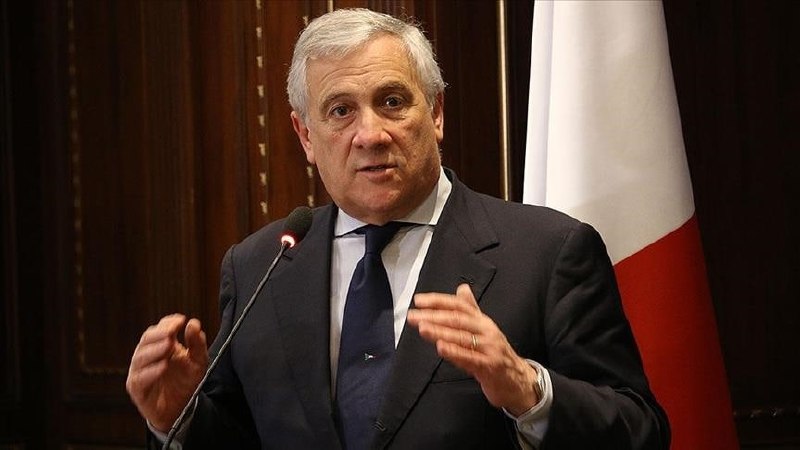
Secretary of State Marco Rubio landed at Rome's Fiumicino Airport on Wednesday, May 7, 2026, beginning a visit that will place him before two leaders with whom the Trump administration has recently collided in unusually blunt terms. The agenda includes a meeting with Pope Leo XIV at the Vatican and separate talks with Italian Prime Minister Giorgia Meloni, according to social media posts by the secretary's travelling pool and reporting from the ClashReport Telegram channel.
The timing is conspicuous. Days before Rubio's arrival, public exchanges between the White House and both the Italian government and the Holy See had turned sharp. Trump, speaking to reporters in Washington, offered pointed criticism of Meloni's government on trade matters, while the Pope—still relatively new to the role following his April election—had made statements on global inequality that American officials publicly characterised as unhelpful.
Rubio's visit represents an attempt at direct damage control at the senior diplomatic level. The secretary, who has spent recent weeks shuttling across the Middle East and Europe on ceasefire and negotiations tracks, arrives in Rome with a specific set of interests: shoring up NATO cohesion ahead of an expected US posture shift, keeping Italy aligned on Ukraine-related sanctions, and establishing a working channel with a pontificate still defining its foreign-policy instincts.
The Meloni conversation will centre on trade. Italy's small-and-medium enterprise export economy has been a persistent friction point with Washington's tariff regime, and Rome has resisted pressure to exclude Chinese technology firms from its 5G infrastructure—a position the Biden administration backed quietly and the Trump team has since escalated publicly. Meloni, whose Brothers of Italy party occupies the nationalist-right space that Trumpist rhetoric sometimes flatters and sometimes threatens, has navigated the relationship by emphasising shared values on migration and Libya rather than economics. That framing is wearing thin on both sides.
The Vatican dimension is different in character but no less consequential. Pope Leo XIV—elected in April following Francis's death—is a Peruvian-born prelate with documented concerns about the effects of unilateral sanctions on civilian populations in the Global South. His public remarks on sovereignty and development have drawn criticism from US officials who interpret them as calibrated endorsements of multipolar governance frameworks. The Holy See, while a microstate, holds recognised diplomatic relations with 183 nations and occupies a unique seat in discussions on humanitarian access, conflict mediation, and arms control. Its positions carry weight in Africa, Latin America, and the Middle East precisely because the institution is not a state in the conventional sense.
What the sources indicate Rubio wants from this audience is not spelled out in official communiqués. But the structural logic is legible: the Secretary of State needs a relationship with a papacy that speaks to audiences the United States increasingly struggles to reach on its own terms. The Pope, meanwhile, needs functional relations with Washington to maintain the Vatican's role in whatever peace negotiations emerge from the Ukraine conflict and from ongoing crises in Gaza and Sudan. Both sides have interests in a working channel; the question is whether the personal chemistry and the political context allow one to be built.
The domestic calculus inside Italy complicates things for Meloni in ways that do not apply to the Holy See. She is heading into a budget negotiation with the European Commission and faces elections within eighteen months. A visible moment of subordination to American pressure—photographed handshakes and warm statements following public criticism—carries political risk. Her office has said the meetings will cover bilateral ties, NATO, and the Mediterranean security architecture, language carefully calibrated to suggest equivalence between the partners rather than hierarchy.
The available evidence does not clarify what specific commitments, if any, Rubio will seek from either interlocutor. The Holy See's press office had not issued a readout of the audience by the time of publication. Italian government spokespeople described the Meloni meeting as a "working session" without elaborating on substance. The sources do not indicate whether humanitarian exemptions from sanctions, 5G procurement decisions, or Ukraine reconstruction roles were discussed in any preliminary sense.
What is clear is that the visit reflects a broader pattern in second-term Trump administration diplomacy: sharp public rhetoric followed by quiet face-saving missions. The technique is familiar from Latin America, where several governments received public rebukes from Trump before sending senior envoys to Washington. Rome, as a G7 capital and a NATO member with unusual soft-power reach, fits the template. Whether it produces results—or simply buys time before the next public flare—remains to be seen.
This publication covered Rubio's Rome visit through the lens of diplomatic repair rather than summitry. The wire services framed the trip primarily as a Nato-alignment check; the Vatican context received less attention than its significance warrants.
Wire provenance
This editorial synthesis draws on the following public wire/social posts:
- https://t.me/ClashReport/12345