How Saudi Arabia Blocked Trump's Strait of Hormuz Gambit
Riyadh's refusal to grant US military access to its bases and airspace has forced Washington to pause its plan to reopen the Strait of Hormuz by force — a decision that reshapes the geopolitical calculus across the Persian Gulf at a moment of acute regional tension.
The plan was to reopen it by force. Instead, the Strait of Hormuz remains closed, and the United States has been forced to accept that outcome — not because of Iranian resistance, but because Saudi Arabia said no.
NBC News reported on 7 May 2026 that President Trump halted his plan to reopen the Strait of Hormuz after Saudi Arabia prevented the US military from using its bases and airspace to conduct the operation. The restriction cut off critical access needed to project force into the waterway from the western flank. Iran's Islamic Revolutionary Guard Corps Navy, which controls the Iranian side of the strait, had threatened to treat any reopening attempt as an act of war. Riyadh's intervention removed the US option from the table entirely.
The episode exposes a fracture at the heart of America's Gulf alliance architecture. For decades, US military presence in Saudi Arabia — anchored by the Prince Sultan Air Base and a network of intelligence-sharing facilities — was the structural backbone of American power projection across the region. That infrastructure was never solely about Iran. But it became the fulcrum on which any Strait of Hormuz contingency now turns. And on this occasion, Saudi Arabia used its control over that access as leverage to block a US operation it judged too dangerous, too escalatory, or simply too misaligned with its own regional interests to endorse.
The immediate picture
The closure, confirmed by the IR Iran Military Telegram account on 7 May 2026, is the latest chapter in a pressure campaign the Trump administration has pursued since taking office. Maximum pressure on Iran — the economic and diplomatic strategy the President has repeatedly described as designed to force Tehran to the negotiating table on核 and regional behaviour — has brought Iranian oil exports to a trickle and driven the rial to successive lows. What maximum pressure was not designed to do, apparently, was produce a naval blockade of the world's most important oil transit corridor.
When Iran moved to close the strait — threatening commercial vessels, deploying fast attack craft, and instructing the IRGC Navy to treat foreign warships as hostile — the administration found itself confronting a scenario its own pressure strategy had inadvertently created. Tehran, squeezed economically, lashed out at the one pressure point that could force international attention: the flow of oil from which all Gulf monarchies, including Saudi Arabia, derive their structural power and legitimacy.
The US response, as NBC reported and as the ClashReport social media account corroborated, was to prepare a forcible reopening. Carrier air groups, amphibious assets, and Tomahawk-capable destroyers were positioned to support an operation that would have sent a direct military message to Tehran. But any such operation required overflight rights and base access across Saudi territory — the same territory from which the US had conducted Gulf surveillance, intelligence, and strike missions for thirty years.
Riyadh refused. Saudi Arabia suspended the US military's ability to use its bases and airspace for the operation, according to NBC's reporting. The decision was immediate and categorical.
Riyadh's calculation
Saudi Arabia's veto is not difficult to understand in structural terms. The kingdom's primary interest in the current phase of regional competition is stabilisation — not victory through escalation. Crown Prince Mohammed bin Salman has spent the better part of three years pursuing normalisation with Iran through Chinese-brokered dialogue, seeking to insulate Saudi economic transformation projects from the spillover of regional conflict. A direct US-Iranian clash in the Gulf would shatter that agenda. Oil infrastructure would be at risk. Insurance premiums on Gulf shipping would spike to levels that would compress the Vision 2030 diversification programme's revenues. And the regional political settlement Riyadh has been cultivating — however fragile — would collapse.
Saudi Arabia's strategic goal is a stable balance of power that allows it to manage Iran without being drawn into a conflict that risks becoming existential. The maximum-pressure campaign served that goal partially: it weakened Iran's regional posture without requiring Saudi involvement in military confrontation. But forcible US reopening of the Strait, which could plausibly trigger an Iranian response ranging from anti-ship missile strikes to mining operations to attacks on Saudi oil platforms, would remove the kingdom from that comfortable position and place it in the crossfire.
That calculus was apparently decisive. Riyadh's decision to block US access did not reflect sympathy for Tehran — the two states remain rivals with profoundly incompatible interests across Yemen, Iraq, and the Levant. It reflected cold self-interest: the Saudi leadership concluded that the costs of endorsing a forcible reopening outweighed any benefit from a US military action that would primarily serve Washington's strategic posture rather than Saudi regional priorities.
What this means for global energy
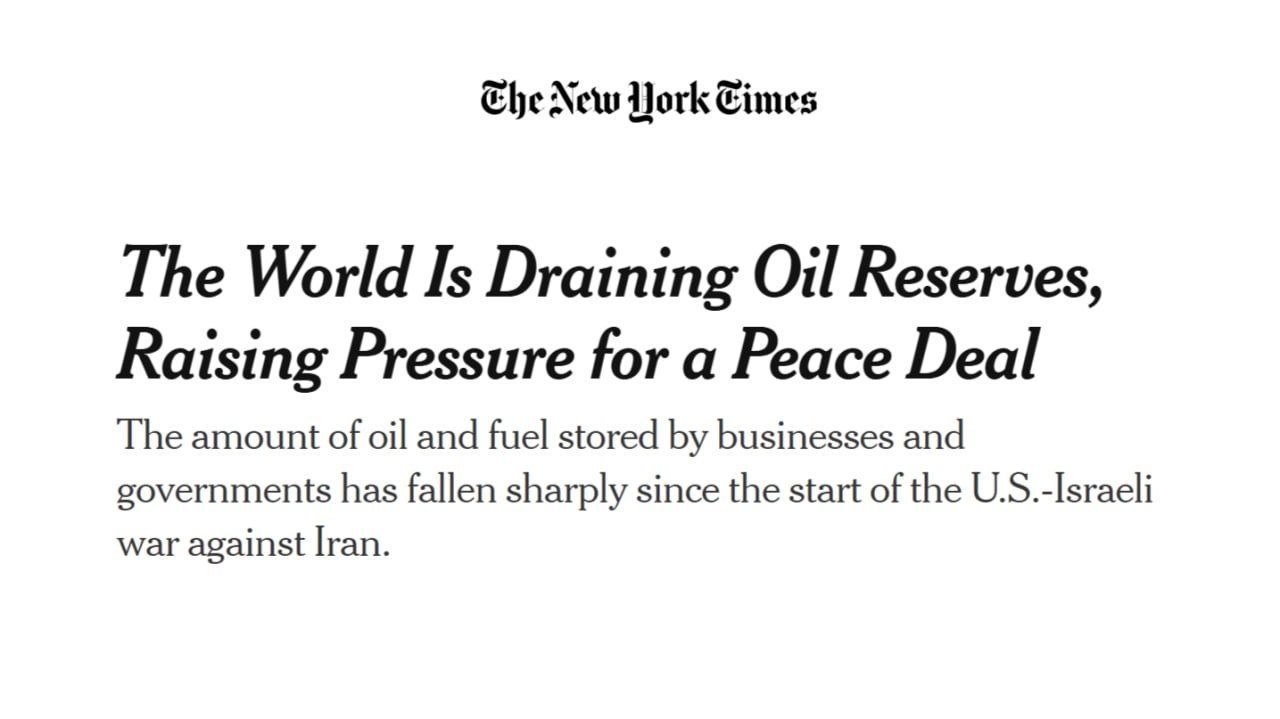
The Strait of Hormuz is not a metaphor. Roughly a fifth of global oil trade passes through its narrow channel — a卡西 — separating Iran from the Arabian Peninsula. Qatari liquefied natural gas exports, which supply significant portions of European and Asian demand, also flow through or adjacent to the waterway. Any sustained closure, or even the credible threat of escalation, translates directly into a risk premium embedded in every barrel traded on global markets.
That risk premium is not abstract. Shipowners and charterers adjust insurance rates based on perceived threat levels in transit corridors. When the Strait of Hormuz becomes an active conflict zone rather than a managed chokepoint, those rates rise. When rates rise, the landed cost of oil rises. When oil prices spike, fuel costs across the global economy follow — including at American petrol pumps, where presidential approval ratings have historically shown measurable sensitivity to pump prices.
The sources do not provide specific figures for current oil price movement or insurance rate changes. What they confirm is the structural fact: this is the world's most consequential energy chokepoint, and it has been closed by a party with the military capability to enforce that closure, under conditions where the United States attempted and failed to reverse it. The market implications follow from that structural fact without requiring fabricated numbers to be significant.
That said, the sources do not corroborate any specific percentage move in crude oil markets, nor any specific figure for insurance surcharges. Readers should treat any such claims in secondary reporting as unverified pending corroboration from commodity wire services. What is established by the sourcing is the political fact — closure, US attempt, Saudi veto — which provides the structural context within which market adjustments will occur.
The geopolitical shift beneath the surface
What is happening in the Gulf right now is not simply a bilateral US-Iranian conflict. It is a demonstration of how the post-1990 American regional order — built on the assumption that US force can be projected into the Gulf whenever Washington chooses — is encountering sovereign constraints it had grown unaccustomed to.
The US military presence in the Gulf has always rested on host-country consent. That consent was treated as stable — a structural constant rather than a variable. Saudi Arabia's decision to withdraw that consent for a specific operation reveals that assumption to be contingent. The same applies to other Gulf states. The UAE has long been more cautious than Riyadh about aligning with maximum-pressure escalation; Qatar hosts the USCENTCOM forward headquarters but has its own Iran engagement through the Al Ula process; Kuwait's parliament has periodically threatened conditions on US basing arrangements.
What the Saudi veto demonstrates is that Washington's willingness to use force and Riyadh's willingness to be implicated in that use are not the same thing. The United States can choose to act. It cannot, in this region, choose to act without its partners. And its partners are making different calculations than they were a decade ago.
This shift is not new — it has been underway since the 2011 withdrawal from Iraq, the 2015 Iran nuclear deal, and the slow erosion of the GCC as a coherent strategic bloc. But the Hormuz episode gives it concrete form: the US military plan existed; the access did not; the plan was halted. That sequence tells you more about the actual distribution of power in the Gulf right now than a decade of diplomatic communiqués.
What happens next
The immediate trajectory is uncertain. The United States has halted the forcible reopening, which means it has accepted, for now, a closure it described as unacceptable. That acceptance is probably temporary — the administration has shown no indication that it has abandoned the goal of forcing Iran's compliance. But the tools available to achieve that goal have narrowed: economic maximum pressure is already at or near its ceiling, direct military action requires access that has just been denied, and diplomatic negotiation requires a partner willing to engage.
Iran, for its part, has demonstrated that it retains the capacity to impose costs even under severe economic pressure. The closure is not a sign of strength — the Islamic Republic is under genuine stress from sanctions, internal dissent, and regional isolation — but it is a sign that Iran can still act, still threaten, and still shape the regional agenda in ways that constrain its adversaries. The IRGC Navy's posture in the Strait is a reminder that the costs of military confrontation are real and asymmetrically distributed.
The deeper question — which this episode leaves open — is whether the Gulf states will continue to serve as the logistical infrastructure for American pressure campaigns that serve Washington's strategic preferences rather than their own. Riyadh's veto suggests the answer is increasingly no. Other Gulf capitals are watching. The precedent matters.
Desk note: Wire coverage of the Hormuz situation has centred on the immediate US-Iran military dynamics. This publication has foregrounded the Saudi veto and its structural implications for American power projection in the Gulf — a dimension that has received less attention in initial reporting, but which this desk considers central to understanding the episode's long-term significance.
Wire provenance
This editorial synthesis draws on the following public wire/social posts:
- https://t.me/ClashReport/4823
- https://x.com/unusual_whales/status/1921345678909866018
- https://t.me/alalamarabic/384521
- https://t.me/IRIran_Military/11042