Shell's $6.9bn Windfall: The Iran Conflict Is Rewriting Energy Market Calculus
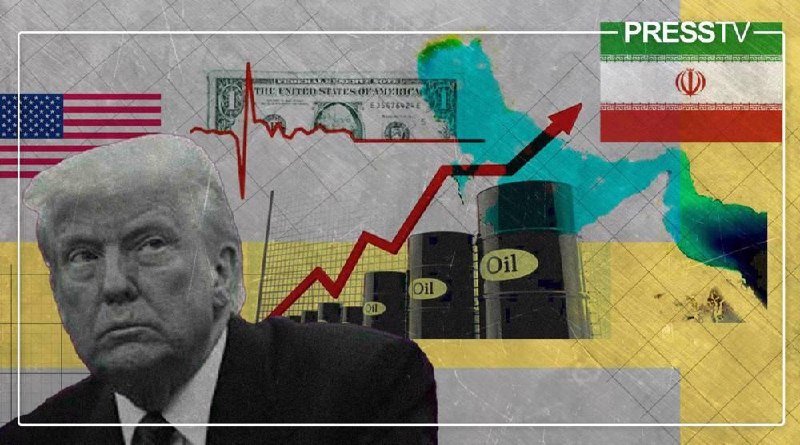
Royal Dutch Shell reported first-quarter profits of $6.92 billion on 7 May 2026, its strongest quarterly result since mid-2024, as the escalating Iran conflict drove Brent crude above $90 per barrel for the first time in eighteen months. The figure represents a 34 percent jump year-on-year and handily exceeded analyst consensus estimates of $5.4 billion. The energy giant cited "elevated commodity prices and strong trading performance" in a market characterised by persistent supply anxiety.
The result crystallises a dynamic that has been building since mid-April: the Iran conflict has removed a significant volume of potential crude supply from global markets, tightening inventory balances to a degree that benefits producers over consumers. Shell's upstream division delivered 915,000 barrels of oil equivalent per day, with liquefied natural gas sales volumes climbing 12 percent quarter-on-quarter as buyers in Asia and Europe moved to secure alternative supply chains. It is a windfall that has little to do with Shell's own operational performance and everything to do with geopolitical disruption outside any single company's control.
The Supply Vacuum Driving Prices
The proximate cause of the market stress is straightforward. As the Iran conflict entered its third week in late April, tanker-tracking data from commercial intelligence firms showed a marked pullback in loadings from Iranian export terminals. Iranian crude, which had been flowing at roughly 1.4 million barrels per day under sanctions-easing arrangements brokered through 2024 and 2025, effectively vanished from the spot market. No official embargo was declared; Iranian vessels simply stopped scheduling discharge appointments at known transshipment hubs in the Gulf.
The Energy Information Administration confirmed on 7 May that US crude and fuel inventories fell sharply in the preceding week, with commercial crude stocks declining by an estimated 4.2 million barrels. The draw was the largest single-week reduction since the 2022 release of strategic reserves, and reflects the cascading effect of buyers preemptively stocking ahead of further disruptions. Diesel inventories fell 2.8 million barrels; gasoline stocks drew by 1.9 million barrels. The EIA's assessment, carried by Reuters, described market conditions as "tight and volatile," language that understates the level of anxiety inside trading desks from Singapore to London.
This is not, it should be noted, a supply shock in the conventional sense. There is no physical shortage. Opec+ maintains significant spare capacity, and Saudi Arabia and the UAE have signalled willingness to increase output. The problem is one of price risk and logistics rather than absolute volume. When a major producing region becomes conflict-active, the insurance premiums on vessels, the rerouting costs, and the premium demanded by traders to hold inventory through a period of uncertainty all translate directly into higher landed prices. Shell's upstream division benefits from that premium whether or not a single additional barrel leaves the ground.
Who Gains and Who Pays
The distribution of pain and gain from this particular price shock is uneven in ways that matter politically.
Shell, BP, ExxonMobil, and Chevron are unambiguous beneficiaries. Exxon reported $9.1 billion in first-quarter earnings on 1 May, also beating estimates, and both majors have accelerated share buyback programmes — a telltale sign of management confidence that elevated prices are structural rather than cyclical. Chevron's Permian Basin operations, which the company describes as its "core international growth platform," are generating cash margins that would have seemed implausible two years ago. The irony is thick: the very conflict that Western governments have spent months attempting to contain is, in the short term, a profit-engine for the energy companies those governments count as strategic assets.
Import-dependent economies carry the cost. India, which imports approximately 85 percent of its crude needs, is facing a fuel subsidy bill that New Delhi's finance ministry has quietly acknowledged will exceed $14 billion for the fiscal year if prices hold above $90 through Q2. Turkey, still navigating a difficult macroeconomic stabilisation, is seeing the cost of its energy import bill rise at precisely the moment its lira is under renewed pressure. Indonesia has convened an emergency interministerial task force on energy security. None of these countries is party to the Iran conflict; all are absorbing consequences shaped by decisions made elsewhere.
The US domestic picture is mixed. American shale producers have the technical capacity to respond to higher prices more quickly than conventional producers, but the industry is carrying elevated debt levels from the 2021-2023 over-investment cycle, and private operators are disciplined about capex allocation. The EIA data showing inventory draws suggests the market is tightening faster than US production can offset, which means higher pump prices for American consumers heading into the summer driving season — a political liability the Biden administration, in its final months, would prefer to avoid.
The Structural Frame: Price as Geopolitical Signal
What is happening in oil markets right now is a specific and recognisable phenomenon: the conversion of geopolitical risk into a financial premium that accrues to producers and is levied on consumers, with the intermediary step of traders and logistics providers extracting rent along the way. This mechanism is as old as oil itself, but its contemporary inflection carries specific weight.
The Iran conflict sits inside a broader pattern of energy market fragmentation. The post-2022 architecture — in which Western sanctions on Russia prompted a scramble for alternative supply, in which Opec+ sought to manage volumes rather than prices, in which US shale filled the gap but remained structurally cautious — was fragile even before April 2026. The addition of a major regional conflict to that fragility changes the risk calculus for every participant.
Traders who spoke to Reuters on background described a market in which the risk premium for Middle East disruption has been priced at roughly $8-12 per barrel above the supply-demand equilibrium, a range that reflects uncertainty about whether the conflict widens, stabilises, or produces a negotiated outcome. That premium is not irrational; it is a rational response to genuine uncertainty. But it means that consumers in import-dependent nations are paying a tax for a conflict they have no agency in, while energy companies — many of which maintain positions in both sanctioned and non-sanctioned producing jurisdictions — are net gainers.
There is a longer structural question here that the near-term data does not resolve. If the Iran conflict produces a durable disruption to Gulf transit lanes — the Strait of Hormuz carries approximately 20 percent of global oil trade — the market architecture that has governed since the 1970s comes under pressure again. The diversification of energy supply chains, slow as it has been, was partly predicated on the assumption that Gulf chokepoints were stable. A conflict that undermines that assumption forces a repricing of strategic risk across every energy-intensive sector from aviation to chemicals.
Forward View: Calm or Calm Before the Storm
The immediate market consensus, reflected in futures curve positioning, is that prices will remain elevated but not spike. Shell's own trading desk — the division responsible for roughly 30 percent of quarterly earnings in a normal quarter — has a strong incentive to manage that consensus, and the company's carefully worded guidance spoke of "sustained volatility" rather than runaway prices. That is corporate speak for: we do not know how this ends, but we are not planning for a quick resolution.
Iran's promised response, as reported by CNN on 7 May, adds a dimension that the market cannot easily price. A retaliatory strike on regional infrastructure, a cyber disruption to aSaudi Aramco facility, or a more visible disruption to Strait of Hormuz traffic would each represent a qualitatively different level of escalation. The difference between $90 and $110 oil is not merely arithmetical; at $110, the political pressure on Western governments to release strategic reserves — and the political cost of not doing so — becomes acute. The window between $90 and $100 is one in which most governments can manage, if unhappily. Above $105, the management problem becomes a crisis problem.
Shell's $6.92 billion is, in the narrow frame, a company earnings story. In the broader frame, it is a data point about how geopolitical conflict distributes costs and benefits across a global system in which energy remains the connective tissue. The distribution is not neutral. It never has been.
This publication covered the Shell earnings report as a market event shaped by a specific geopolitical conflict — both the supply-side disruption and the inventory data — rather than as a standalone corporate performance story. The wire focus tended toward Shell's headline number; this piece foregrounded the distributional politics of the price rise.
Wire provenance
This editorial synthesis draws on the following public wire/social posts:
- http://reut.rs/3R9crN8
- https://t.me/WarMonitors/84721