The Strait of Hormuz Gambit: How Iran Outmaneuvered Project Freedom
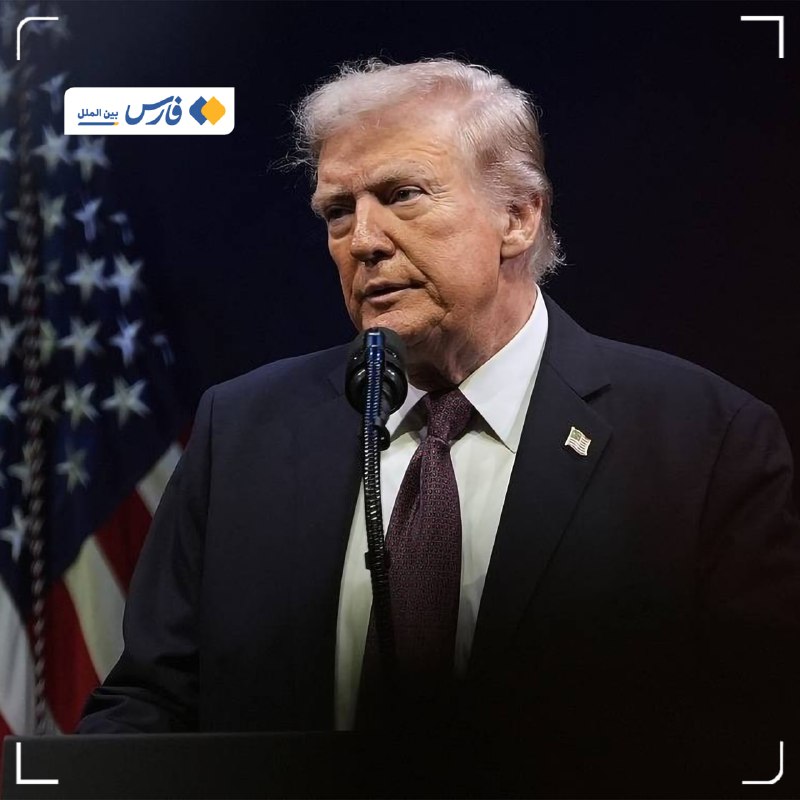
The Strait of Hormuz, the narrow maritime chokepoint through which roughly one-fifth of the world's oil flows, has become the epicenter of a high-stakes diplomatic confrontation between Iran and the United States. On 7 May 2026, Iranian officials delivered a categorical rejection of an American proposal to reopen the waterway, describing the offer as "unrealistic" and laying out preconditions that Washington is unlikely — or unable — to meet in the near term.
The Iranian position, as articulated through state-adjacent channels, is unambiguous: the Strait will remain closed until the war is permanently ended, the US naval blockade is lifted, and sanctions are removed. No one in Tehran appears willing to signal flexibility. That stubbornness has forced the United States into an uncomfortable position — one that was complicated just hours earlier when two key regional partners appeared to wobble.
The Saudi-Kuwaiti U-Turn and Project Freedom's False Start
The diplomatic choreography began with a setback. According to multiple reports published on 7 May 2026, Saudi Arabia and Kuwait initially restricted American access to their military bases and airspace — a move that, if sustained, would have severely constrained any US force projection aimed at the Strait. The restriction appeared to reflect Gulf-state anxiety about being dragged into a wider conflict with Iran, particularly one in which the United States was operating without a clear international mandate.
One account, from a channel aligned with Iranian-adjacent perspectives, described the moment as a forced declaration of failure for what was being called "Project Freedom" — an American effort to forcibly reopen the Strait. The report suggested that Riyadh understood something that Washington did not: that Iran would not back down under pressure, and that any military miscalculation risked destabilizing the entire Gulf.
But the situation reversed sharply. By mid-afternoon UTC on 7 May, both Saudi Arabia and Kuwait had restored American military access to their bases and airspace, effectively removing the constraint that had appeared to cripple the operation. The Wall Street Journal reported that the United States was now considering restarting the Project Freedom effort during the same week. The reversal came after what sources described as intense diplomatic engagement between Washington and the two Gulf monarchies.
The whipsaw sequence raises questions about the coherence of American regional strategy. Gulf states, which have long relied on US security guarantees, are evidently unwilling to provide blank-check support for an operation whose objectives and legal basis remain unclear. Their initial hesitation — and the speed of the subsequent reversal — suggests that Riyadh and Kuwait City were testing Washington's resolve more than they were genuinely reconsidering the alliance.
Tehran's Strategic Patience
Iran's response to American overtures reveals a government that has calculated its position carefully. The Islamic Republic controls the northern shore of the Persian Gulf and commands the水道 geography in a way no other actor can replicate. Closing the Strait was not a spasm of nationalist anger; it was a strategic decision tied to specific, negotiable conditions.
The first condition — permanent end of the war — almost certainly refers to the broader regional conflict that has escalated since Washington's withdrawal from the Joint Comprehensive Plan of Action in 2018 and the subsequent "maximum pressure" campaign. Iran has consistently argued that sanctions and military containment are acts of war by other means. Whether or not one accepts that framing, it reflects a coherent legal and political position, not an arbitrary demand.
The second condition — lifting the naval blockade — targets the heart of American coercive leverage in the Gulf. The US Fifth Fleet, based in Bahrain, has for years maintained a posture that Iranian officials describe as a de facto blockade: interdiction of tankers carrying Iranian oil, harassment of Iranian fishing vessels, and the constant presence of carrier strike groups in nearby waters. Iran has long argued that this posture violates the Law of the Sea and the principle of free navigation it claims to uphold.
The third condition — removal of sanctions — is the most politically sensitive, because any American administration that agreed to comprehensive sanctions relief would face fierce opposition from Israel and domestic political constituencies that have spent years framing Iran as an existential threat. This is, at bottom, a domestic American political problem disguised as a bilateral negotiation.
The Geopolitics of a Waterway
The Strait of Hormuz is not merely a shipping lane. It is a geopolitical fault line. Approximately 21 million barrels of oil pass through it daily, according to Energy Information Administration data from before the current crisis. A sustained closure would send shockwaves through global markets in a way that even the most aggressive American shale production cannot offset. Europe, which imports significant quantities of Gulf crude, would face acute energy shortages. India and Japan, deeply dependent on Gulf supplies, would be forced to make difficult choices about their strategic orientation.
This geography gives Iran leverage that is structural, not merely political. No amount of diplomatic pressure or military posturing changes the fact that the narrowest point of the Strait — the width of the shipping channel itself — is within easy range of Iranian anti-ship missiles, naval mines, and small-boat operations. The United States can project power, but it cannot project presence everywhere simultaneously.
Previous American administrations understood this geometry. The Obama team's nuclear deal with Iran was, in significant part, an acknowledgment that confrontation over the Strait was not worth the risk. The Trump administration's maximum pressure campaign implicitly accepted higher risks in exchange for what it hoped would be regime-change outcomes. The current crisis exposes the limits of that approach.
What Comes Next
The immediate outlook is uncertain. Iran has shown no inclination to soften its position, and the Trump administration — having publicly staked credibility on reopening the Strait — faces pressure to demonstrate that maximum pressure has not failed. The restart of Project Freedom, if it materializes, would put US forces in closer proximity to Iranian assets than at any point since the 2019 tanker confrontations.
Saudi Arabia and Kuwait, having performed their diplomatic pirouette, are likely to remain engaged but cautious. Their reversal of the base-restriction decision does not mean enthusiastic support for American military action. It means they are trying to maintain their relationships with Washington while avoiding responsibility for whatever follows. This is familiar Gulf-state hedging, not a sign of genuine strategic alignment with an aggressive American posture.
The deeper question is whether any of the three Iranian conditions are achievable in the current political environment. Permanent end of the war would require a regional security architecture that none of the parties seem prepared to negotiate. Lifting the naval blockade would require the United States to acknowledge that its Gulf posture has been legally problematic — an admission that no administration is likely to make publicly. And sanctions removal would require a domestic political consensus in Washington that does not currently exist.
Iran appears to have calculated that waiting is itself a strategy. The longer the Strait remains constrained, the more pressure builds on American allies and the more the costs of the status quo become visible. This is not a novel Iranian approach — the Islamic Republic has historically been willing to endure economic pain in exchange for strategic persistence — but it is one that the current American team may not have adequately prepared for.
What is clear is that Project Freedom, whatever it ultimately becomes, is not a simple military operation. It is an attempt to change the strategic calculus of a state that controls one of the world's most critical maritime chokepoints through force of arms alone. The evidence of 7 May 2026 suggests that calculus has not changed, and that Iran intends to hold the line.
This publication covered the Strait of Hormuz crisis as a live geopolitical negotiation between regional actors with competing interests, rather than as a straightforward US-versus-Iran binary. Iran's preconditions were reported in full; the American response was framed as diplomatic scrambling rather than strategic clarity.
Wire provenance
This editorial synthesis draws on the following public wire/social posts:
- https://t.me/bricsnews/18432
- https://t.me/bricsnews/18431
- https://t.me/bricsnews/18430
- https://t.me/ClashReport/28941
- https://t.me/FotrosResistancee/18420
- https://x.com/unusual_whales/status/192987654321