The Night the Strait of Hormuz Caught Fire
Explosions reported near Iran's principal commercial port on the Strait of Hormuz on May 7, 2026, have drawn denials from the UAE and raised questions about a new phase in the shadow conflict gripping the Persian Gulf.
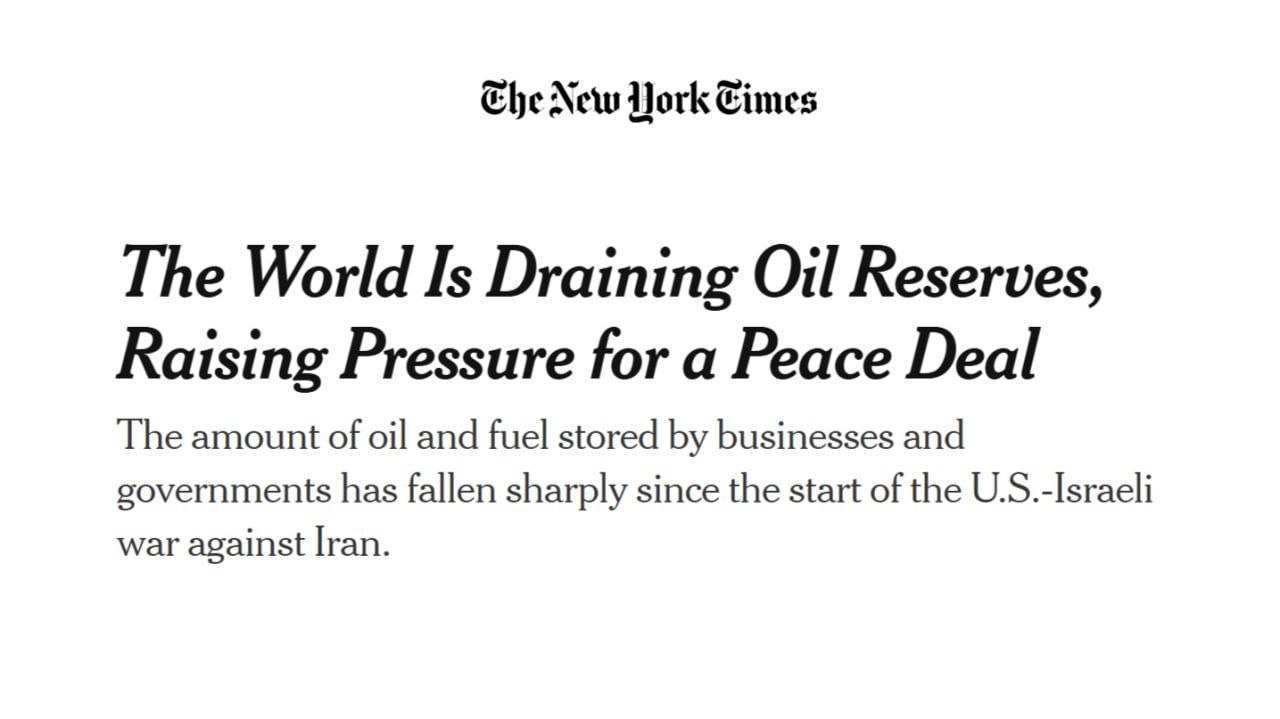
At 18:50 UTC on May 7, 2026, the Fars News Agency reported sounds of several explosions of unknown origin near Bandar Abbas, Iran's principal commercial port on the Persian Gulf. Within an hour, the scope of the incident had expanded across multiple Telegram wire channels carrying reports from Iranian state media. The Bahmen docks on Qeshm Island, a commercial facility within Iran's territorial waters, had also registered explosions, according to IRIB, the Islamic Republic of Iran Broadcasting corporation. The Tasnim News Agency — a semi-official outlet with direct channels to the Revolutionary Guards — confirmed the Bahmen Pier report and described the exchange as a "defensive confrontation" between Iranian armed forces and two small hostile aircraft.
No government has claimed the strike. The UAE denied involvement within hours. But the incident, occurring on one of the world's most consequential maritime chokepoints, is already being read in Tehran, Abu Dhabi, and Washington as a possible inflection point in a conflict that has been conducted largely through deniable operations for years.
What the sources actually say
The Telegram channels carrying this story — wfwitness, rnintel, and GeoPWatch — posted a consistent set of Iranian state-media reports with a notable internal tension. Tasnim described the event as a defensive engagement against hostile aircraft; Fars News Agency reported commercial-port segments at Bahmen Pier had sustained damage during the exchange; and Mehr News Agency simultaneously flagged the "possibility" of UAE involvement in the attacks on Iranian ports. The dual framing — defensive action against incoming threats and investigation into external attribution — suggests Iran's information apparatus was still assembling a coherent account of the night's events.
What is clear is the location. The Port of Bandar Abbas handles the majority of Iran's non-oil maritime trade and sits adjacent to facilities operated by the Islamic Republic of Iran Navy. Qeshm Island, at the mouth of the Persian Gulf, hosts free-trade zone infrastructure and a naval presence. Strikes on either — if confirmed as external — would represent something qualitatively different from the attacks on commercial vessels that have defined the shadow conflict since late 2023. Targeting port facilities, rather than ships in transit, implies a willingness to damage Iran's supply-chain infrastructure rather than merely disrupt traffic through the strait.
The sources do not specify the aircraft type, the ordinance used, or the extent of material damage. Independent verification remains absent. The attribution question — who, if anyone, struck Iran — remains genuinely open.
The UAE denial and what it reveals
Abu Dhabi's prompt denial of involvement is the most analytically significant signal in the immediate aftermath. The UAE has maintained a policy of strategic hedging in the Gulf — deepening security ties with the United States while preserving back-channel communication with Tehran — and an explicit denial now suggests Abu Dhabi either had no knowledge of the operation or calculated that silence would carry greater reputational cost than admission.
There is a structural observation worth making: the UAE's denial arrived faster than denials typically do in cases where Gulf state involvement is genuinely suspected rather than confirmed. That speed could indicate genuine non-involvement. It could equally indicate that Abu Dhabi wanted to get ahead of a story that it feared would escalate into a confrontation it did not seek. The sources do not allow a clean resolution between those readings.
What the denial does accomplish is to narrow the field of plausible actors in the short term. The United States has not commented. Israel, whose recent operations against Iranian facilities have included strikes attributed to it in Syria and an operation inside Iran last year, has not claimed this incident. The sources leave open whether a state actor conducted the strike with sufficient operational security to avoid immediate attribution, or whether a non-state or sub-state actor used capabilities inconsistent with their publicly known inventory.
The Hormuz dimension
The Strait of Hormuz is not a passive geographic feature. Roughly a fifth of global oil trade transits its narrowest point — the shipping channel between Oman and Iran — each day. Disruption there registers immediately in energy markets and carries political consequences that extend well beyond the Gulf's littoral states. Every actor with a stake in stable energy supply has an interest in preventing the strait from becoming a zone of active hostilities. Every actor also has an incentive to signal willingness to close it under sufficient provocation.
This structural condition — a chokepoint whose disruption affects global markets — has historically acted as a deterrent against large-scale kinetic operations in the Gulf. The attacks of recent years on commercial vessels, while dangerous, stopped well short of port facilities. The explosions at Bahmen docks, if they represent a deliberate targeting decision rather than collateral damage from an air defense engagement, alter that calculus. The deterrent architecture built around the strait's significance is now being stress-tested at a node — port infrastructure — that the previous phase of the conflict left largely untouched.
The reporting itself emerged through Telegram channels rather than official government channels — a reminder that in contested information environments, the primary wire services for major geopolitical events are increasingly the research and relay accounts that aggregate, translate, and contextualise state-media output in real time. That infrastructure is reliable for what Iranian state media said; it is not reliable for verifying the underlying facts.
Pattern, precedent, and what comes next
The broader trajectory in the Gulf has included a sequence of incidents whose cumulative effect has been to erode the informal rules that kept prior confrontations below certain thresholds. Attacks on commercial vessels. Cyber operations against port management systems. Signals operations against navigation networks. Each incident, taken alone, fell within a range of activity that regional actors had demonstrated a tolerance for absorbing without escalation. The apparent targeting of port infrastructure — not a ship in transit but the dock itself — sits above that threshold if it was a deliberate choice.
Whether it was deliberate is the central question. Iranian state media described the Bahmen Pier damage as occurring "during the exchange of fire between the Iranian armed forces and the enemy" — language that frames the damage as a byproduct of air defense engagement rather than the objective of the strike. That framing could be accurate. It could equally be a face-saving characterisation offered before attribution was established.
The precedent question is complicated by the absence of a clean historical analogue. The Gulf's informal conflict architecture has evolved rapidly since 2023, and the rules that govern it are implicit rather than codified. What can be said with some confidence is that each phase of the conflict has been defined by what the previous phase established as acceptable. The Bahmen Pier incident, if confirmed as external targeting of port infrastructure, would represent the extension of those acceptable parameters in a direction that most regional actors have previously signalled they wanted to avoid.
The coming hours and days will determine whether this remains a discrete incident — the kind whose significance is retroactively established by what does or does not follow it — or the beginning of a recognisable new phase. The UAE denial has reduced one pathway to escalation by foreclosing Abu Dhabi's direct involvement. What remains open is whether whoever conducted the operation has the capacity and intent to repeat it, and how Tehran chooses to respond to an attack that may have originated from a direction it did not anticipate.
This publication's desk approached this story with the question of escalation architecture at the fore. The wire services led with Iranian state-media attribution speculation; Monexus led with the port infrastructure as the analytically significant element. The UAE denial, treated by most wire services as a secondary development, is positioned here as a primary signal in its own right.
Wire provenance
This editorial synthesis draws on the following public wire/social posts:
- https://t.me/GeoPWatch/8471
- https://t.me/wfwitness/12381
- https://t.me/GeoPWatch/8473
- https://t.me/wfwitness/12383
- https://t.me/rnintel/5297
- https://t.me/wfwitness/12382
- https://t.me/wfwitness/12384