Trump's Hormuz Ultimatum Collapses as Iran Holds and Gulf Allies Waver
Iran has dismissed a US proposal to reopen the Strait of Hormuz as unrealistic, exposing the limits of the Trump administration's coercive approach and leaving American credibility in the Gulf in question.
On Wednesday the White House presented Iran with a choice: reopen the Strait of Hormuz or face consequences. By Thursday evening, Tehran's response had landed — and it was not what Washington wanted to hear. Iran's Foreign Ministry described the American proposal as "unrealistic," according to reporting by the BRICS News wire on 7 May 2026. The rejection marks a significant blow to the Trump administration's so-called Project Freedom effort, which had sought to use a combination of diplomatic pressure and implied military action to force a reopening of the waterway following what sources describe as a period of Iranian restrictions.
The collapse of the initiative has rippled across the Gulf. According to simultaneous wire reports from ClashReport and BRICS News, Saudi Arabia and Kuwait briefly restricted American access to their bases and airspace — a move that functionally crippled Washington's ability to conduct any military operation in or around the Strait of Hormuz. Both states subsequently restored access, easing the immediate confrontation with the Trump administration, but the episode underscored a deeper problem: America's Gulf partners are increasingly unwilling to be deployed as instruments of coercive pressure against Iran.
A regional rebuff
The signals from Riyadh and Kuwait City were unmistakable. Even during the brief window when base access was suspended, the message to Washington was clear — the monarchies are not prepared to fully underwrite a military escalation against Iran, at least not under the current proposal. The Fotros Resistancee Telegram channel, which tracks Iranian-aligned regional reporting, framed the episode as a humiliation for Trump, noting that the President was effectively forced to wind down Project Freedom after his closest Gulf allies refused to enable it. The assessment from Tehran's perspective, as conveyed through that channel, was that Saudi Arabia recognises Iran will not yield under external pressure.
Saudi Arabia and Kuwait's hesitation is not hard to explain structurally. Both states derive the overwhelming majority of their export revenue from oil shipments that must pass through or near the Strait of Hormuz. A confrontation that shuts down the strait — whether deliberately by Iran or as an unintended consequence of military miscalculation — would devastate their economies before it damaged Tehran's. The rational position for Riyadh and Kuwait City is therefore to signal deterrence on the American side without enabling a scenario that makes the worst outcome more likely.
Iran's calculation follows a different but equally rational logic. Tehran's primary grievance — conveyed through official statements and echoed in regional reporting — is economic: the sanctions regime has sharply reduced its oil export capacity and squeezed its foreign exchange position. The strait represents the one mechanism that makes the region's dependence on Iranian cooperation visible and legible. Iran reads the American ultimatum as a pressure tactic, and its rejection reflects a bet that Washington lacks the regional support and domestic staying power to sustain a military posture.
The structural weight of the waterway
The Strait of Hormuz handles roughly 20-25 percent of global oil trade, making it among the most strategically sensitive chokepoints in the world. It is also, by geographical circumstance, deeply difficult to circumvent at scale. Alternative export routes — pipelines through Saudi Arabia and the UAE to Red Sea terminals, or overland routes to Pakistan — exist but lack the capacity to substitute for maritime transit. The Gulf monarchies know this; Iran knows this; Washington knows this. The strait is the reason the confrontation has not already escalated further.
The structural reality creates a peculiar equilibrium. Iran cannot permanently close the strait without triggering a response that would be catastrophic for its own interests and for its remaining regional partners. The United States cannot open the strait by force without the active participation of Gulf states whose cooperation appears increasingly conditional. What remains is a coercive stalemate — the kind of situation that historically produces miscalculation, not resolution.
What comes next
The immediate question is whether the Trump administration doubles down or steps back. The sources do not indicate a decision either way has been communicated as of publication. But the pattern visible in this episode — ultimatum issued, proposal rejected, regional allies withheld support, American posture weakened — is not consistent with a successful coercive strategy. Tehran is signalling that it does not believe the threat will be executed. The Gulf monarchies are signalling that they will not be used to execute it.
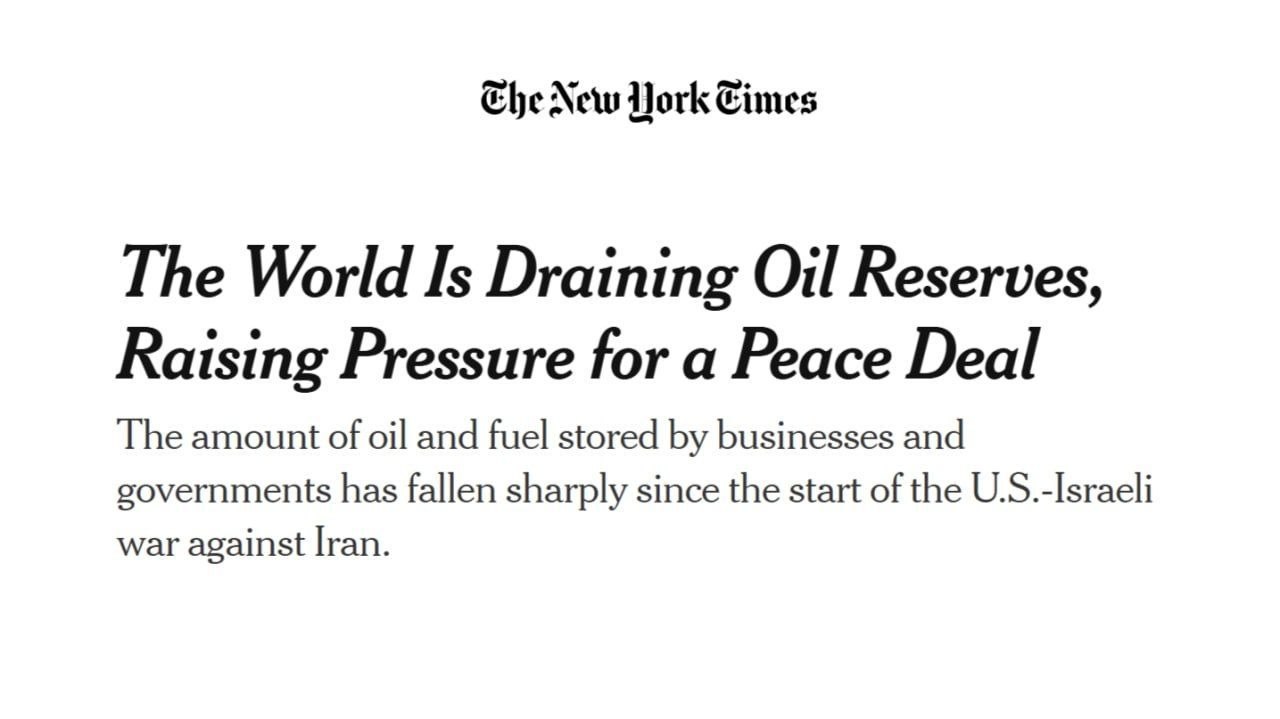
For the wider Middle East, the stakes are acute. A prolonged Hormuz standoff pushes oil prices upward, incentivises faster development of alternative export routes through pipelines and the Strait of Malacca, and erodes the coherence of the American-backed deterrence architecture that has underpinned Gulf security for decades. It also gives Iran more leverage to extract economic concessions from whatever diplomatic channel eventually opens — even on terms that fall short of a formal nuclear deal.
The GCC states appear to be repositioning themselves as mediators rather than accessories. Oman and the UAE have historically served as back-channel intermediaries between Washington and Tehran; if the current ultimatum has genuinely collapsed, those channels will matter more than they have in months. The risk is that a US administration accustomed to receiving compliance from its Gulf partners has misread how far that compliance extends — and that misreading has now been exposed on the world's most consequential maritime chokepoint.
This desk covered the Gulf states' position as a matter of sovereign calculation rather than American alignment. The wire framed the base-access reversal as a diplomatic hiccup; the structural pattern — GCC states insulating themselves from a confrontation that serves neither their economic nor security interests — warranted closer attention.
Wire provenance
This editorial synthesis draws on the following public wire/social posts:
- https://t.me/BRICSNews/8472
- https://t.me/BRICSNews/8471
- https://t.me/ClashReport/1843
- https://t.me/FotrosResistancee/1204
- https://t.me/bricsnews