Trump's simultaneous Iran-China negotiations expose US diplomatic overreach
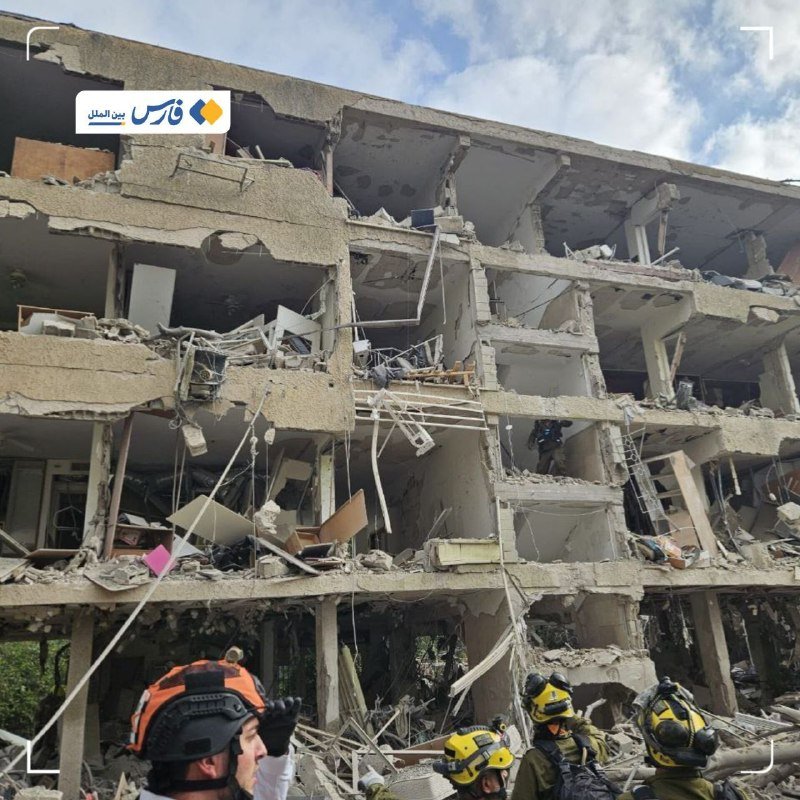
Israel struck a senior Hezbollah figure in Beirut on 6 May 2026 — the first Israeli attack in the Lebanese capital since the ceasefire arrangement held through mid-April, according to BBC reporting. The strike landed hours before Washington confirmed it was pressing a 14-point memorandum of understanding with Iran through intermediaries in Oman, and two days before President Donald Trump was due in Geneva to sit across from Chinese President Xi Jinping. Three simultaneous diplomatic tracks, one White House. The question increasingly being asked in Gulf capitals, European foreign ministries, and inside the offices of regional analysts is whether any of those tracks can succeed without undermining the others.
The structural observation is straightforward: Trump is negotiating with a strategic rival and a regional adversary at the same time while applying economic and military pressure to both. History suggests this is not a natural equilibrium. It requires that leverage remain consistent — that every concession Iran considers comes with a credible threat attached, and that Beijing reads Washington's tariffs and technology restrictions as genuine rather than ceremonial. Neither condition is guaranteed. The US needs regional partners — Saudi Arabia, the UAE, Jordan — to hold the line on any Iran fallout. Those partners are watching closely.
Israel puts a ceiling on the Iran deal
Israeli military officials confirmed the Beirut strike targeted a senior Hezbollah figure on the evening of 6 May. The IDF spokesperson said the operation was conducted on the basis of existing intelligence and that the ceasefire framework remained in force — though the statement carefully distinguished between the ceasefire's holding and Israel's right to act against imminent threats. Hezbollah confirmed the figure was killed but did not escalate in the hours that followed, a restraint that analysts read as an effort to avoid giving Israel a pretext for broader action.
The timing matters. Hours earlier, BBC had reported that an Iranian official described the US 14-point proposal as "constructive" while simultaneously describing the terms as "incomplete." That dual language — encouraging enough to signal willingness, vague enough to signal leverage — is characteristic of how Tehran has historically managed high-stakes negotiations. Iranian Foreign Minister Abbas Araghchi has repeatedly said any deal must respect Iran's "red lines," a phrase that covers both the enrichment programme and the regional network of allied groups that the White House wants constrained.
Israeli officials have made clear, both publicly and through diplomatic channels reported by Western wire services, that Jerusalem will not accept a deal that leaves Iran with a residual enrichment capability or with Hezbollah intact as a functional military force. If Trump wants Israeli acquiescence to an Iran deal — and he has signaled publicly that he does — he needs to either deliver a harder text than Tehran currently finds acceptable, or persuade Israel to accept less. The Beirut strike reads as a signal that Jerusalem is not waiting to be persuaded.
What the Geneva summit actually covers
Trump's meeting with Xi in Geneva on 7 May is being presented by the White House as a reset. The joint Communiqué language, whatever it contains, will be read for warmth. But the substantive substance — tariffs, technology restrictions, Chinese financing of Russia's industrial base — is not resolved by a photograph. Industry analysts writing for the South China Morning Post describe the summit outcome as containing "simmering tensions beneath the surface." That is diplomatic language for a hard negotiation that produced a temporary ceasefire rather than a settlement.
The China track matters to the Iran track in ways the White House is reluctant to emphasize publicly. Beijing has consistently opposed the maximum-pressure campaign — not out of sympathy for Tehran, but because Iranian instability complicates the Belt and Road corridor logistics it has spent a decade building. A US-Iran deal that ends the sanctions architecture removes one pressure point Beijing has been navigating around. It also potentially restores Iranian oil flows to global markets, which affects the same energy price dynamics China uses as a baseline for its own economic planning.
The tariffs themselves are not the real argument. They are a proxy for a deeper contest over technological dominance — AI, semiconductors, advanced manufacturing — where both governments see the other as a systemic challenger rather than a trading partner. A trade agreement that patches over tariff numbers without addressing that structural competition is a pause, not a resolution. The Geneva summit may produce a pause. Whether it produces anything durable depends on whether either side is willing to concede ground on the underlying contest, and neither, so far, has shown that willingness.
The structural problem of simultaneous pressure
There is a pattern in how the US is managing these three relationships — with Iran, with China, with the post-ceasefire Middle East — that is harder to sustain than the White House appears to acknowledge. Maximum pressure, when applied to multiple actors at once who can observe each other's responses, produces a form of diplomatic inflation: the threats become less credible because the capacity to follow through on all of them simultaneously is visible. Iran knows the US wants a deal. China knows the US wants stability in the Pacific. Israel knows the US needs a partner in Gaza and Lebanon. Each actor calibrates accordingly.
The platform that once coordinated Western allied responses to these kinds of challenges — the diplomatic, economic, and security architecture built over decades — has not been replaced by anything. What exists instead is a series of bilateral conversations, each conducted on its own terms. That absence is not incidental. It is the consequence of a worldview that sees multilateral frameworks as constraints rather than instruments. Countries that would prefer to work within those frameworks — the Gulf states most exposed to Iranian regional ambitions, the European governments that depend on stable energy pricing, the Asian economies that need both Iranian oil and American security guarantees — are being asked to choose sides in a disorganized fashion. That is not a comfortable position for anyone, and it creates incentives to hedge rather than commit.
What comes next — for the region and the world
The next 72 hours will test whether the Iran deal framework holds. Iranian officials are still evaluating the 14-point text. Israeli officials have made clear that a deal which leaves their core security concerns unaddressed is not acceptable. If Trump can thread that needle — delivering enough to Tehran that Iranian leadership finds a face-saving path to compliance while giving Israel enough evidence of containment to stay quiet — he will have done something his predecessors could not. If he cannot, the same pressure campaign that was supposed to force concessions will instead produce the escalation that maximum pressure was supposed to prevent.
Either outcome reshapes the Middle East. If the deal succeeds, it will be the first major US concession to a government the White House still formally designates as a state sponsor of terrorism — and the signal it sends to Gulf allies about the durability of American commitments will be parsed carefully. If it fails, the strikes, the sanctions architecture, and the regional pressure converge toward something that looks considerably less like containment and considerably more like the opening moves of a broader conflict.
The Geneva summit with China is not unrelated to this. A US that is simultaneously negotiating with an adversary, pressuring a regional rival, and maintaining tariffs on a third power is a US with a high volume of concurrent commitments and declining bandwidth to follow through on all of them. Beijing is watching. Tehran is watching. The Gulf states are watching. The question is not whether the US has leverage — it demonstrably still does, in every one of these relationships. The question is whether leverage applied in multiple directions at once produces a coherent strategy or simply produces friction without progress. The answer will define the next phase of American engagement with the world.
This article was filed from Geneva. Monexus tracked the Israel-Beirut strike alongside the Iran deal framework as a single story — wire services treated them as parallel events. We chose a different frame: that they are the same story, because the White House made them the same story.
Wire provenance
This editorial synthesis draws on the following public wire/social posts:
- https://t.me/BBCWorldoffl/14298
- https://t.me/BBCWorldoffl/14295
- https://t.me/BBCWorldoffl/14293
- https://t.me/SCMPNews/28472
- https://t.me/tsn_ua/18931
- https://t.me/Politepolitics/18929