The Deadline That Never Came
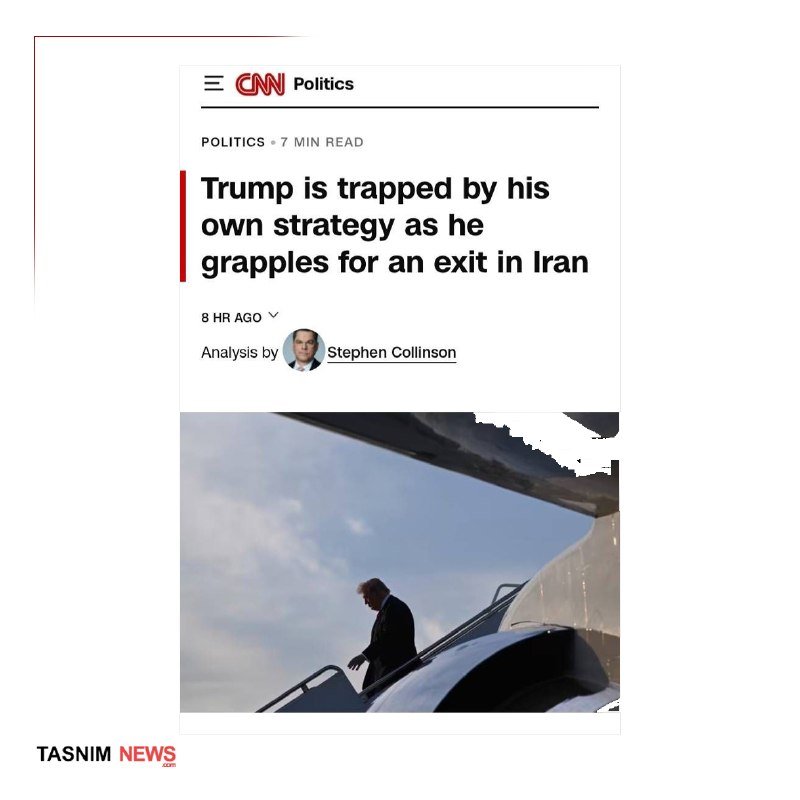
The pattern is clear by now. On 15 March 2026, the White House announced Iran had 48 hours before consequences. On 28 March, the timeline shifted to 72 hours. By 4 April, it was "until 8 PM." Each time, the deadline passed. Each time, the escalation never materialised. The language was always absolute — hell raining down, unimaginable consequences — and each time, the silence that followed was treated as something other than a broken promise.
Then, on 6 May, the framing changed entirely. Trump told reporters Iran had agreed not to pursue a nuclear weapon. The war, he said, may "end soon." It has, he added, "a pretty good chance."
This is not diplomacy. This is a cycle of manufactured urgency followed by declared victory on terms that were always available. The question is what it tells us about the gap between how this White House talks and what it actually does — and what that gap costs.
What the Deadlines Were Supposed to Achieve
The series of ultimatums was presented as coercive pressure: force Tehran into concessions through the credible threat of military action. That is the logic. Cut off the pathway, make the cost explicit, and wait. But coercion requires follow-through when the deadline passes. When it does not, the threat loses its coercive value entirely — and the adversary learns exactly how much time they have before the rhetoric returns to normal.
Iran did not comply with any of the stated deadlines. It also did not face the threatened consequences. What Tehran appears to have extracted from this episode is information: the exact point at which the United States will talk itself down from its own ultimatums. That is not a small intelligence gain. A great power that habitually escalates verbally and de-escalates operationally is a great power that can be waited out.
The Deal That Was Always On the Table
The substance of what Trump described on 6 May — Iran committing not to develop a nuclear weapon — is not new. It has been the stated goal of US and allied policy for years. The Joint Comprehensive Plan of Action, which the United States withdrew from in 2018, was built on exactly this premise: verified limits on Iran's nuclear programme in exchange for sanctions relief. What changed in the intervening years was not Iran's position — it was the US posture. The JCPOA's restrictions were largely intact when Washington exited; what followed was a maximalist pressure campaign that produced neither the promised better deal nor any meaningful change in Tehran's behaviour.
If Iran has now agreed to a no-weapons commitment, it is not because of the deadlines. It is because diplomatic tracks do not close simply because one side issues ultimatums. The channels that enable deals exist continuously; the deadlines do not create them, they merely interrupt them. The question is whether this outcome gets framed as the product of coercive threats, which rewards the pattern of ultimatum-making, or as the product of sustained diplomatic engagement, which is the only reason it was ever achievable.
Why the Pattern Itself Is the Problem
The cost of serial ultimatum-making is not just rhetorical — it is structural. Every time a stated deadline passes without consequences, it normalises a process where threats function as domestic political theatre rather than foreign policy instruments. The audience for these deadlines is partly Tehran, but it is also Washington, cable news, and the political base that needs to see strength demonstrated in real time rather than as a long-term strategic commitment.
When the deadline passes and the story quietly closes, there are two options: admit the threat was hollow, or claim success anyway. The latter is the easier political move, which is why it is the one that gets made. The result is an environment where threats become costless — and therefore meaningless. Adversaries learn to wait, domestic audiences receive a story about strength, and the underlying problem remains unaddressed.
This matters beyond Iran. A foreign policy apparatus that uses deadline rhetoric as a pressure-release valve — the kind that lets a president sound firm without committing to consequences — is one that erodes its own credibility systematically. When the next crisis arrives, and the next set of deadlines is issued, the response from foreign capitals will be calibrated accordingly.
What This Actually Tells Us
The Iran episode — from March deadline to May deal-framing — is a case study in coercive diplomacy without follow-through. It produced a deal that was probably achievable without the escalation. It also taught Iran something about how far the US will go in practice versus in statement. And it reinforced a pattern in which domestic political pressure creates the appearance of action while diplomatic substance gets compressed into whatever narrative survives the news cycle.
The war may end soon. That would be welcome — for Iranian civilians, for regional stability, for the American service members who would otherwise be drawn into another Middle Eastern conflict. But the path to ending it runs through the channels that have existed all along, not through the deadlines that pass and the language that resets. The sooner the framing catches up with that reality, the better.
The deadline that never came tells us something. Not about Iran. About the gap between power as it is wielded and power as it is described — and about who pays the price when those two things diverge.
Wire provenance
This editorial synthesis draws on the following public wire/social posts:
- https://t.me/sprinterpress
- https://t.me/unusual_whales
- https://t.me/unusual_whales