The Deal That May or May Not Be: Trump, Iran, and the Diplomacy of Ambiguity
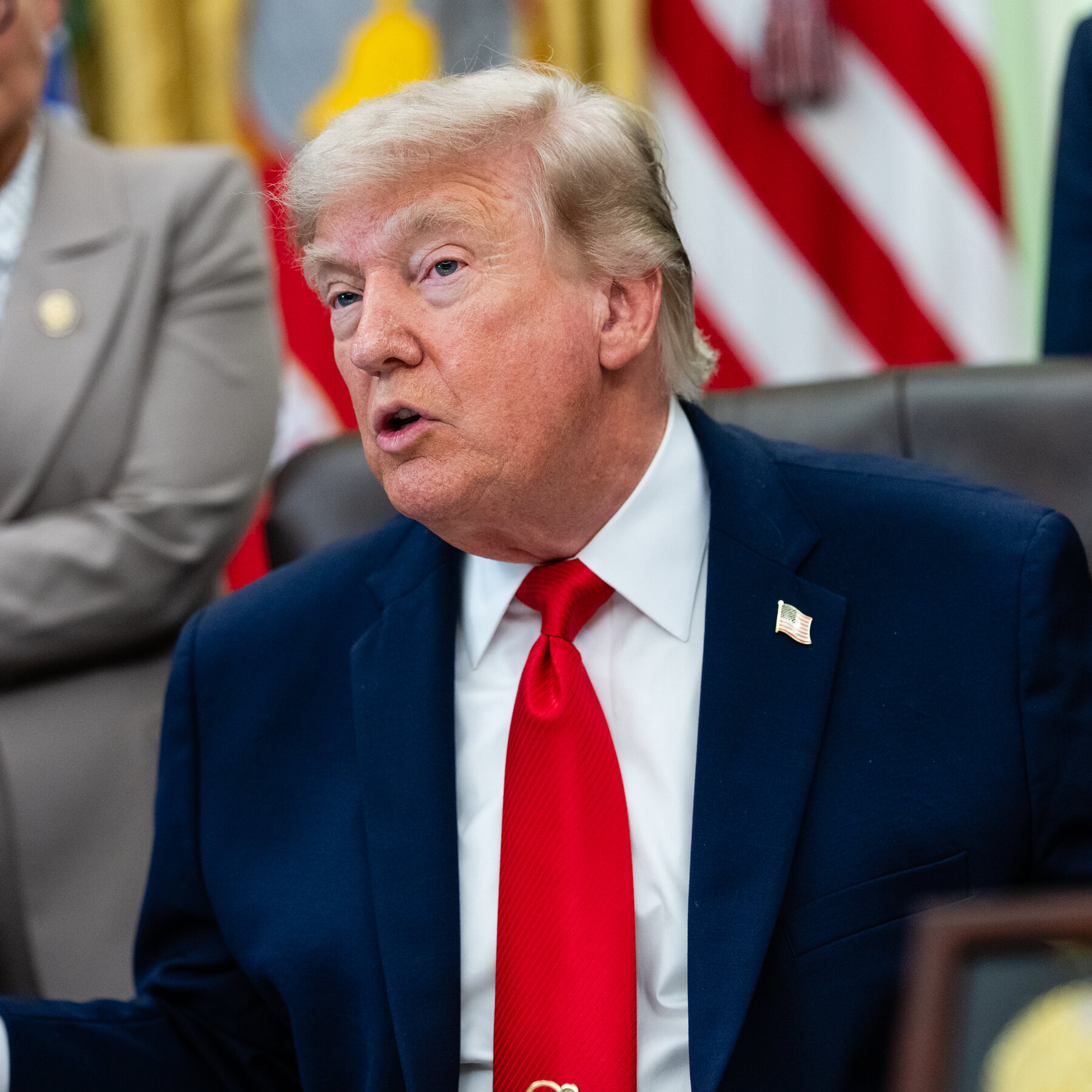
For a week that began with the word "bombing" and ended with talk of a peace deal, the Iran file has generated more heat than light. On 6 May 2026, President Donald Trump told assembled reporters at the White House that talks with Iran had been "very good" — and that the conflict had a "very good chance" of ending soon. Twenty-four hours later, CGTN was quoting him using the same phrase. The Reuters wire carried the same framing. Markets moved. Polymarket ticked upward on Iran-deal sentiment. Yet across the same 48-hour window, no Iranian official had publicly confirmed a single substantive concession, and those tracking the negotiations from outside the administration were left parsing three separate and sometimes contradictory Trump statements for signal.
The pattern is familiar by now. The administration alternates between maximum-pressure language and deal-maker optimism without always clarifying which mode governs policy. What is new — or at least newly visible — is the speed at which the oscillation is now occurring, and the degree to which it is being amplified by the platform mechanisms that carry presidential utterances directly into global financial and diplomatic calculations.
What Trump Said, and When
The sequence matters, because the chronology reveals ambiguity that the headlines elide.
On 6 May 2026, at 15:17 UTC, Trump delivered what Unusual Whales captured as a categorical statement: if Iran did not agree to a deal, "the bombing starts." That framing — direct, time-bound, and carrying an implicit ultimatum — is the language of coercive diplomacy. It was reported across the financial wires as a risk factor for oil markets.
Less than three hours later, at 18:33 UTC the same day, the tone had shifted. According to the same monitoring feed, Trump told reporters the Iran war — he used the word "war" — may "end soon" and had a "pretty good chance" of doing so. That represents a substantive pivot in register, from ultimatum to conditional optimism.
By 19:12 UTC, the declaration was more specific: Trump stated Iran had "agreed to not have a nuclear weapon." That is a precision claim. It asserts a concrete concession from the Iranian side. No independent corroboration of that specific commitment appears in any of the wire reports reviewed for this piece.
Then, at 14:37 UTC — an hour before the bombing ultimatum — Trump said it was "too soon to prepare for Iran peace deal signing." That phrasing suggests no ceremony is imminent, despite the upbeat deal language.
Read together, these four statements cover a twelve-hour window on 6 May and contain at least three incompatible framings: a looming military strike absent a deal, a war approaching its end, and an agreed concession on nuclear capability — alongside an admission that no signing ceremony is being prepared.
The Silence From Tehran
The most consequential gap in the public record is the absence of any verified Iranian government response to Trump's claimed agreement. The South China Morning Post's 7 May piece, filed from Tokyo, covers the political fallout — specifically the fraying of pro-Trump sentiment in Japan, a US treaty ally whose government has been watching the Iran escalation with acute anxiety given its dependence on Gulf oil transit. But Tokyo's uncertainty is a secondary indicator of the primary problem: nobody on the Iranian side has spoken on the record.
Iranian state media — including PressTV, Tasnim, and IRNA — are not represented in the thread context as having issued confirmations or denials of the specific commitments Trump described. That silence is not neutral. In diplomatic disputes of this magnitude, a claimed concession by the adversary normally produces some form of official response, if only to manage domestic audience expectations. The fact that none appears in the wire record as of the morning of 7 May 2026 is a significant epistemic gap.
This matters because the market and political reaction has been treated as though the deal is real. Polymarket's odds shifted on the basis of Trump's statements. That movement is driven by the assumption that the president is accurately characterizing Iranian concessions. If those concessions are, at this point, unverified or mischaracterized, the financial and diplomatic scaffolding built on them is exposed.
The Japan Angle — A Read on Western Allied Anxiety
The SCMP piece from 7 May offers a useful external perspective on what the ambiguity costs. Japan has been a consistent US treaty partner in the Indo-Pacific and a country with direct energy-security exposure to any escalation in the Persian Gulf. Tokyo's public support for the US alliance has historically been unconditional. What the SCMP reports is that this unconditionality is now fracturing — among the "last diehard fans" of Trump's style of diplomacy, to use the outlet's phrasing.
This is not a fringe political phenomenon. Japan runs a calibrated hedging strategy in its alliance with the United States, balancing deterrence commitments against economic dependency on Chinese trade and energy supply lines that transit contested waters. Any US administration that generates sustained volatility in Gulf energy markets — through bombing threats one day and peace-deal optimism the next — introduces a variable Tokyo cannot plan around. The "diehard" qualifier in the SCMP headline suggests the erosion is reaching even the most loyal constituencies, not merely the critics.
That erosion is a structural signal. Western allied support for a given administration's Iran policy is not unlimited; it is contingent on coherence and predictability. A policy that oscillates between military threat and diplomatic breakthrough within the same twelve-hour window is, by any operational measure, incoherent. Tokyo is reading that incoherence in real time and repositioning accordingly.
The Diplomatic Architecture — What a Real Deal Would Require
To understand what is missing from Trump's framing, it helps to outline what a verified nuclear agreement with Iran would actually entail — and what the current statements omit.
The 2015 Joint Comprehensive Plan of Action, which the Trump administration abandoned in 2018, involved International Atomic Energy Agency inspections, enrichment limits, a sanctions-relief mechanism, and a dispute-resolution architecture spanning multiple jurisdictions. It was verifiable not because both sides trusted each other, but because it was structured to be verifiable — with access provisions, reporting timelines, and a defined process for addressing violations.
The current administration's stated goal — that Iran has "agreed to not have a nuclear weapon" — is not a technical description of any existing verification framework. A commitment by a state not to develop nuclear weapons is only meaningful insofar as it is embedded in a monitoring and enforcement architecture. Without specifying the inspection regime, the sanctions timeline, the sequencing of concessions, or the role of any third-party arbiter, a statement of intent is not a deal.
The absence of these details in the public record — combined with the White House's own characterization that it is "too soon to prepare for signing" — suggests that what Trump described as a concluded agreement may be, at best, an early-stage understanding with no agreed-upon verification mechanism. At worst, it is an optimistic read of an ongoing conversation that has been mischaracterized for domestic political effect.
The distinction matters enormously for regional stakeholders. Countries like Saudi Arabia, the UAE, and Qatar have their own calculations about a US-Iran normalization. Each has invested in deterrence relationships with Washington partly on the assumption that the US would not normalize with Tehran without extracting concessions on the regional dimension — ballistic missiles, proxy networks, influence in Iraq, Syria, and Yemen. A deal framed solely around the nuclear question, without addressing the regional architecture, would be read very differently in Riyadh than in Tokyo.
Stakes and Forward View
The immediate stake is not Iran. It is credibility — both diplomatic and market-level. The Polymarket reaction to Trump's statements indicates that financial actors are pricing in the deal, moving on the assumption that the president's characterizations are accurate. If those characterizations are later walked back, or if the "bombing starts" language resurfaces, the financial adjustment will be sharp.
The diplomatic stake is longer-term. The United States enters any subsequent negotiation — whether on Iran or on other الملفات (dossiers, in Arabic) — carrying the memory of this episode. Partners and adversaries alike will discount presidential optimism against the possibility of presidential reversal. That is not a neutral state. It means future agreements require a higher burden of verification before markets and partners treat them as real.
For Japan and other treaty allies, the episode adds weight to an ongoing recalculation about strategic autonomy. The energy-shock scenario — a Gulf conflict disrupting the oil flows on which Japanese industry depends — is no longer a remote contingency. It is an event that has happened, or nearly happened, twice in three years. Each occurrence strengthens the logic of hedging that Tokyo has been pursuing incrementally since at least 2022.
For Iran, the stakes are simpler and more existential. Any agreement that constrains nuclear capability without delivering verifiable sanctions relief collapses on itself within months, as the 2018 experience demonstrated. Tehran will not accept constraints on its program in exchange for promises that a future administration can reverse. The verification architecture is not a technical nicety — it is the entire substance of the deal from Tehran's perspective.
What Monexus finds, reviewing the wire record as it stands on 7 May 2026, is that the gap between the administration's public characterizations and the available corroborating evidence is wide. That gap does not prove a deal does not exist. It proves only that we cannot yet verify that it does. In the interim, the ambiguity serves the White House's domestic political needs — it generates optimistic headlines without creating binding obligations. Whether it serves any broader strategic purpose remains, for now, unknowable.
Desk note: Monexus framed this piece around verifiable public statements rather than administration spin, using the conflicting Trump timeline as the structural spine. The SCMP Japan angle provided a useful external corroboration of allied anxiety that Western wires underweighted.
Wire provenance
This editorial synthesis draws on the following public wire/social posts:
- https://x.com/cgtnofficial/status/1930472807123251200
- https://x.com/unusual_whales/status/1930351872349917386
- https://x.com/unusual_whales/status/1930345582847721671
- https://x.com/unusual_whales/status/1930335197495533776
- https://x.com/unusual_whales/status/1930332538058698903