Trump-Lula Meeting Concludes Without Press Conference as Tariff Talks Advance
President Trump and Brazilian President Lula da Silva met at the White House on May 7, 2026, describing discussions on trade and tariffs as productive while a scheduled joint press conference was cancelled without explanation.
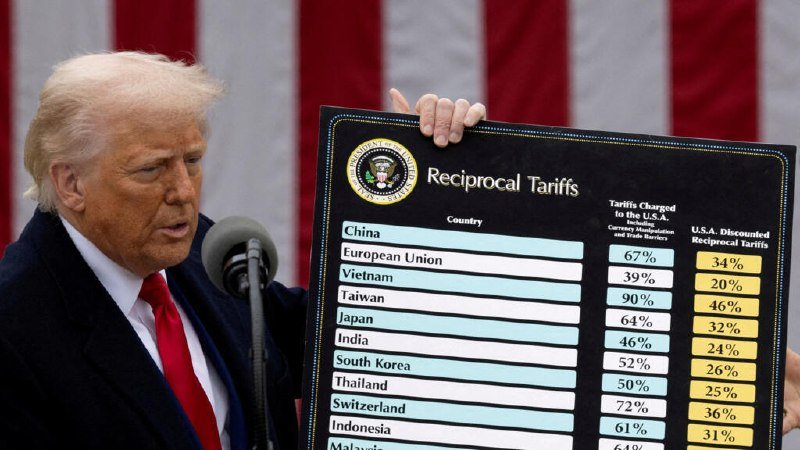
President Donald Trump and Brazilian President Luiz Inácio Lula da Silva met at the White House on Wednesday, May 7, 2026, concluding bilateral discussions that Trump described on Truth Social as having gone "very well." The two leaders addressed trade and tariffs — the defining friction point in the relationship — though the absence of a joint public appearance left the substance of their conversations largely undisclosed.
A scheduled joint press conference set for 11:15 Eastern Time was cancelled before the meeting took place, according to multiple OSINT monitors tracking White House pool operations. Neither the Brazilian nor the American side provided a public explanation for the cancellation, and no substitute media availability had been announced as of early Wednesday afternoon UTC.
The Tariff Fault Line
Trump's description of Lula as "the very dynamic President of Brazil" — a formulation unusual in its degree of personal warmth — followed weeks of escalating tariff pressure from Washington. The Trump administration has pursued an aggressive trade posture since the beginning of the second term, imposing broad import levies that have affected trading partners across the Americas, including Brazil.
Brazil, which exports soy, beef, iron ore, and aircraft to the United States, has been navigating its own complex position. Lula's government has sought to avoid direct confrontation with Washington while simultaneously signaling that Brazil will not accept terms that compromise its industrial development strategy. The cancellation of the press conference — unusual for a meeting of this seniority — may reflect the difficulty of finding sufficient common ground to present a unified public front.
It remains unclear whether the two sides reached any specific agreements on tariff rates, agricultural market access, or the treatment of Brazilian industrial goods entering the American market. Neither the White House nor the Brazilian presidency had released a joint statement or formal readout as of publication.
What the Optics Tell Us
The decision to hold the bilateral meeting while cancelling the joint press conference is, in diplomatic terms, a signal in itself. Administrations typically reserve press conference cancellations for situations where one or both sides fear the optics of a public appearance — either because the substantive outcome is thin, because domestic political constraints make flexible language untenable, or because the chemistry between principals is insufficient to survive unscripted questioning.
The framing from the Trump side, posted to Truth Social within minutes of the meeting's conclusion, was deliberately positive. "The meeting went very well," Trump wrote. "We discussed many topics, including Trade and, specifically, Tariffs." That precision — naming tariffs specifically — suggests the administration wanted to signal progress without committing to details that might invite scrutiny of what, exactly, was agreed.
Brazilian state media and the Lula administration's own communications apparatus had not issued a formal readout matching the scope of Trump's post by the time this article was published. The asymmetry in public communication — an immediate American statement versus a delayed or absent Brazilian counterpoint — is not unusual in bilateral diplomacy but leaves significant questions about what the two governments actually settled.
Structural Position of Both Sides
The United States under the second Trump administration has pursued tariff expansion as a primary instrument of trade policy, treating import levies not merely as revenue or protectionist measures but as negotiating leverage. Brazil, for its part, occupies a position of growing importance in the global south's efforts to diversify trade relationships away from dollar-denominated transactions with Western institutions. Lula has been an explicit advocate for reducing reliance on the American financial system, and Brazil's central bank has been among the most active in exploring alternative settlement mechanisms for bilateral trade.
This structural dynamic — American leverage through tariffs, Brazilian leverage through commodity importance and growing diplomatic partnerships with non-Western economies — creates a negotiation where neither side can easily impose its preferred outcome. Brazil is too large and too strategically positioned in agricultural and mineral supply chains to be bullied into capitulation. The United States remains Brazil's largest single export market, making the relationship too consequential for either side to allow a rupture.
The meeting's outcome, whatever its specifics, sits within this structural tension. Both governments have incentives to project success. Both have domestic constituencies that would punish visible compromise. The press conference cancellation suggests that the gap between those two imperatives — the desire for positive optics and the reality of unresolved differences — was too wide to bridge in a public forum.
Stakes and What Comes Next
The stakes of this meeting extend beyond bilateral trade. Brazil and the United States are the two largest economies in the Western Hemisphere, and the terms of their trade relationship set parameters for the entire region. A pattern of escalating American tariffs met by Brazilian counter-measures would ripple through supply chains in Argentina, Mexico, and the Central American states that benchmark their own trade policies against the US-Brazil dynamic.
For the Trump administration, a productive meeting with Lula — even without a joint communique — provides evidence that the tariff-as-leverage strategy can deliver diplomatic goodwill alongside commercial concessions. For Lula, the meeting offers an opportunity to signal that Brazil will engage directly with Washington without abandoning its broader strategic orientation toward a more multipolar global order.
What remains uncertain is whether the meeting produced any concrete commitments — on tariff levels, on agricultural access, on technology trade, or on the treatment of Brazilian exports in sectors that the American manufacturing lobby has identified as priorities. The cancelled press conference makes that determination harder to establish from public sources. Monexus will continue monitoring for official readouts from both governments.
This article was updated to reflect the confirmed cancellation of the joint press conference, which had been listed as "scheduled" in earlier wire reports.
Wire provenance
This editorial synthesis draws on the following public wire/social posts:
- https://t.me/ClashReport/48291
- https://t.me/GeoPWatch/18432
- https://t.me/BellumActaNews/12847
- https://t.me/rnintel/22981
- https://t.me/OSINTdefender/8847