The 9 May Dilemma: How Ukraine Is Using Moscow's Victory Day as a Diplomatic Test
Ukraine has issued a direct appeal to foreign governments: stay away from Moscow's 9 May Victory Day celebrations. The move is more than symbolic — it represents a calculated attempt to isolate Russia diplomatically at an event the Kremlin has historically used to project legitimacy and consolidate its version of the war's narrative.
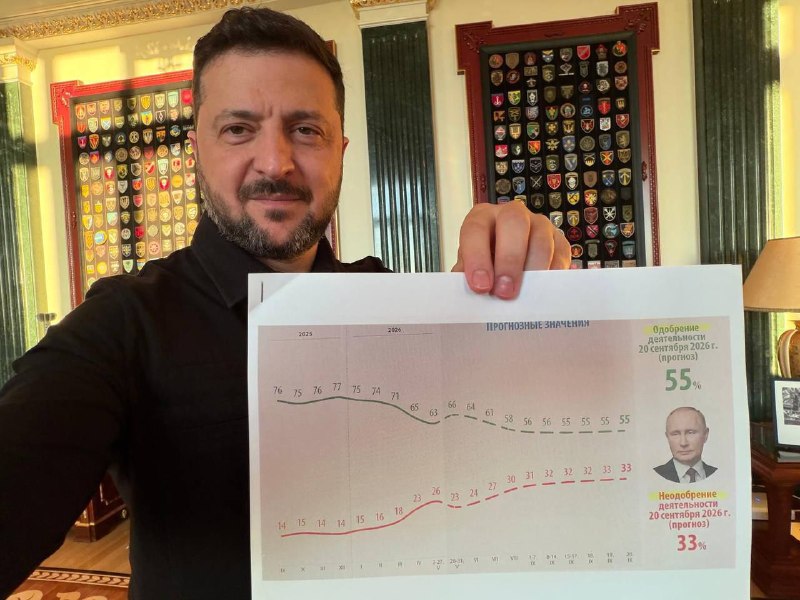
The Ukrainian government issued an unambiguous appeal on 7 May 2026: foreign delegations should not attend Moscow's Victory Day commemorations on 9 May. The statement, relayed through multiple official channels including WarTranslatedUkraine and corroborated by reporting from Epoch Times, came directly from President Volodymyr Zelenskyy's office. It marked a deliberate escalation in Kyiv's effort to shrink the diplomatic space available to the Kremlin at an event it has long used to signal international support.
The appeal is notable for its directness. Kyiv has consistently framed the war as a contest not just over territory but over narrative — over whose version of events commands global credibility. Victory Day in Moscow has traditionally served as a stage for that contest. A reduced foreign presence would undermine a core Kremlin objective: presenting the invasion as internationally intelligible, even justified, by manufacturing a sense of global acquiescence.
The Strategic Weight of 9 May
Victory Day in Russia carries a gravity that goes beyond ceremonial tradition. The 9 May commemoration is one of the most politically loaded dates on the Kremlin's calendar. It anchors official claims about World War II sacrifice, national resilience, and — since February 2022 — a direct line to the framing of the current invasion. Russian state media has consistently described the full-scale assault on Ukraine as a continuation of the struggle against fascism, borrowing legitimacy from the Soviet victory over Nazi Germany.
That conflation has been a persistent irritant in Ukraine's communications strategy. Kyiv has worked to sever the link, arguing that modern Russia bears no meaningful inheritance from the Soviet Union's anti-fascist struggle and that the invasion represents a reversal of the values the 1945 victory embodied. By urging foreign governments to stay away from this year's festivities, Ukraine is attempting to do more than embarrass Moscow. It is trying to demonstrate, through attendance records, that the Kremlin's framing of the war lacks international buy-in.
The appeal arrives at a moment when several governments have been navigating genuine tensions between their declared support for Ukraine's sovereignty and their economic or energy relationships with Russia. Central Asian states, certain Middle Eastern governments, and a small number of EU members have each faced pressure over their continued diplomatic engagement with Moscow. The 9 May event functions as a pressure valve — a visible test of where those loyalties ultimately settle.
The Hungary Variable
Not every signal from the diplomatic periphery has pointed toward Moscow. In a statement carried by Epoch Times on the same day as Ukraine's formal appeal, President Zelenskyy thanked Hungary for what he described as a "constructive approach and civilized step." The phrasing was deliberately warm, a public acknowledgment that Budapest had apparently refrained from attending or lending official status to Moscow's commemoration.
The gratitude toward Hungary carries significance precisely because Budapest has been one of the more difficult presences within the EU's unified response to Russian aggression. Viktor Orbán's government has repeatedly blocked or diluted aid packages, delayed NATO accession for Sweden, and maintained closer energy and diplomatic ties to Moscow than any other EU member state. That record made any movement toward Kyiv's preferred position — however modest — worth noting publicly. Zelenskyy's statement functioned as both acknowledgment and incentive: a signal that small gestures of alignment will be rewarded with visible recognition.
The dynamic illustrates the layered nature of Ukraine's diplomatic campaign. Kyiv is not simply demanding total isolation; it is differentiating between actors, applying pressure unevenly, and offering targeted incentives to states that move, even partially, in its direction. The result is a patchwork of positions across Europe and beyond — some delegations firmly absent, others present in muted form, and a handful of governments still calculating their exposure.
The Counter-Narrative Problem
Ukraine's campaign faces a structural constraint that no amount of diplomatic outreach can fully resolve: the information environment surrounding 9 May is not equally accessible to all audiences. Russian state media controls the framing for domestic consumption regardless of foreign attendance. Moscow can proceed with a full military parade, stage its own commemorative narrative, and present it to a domestic audience already conditioned to receive it. The absence of foreign heads of state in Moscow does not automatically translate into a legible international rebuke — particularly in regions where Russian information operations maintain significant reach.
There is also a harder strategic calculation that several governments have made, even privately: direct engagement with Moscow has sometimes proved more effective at influencing Russian behaviour than total ostracism. This argument, favoured by some diplomatic establishments, holds that sustained low-level contact preserves channels for negotiation and reduces the likelihood of miscalculation. Whether that logic holds in the current environment is a matter of genuine dispute among practitioners. The Ukrainian position — that engagement without accountability normalises aggression — remains the dominant frame in Western policy circles, but it is not uncontested.
The counter-narrative challenge for Kyiv is therefore not simply about attendance figures. It is about translating those figures into a coherent, internationally visible message that cuts through noise generated by Russian state media and reaches audiences beyond the Western information ecosystem.
What Comes After 9 May
The immediate aftermath of the 9 May commemoration will offer a partial verdict on Ukraine's diplomatic strategy. A significantly diminished foreign presence — particularly among heads of state from major economies — would constitute a measurable success for Kyiv's campaign. A well-attended event, by contrast, would suggest that the pressure Kyiv has applied was insufficient to override competing interests.
The longer-term stakes extend beyond the 9 May date itself. Ukraine's diplomatic toolkit includes sanctions advocacy, International Criminal Court engagement, grain corridor negotiations, and the slow construction of legal and institutional mechanisms to hold Russian officials accountable for actions in Ukraine. Each of these efforts depends on maintaining a coalition of supportive states — a coalition that is tested every time an event like Victory Day in Moscow creates a visible moment of choice. The appeal issued on 7 May is, in that sense, an investment in coalition maintenance: a reminder to friendly governments that alignment with Kyiv has material and reputational consequences, and that deviation carries a cost.
The sources reviewed for this article do not yet indicate which heads of state or governments have confirmed their attendance or absence from Moscow's 9 May events. That data will become available only after 9 May 2026. What is clear is that the Ukrainian government intends to make the fullest possible use of whatever that record shows — as evidence, as pressure, and as a measure of where the international consensus on Russia's invasion actually stands.
This article was updated with reference to statements from President Zelenskyy's office issued via WarTranslatedUkraine and Epoch Times on 7 May 2026.
Wire provenance
This editorial synthesis draws on the following public wire/social posts:
- https://t.me/wartranslated
- https://t.me/epochtimes
- https://twitter.com/wartranslated/status/2052442854174159317