UN Security Council Debates US-Bahrain Resolution on Strait of Hormuz as Iran Cries Foul
The United Nations Security Council convened on 7 May 2026 to consider a US-Bahrain draft resolution on freedom of navigation through the Strait of Hormuz, drawing immediate condemnation from Tehran as a one-sided and provocative exercise.
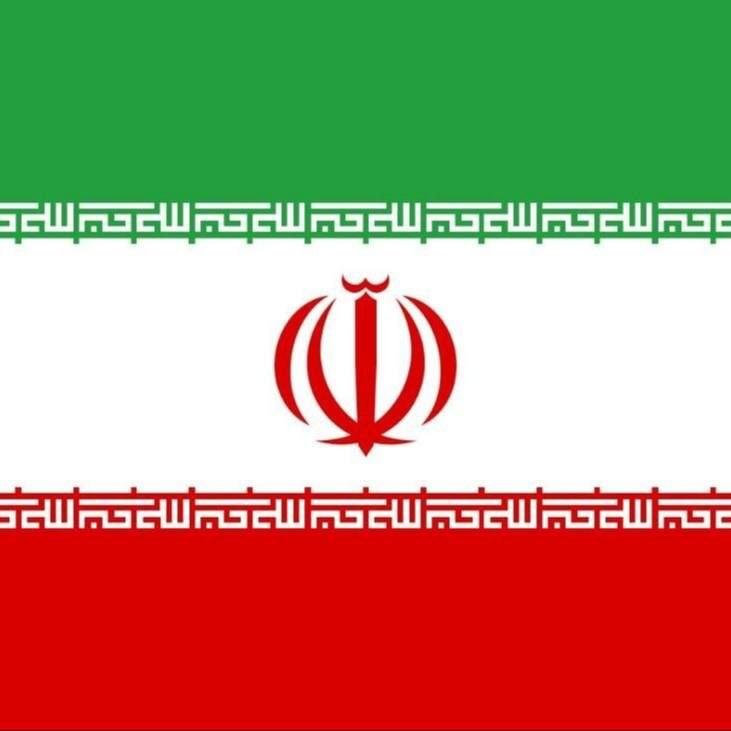
The United Nations Security Council convened on 7 May 2026 to consider a draft resolution proposed by the United States and Bahrain addressing freedom of navigation through the Strait of Hormuz, the world's most critical chokepoint for oil shipments. Within hours of the session opening, Iran's Foreign Minister Abbas Araghchi dispatched letters to both the UN Secretary-General and the Security Council denouncing the initiative as a one-sided and provocative maneuver designed to prejudice ongoing disputes over the waterway's legal status.
The resolution, the precise text of which has not yet been released in full by the Security Council, represents the latest escalation in a protracted diplomatic standoff over the narrow strait through which roughly one-fifth of global oil trade passes. Bahrain, which hosts the US Fifth Fleet, has aligned closely with Washington on regional security architecture, while Iran controls the northern shore and has long maintained that its naval presence in the Persian Gulf constitutes a legitimate defensive posture rather than a threat to commercial shipping.
The Resolution and Its Proponents
According to reporting by Iranian state media outlets, the US-Bahrain draft frames freedom of navigation through Hormuz as a universal principle under international law and calls on all parties to refrain from actions that could imperil commercial vessels. The resolution does not explicitly name Iran, but its sponsors have made no secret of the target: repeated incidents involving Iranian naval vessels near merchant ships, as well as the periodic seizure of tankers suspected of sanctions violations, have animated Gulf Arab security planning for more than a decade.
Bahrain's ambassador to the United Nations, speaking during the open session, argued that the resolution simply codifies existing obligations under the United Nations Convention on the Law of the Sea, to which most nations are parties regardless of formal ratification status. The US delegation framed the initiative as a bulwark against destabilizing behaviour, though no specific recent incident was cited as the trigger for tabling the draft at this moment.
Iran's Countermove
Tehran's response was swift and categorical. Araghchi's letter to Secretary-General António Guterres, circulated to all Security Council members, characterized the US-Bahrain text as prejudging legal questions that remain genuinely contested and as providing diplomatic cover for what Iran describes as ongoing American military buildup in the Gulf. According to the Iranian Foreign Ministry's own readout, Araghchi wrote that the resolution "undermines the spirit of dialogue" and risks converting a commercial waterway into a flashpoint for great-power confrontation.
A separate communication addressed to the Security Council specifically flagged what Iran termed "anti-Iranian movements" by the United States and Bahrain, a formulation that signals Tehran views the resolution not as a neutral legal instrument but as part of a broader pressure campaign. Iranian state media, citing the Foreign Ministry, reported that Araghchi also criticized what he described as the one-sided nature of the draft—singling out the absence of any reciprocal language urging restraint by naval forces operating from outside the region.
The gap in the Iranian argument, as Gulf analysts note, is that Tehran has itself been the primary actor cited in international shipping disruption through the strait. Iranian officials counter that the disruptions resulted from unilateral US sanctions regimes that criminalize normal commercial activity and that the burden of proof for "destabilizing behaviour" should rest with those who imposed the sanctions in the first place.
The Hormuz Question in Geopolitical Context
The Strait of Hormuz sits at the intersection of several overlapping tensions. Iran, under successive administrations, has maintained that the strait is an international waterway but that its security oversight role is indispensable—positioning itself as guarantor rather than threat. Gulf Arab states, Saudi Arabia and the UAE in particular, have invested heavily in alternative export routes that reduce their reliance on the strait, but none of those bypasses—most notably the East-West Crude Oil Pipeline running through Saudi Arabia to the Red Sea—can fully substitute for Hormuz transit volumes.
The timing of the US-Bahrain resolution is notable. Negotiations over Iran's nuclear programme have produced no binding agreement in recent rounds, and the Trump administration reimposed sweeping sanctions in 2025 after a brief partial relief period. That punitive environment has left Iran with limited economic levers and, by its own assessment, fewer incentives to exercise restraint in the Gulf. The resolution, from Tehran's perspective, offers Washington a tool to internationalize pressure without the costs of direct confrontation.
From the American and Bahraini standpoint, codifying freedom-of-navigation norms through a Security Council resolution carries symbolic and procedural weight: it establishes a documented international standard, creates a framework for future diplomatic escalation if incidents continue, and signals to global insurance and shipping markets that the international community—not just Washington—views the strait's openness as non-negotiable.
Stakes and What Comes Next
A Security Council resolution is legally binding on all member states, but enforcement depends on political will and the cooperation of the permanent members. The United States, France, and the United Kingdom would likely vote in favour; China's position is less predictable—it has significant economic interests in Gulf stability and has historically resisted resolutions that target Iran in ways it views as disproportionate. Russia, which has maintained a cautious but consistent partnership with Tehran, is expected to veto or dilute any language perceived as explicitly anti-Iranian.
If the resolution passes in its current form, Iran faces a diplomatic bind: complying validates a text it considers hostile and one-sided, while defying it provides ammunition for further international pressure. If the resolution fails to pass, Washington loses a procedural tool but retains the operational capacity to interdict vessels it deems sanctions violators—a situation Tehran would prefer, though one that keeps the underlying tensions unresolved.
The more durable question is whether Hormuz's status as a contested space reflects a genuine legal dispute or a political contest dressed in legal language. The former admits of compromise; the latter does not. What the Security Council debate on 7 May laid bare is that the major parties involved have yet to agree on which category they are operating in—and that absent that agreement, any resolution text is likely to become another artifact of mutual suspicion rather than a framework for stability.
This publication drew on reporting by Iranian state media outlets including Tasnim News, Fars News, and Al-Alam. Where those accounts have been cited as primary sources for Iranian government positions, they are identified as such. Western-wire reporting on the Security Council session had not been published at the time of this article's filing.
Wire provenance
This editorial synthesis draws on the following public wire/social posts:
- https://t.me/JahanTasnim/124321
- https://t.me/tasnimnews_en/987654
- https://t.me/tasnimnews_en/987655
- https://t.me/alalamfa/456789
- https://t.me/alalamfa/456790
- https://t.me/FarsNewsInt/789012