US Hosts First Direct Israel-Lebanon Talks Under Trump Administration as Ceasefire Frays
The United States will host the first direct bilateral talks between Israel and Lebanon in over two years, with delegations from both countries scheduled to convene at the State Department in Washington on 14–15 May 2026. A State Department official confirmed the two-day round of talks to Al Jazeera on 7 May, describing the meetings as a structured diplomatic engagement rather than informal consultations. The session marks the first formal bilateral negotiating forum established under the Trump administration's mediation effort, and the first time both governments have committed to sitting across a table in the American capital since cross-border hostilities escalated in late 2024.
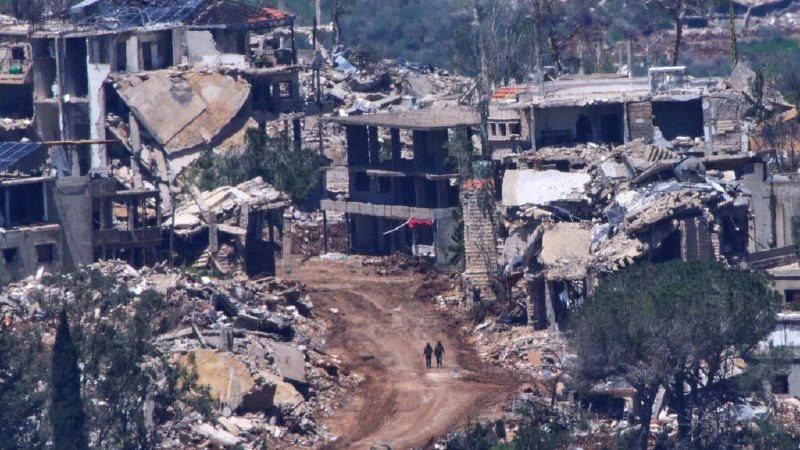
The talks arrive against a deteriorating security picture. Israel's northern border communities remain largely evacuated; Hezbollah has publicly maintained its fighters' presence south of the Litani River despite ceasefire terms requiring their withdrawal. Israeli Defense Forces have conducted periodic strikes inside Lebanese territory since November, justifying them as enforcement of the accord. UNIFIL peacekeepers have repeatedly called for restraint from both sides, with little effect. The ceasefire that was meant to contain the conflict has frayed into a low-grade standoff in which each incident risks triggering a fuller reprise of the 2024 exchanges that brought the region to the edge of wider war.
The State Department announcement is significant precisely because it elevates the engagement from back-channel mediation to formal bilateral negotiation. American officials have been circulating proposals between Jerusalem and Beirut for months, working through intermediaries including French diplomats and UN intermediaries. Hosting both delegations simultaneously in Washington signals a decision by the Trump administration to consolidate its role as mediator and to push for written commitments rather than informal understandings that either side can later disavow.
Israel has been explicit about what it wants from any diplomatic process. The stated objective in repeated public briefings is a formal framework — verified by international monitors and backed by credible enforcement mechanisms — that removes Hezbollah's military infrastructure from southern Lebanon permanently. Prime Minister Benjamin Netanyahu's government has insisted that the November 2024 ceasefire terms were never fully implemented, and that diplomatic talks are useful only insofar as they produce a durable outcome that allows Israel's northern residents to return home. The Lebanese government, for its part, faces structural obstacles that complicate its negotiating position.
Lebanon has been without a sitting president since Michel Aoun's term ended in October 2022, when parliament repeatedly failed to elect a successor. The resulting power vacuum has left the country governed by a caretaker administration with limited constitutional authority to enter binding international agreements. Hezbollah's political wing retains significant influence over state decision-making, meaning any Lebanese delegation's ability to make enforceable commitments is genuinely uncertain. This was a persistent problem during earlier indirect negotiations and it has not resolved. The talks in Washington will have to work around a Lebanese counterpart whose authority to finalize an accord remains contested.
Beyond the bilateral mechanics, the talks sit inside a wider regional calculation. American strategy in the Levant under the Trump administration has combined aggressive pressure on Iran — including targeted sanctions on the Islamic Revolutionary Guard Corps' financial networks — with a renewed push for normalization agreements between Israel and Gulf states. Saudi Arabia's participation in any broader diplomatic architecture remains conditional on Israeli concessions regarding Palestinian statehood, which the current Israeli government has explicitly ruled out. Lebanon's status as a contested arena between Iran-aligned Hezbollah and a pro-Western if dysfunctional state apparatus makes it a proxy for these larger questions. The outcome of the Washington talks will be read in Tehran, in Riyadh, and in the Gulf capitals as a signal of whether American mediation can produce results where UN-backed mechanisms have stalled.
There is also a domestic political dimension on the Israeli side. Netanyahu faces pressure from far-right coalition partners who oppose any diplomatic process that does not explicitly include a full Hezbollah disarmament timeline, and from center-right members who want the northern border reopened regardless of the diplomatic path. A failed negotiating round would give the hardline wing ammunition against the government's approach. A successful one — assuming success is defined as verifiable Hezbollah repositioning — could unlock political space for other regional initiatives the administration is pursuing.
The immediate stakes are concrete: northern Israel remains uninhabited, Lebanese state institutions remain paralyzed, and the ceasefire exists on paper more than in practice. The Washington talks represent the most serious effort yet under this administration to translate a fragile agreement into something enforceable. Whether the two governments can produce a document both sides consider worth signing — and whether the Lebanese delegation can carry whatever it commits to in Washington through a fractured domestic political landscape — will determine whether the diplomatic opening produces a durable arrangement or simply delays the next round of hostilities.
This publication's coverage leads with the Washington-anchored announcement as confirmed to Al Jazeera by the State Department official, and foregrounds the caretaker government's negotiating-authority question — which the wire has largely treated as a secondary detail rather than a structural obstacle.
Wire provenance
This editorial synthesis draws on the following public wire/social posts:
- https://t.me/s/Status6_Military
- https://t.me/WarMonitors
- https://t.me/GeoPWatch