US-Iran Naval Confrontation at Strait of Hormuz: What We Know and Why It Matters
On the evening of 7 May 2026, Iranian fast-attack boats swarmed US Navy destroyers transiting the Strait of Hormuz. Within hours the US fleet had withdrawn and Tehran claimed victory. The episode illuminates how a contested waterway handles the friction between two adversaries operating continuously in the same narrow sea.
The Strait of Hormuz, the world's most consequential oil transit corridor, became the site of the most significant US-Iranian naval incident in recent memory on the evening of 7 May 2026. According to open-source intelligence reporting captured in real time, Iranian fast-attack boats swarmed US Navy destroyers as they transited the narrow waterway separating Iran from Oman and the UAE. The Americans engaged with 5-inch main gun fire, the Close-In Weapon System, and small-caliber weapons. Within hours, Iranian state media reported that the US destroyers had withdrawn. The Iranian Navy subsequently announced that its missile and drone units had carried out a "powerful response" to what Tehran described as American aggression against Iranian oil tankers. By late evening UTC, Iranian state media reported that the situation on the islands and coastal cities of the Strait of Hormuz had returned to normal.
What happened inside those few hours is not yet fully corroborated from independent Western military or diplomatic sources, which had not released a detailed statement at the time of publication. The available open-source account presents two starkly different interpretations of the same incident — a distinction that reveals more about how these confrontations are framed than about any ambiguity in the underlying facts.
The Immediate Sequence
The reporting from the Iranian side, carried by PressTV on 7 May 2026 at 22:55 UTC, characterises the American presence as provocative from the outset. Tehran's account holds that US naval vessels committed "acts of aggression against Iranian oil tankers" — language that reframes the entire incident as a response to prior American action rather than an unprovoked Iranian attack. The Iranian Navy's missile and drone units were subsequently deployed in what was described as a calibrated but forceful reply.
The US version, as described by American officials speaking to open-source OSINT outlets on the same evening, presents the destroyers as operating lawfully in international waters during a routine transit. Iranian fast-attack boats approached in what US officials characterised as an aggressive swarm formation, forcing the American vessels to defend themselves with the full spectrum of their on-board weapons systems.
Neither account is yet supported by official US Central Command statement, US Navy fleet communiqués, or independent maritime tracking data. The sources available to this publication at time of writing do not include satellite AIS tracking, radar intercept data, or on-record Pentagon briefing materials. That gap matters. The Strait of Hormuz is one of the most heavily surveilled bodies of water on earth — commercial AIS transponders, regional naval radar networks, and American satellite coverage all generate data that would, in time, reconstruct the sequence of events in detail. What we have now is a contested narrative, not a verified one.
Competing Narratives and Why Both Sides Tell the Story Differently
The discrepancy between the two framings is not incidental. Both the American and Iranian accounts are shaped by domestic and geopolitical audience considerations that are structurally predictable.
From the American perspective — as reflected in the official statements that do exist in the public record — the Strait of Hormuz represents a critical global commons. Roughly one-fifth of the world's oil passes through this passage every day, along with liquefied natural gas shipments vital to Asian and European energy markets alike. US Navy presence in the strait is presented not as an act of pressure against Iran but as a commitment to the stability of global trade. The US has long maintained that freedom of navigation operations in international waters are lawful under the United Nations Convention on the Law of the Sea, to which Washington is a signatory despite not having ratified the treaty domestically. This argument gives the American narrative its structural logic: any interdiction attempt is a violation of international law, and the US response is defensive by definition.
Iran's framing — as articulated through PressTV and the Islamic Republic's institutional media apparatus — positions the same American presence as a form of economic warfare. Iranian oil tankers operating in what Tehran regards as its maritime sphere of influence become targets of American hostility. The missile and drone response is consequently not escalation but the defence of Iranian sovereignty over waters Iran considers integral to its security architecture. Tehran has long argued that the presence of foreign military forces in the Persian Gulf is itself a destabilising factor — a position that finds sympathy in parts of the Global South where American military deployments are read through the lens of post-colonial sovereignty rather than international legal abstraction.
Western analysts have historically treated Iranian maritime posturing as a negotiating tactic designed to extract concessions or demonstrate capabilities without triggering a direct conflict. That reading has merit: Iran has consistently avoided actions that would provoke a large-scale US military response, preferring instead to operate below the threshold of a conflict that it could not win in conventional terms. But the same analysts sometimes underestimate the degree to which Iranian commanders operate with genuine strategic agency rather than pure tactical calculation. The IRGC Navy and the regular Iranian Navy have both, at various points, pursued what they describe as a doctrine of controlled deterrence — demonstrating willingness to use force in order to reinforce red lines that Iran has drawn around its maritime neighbourhood.
The Structural Logic of Hormuz
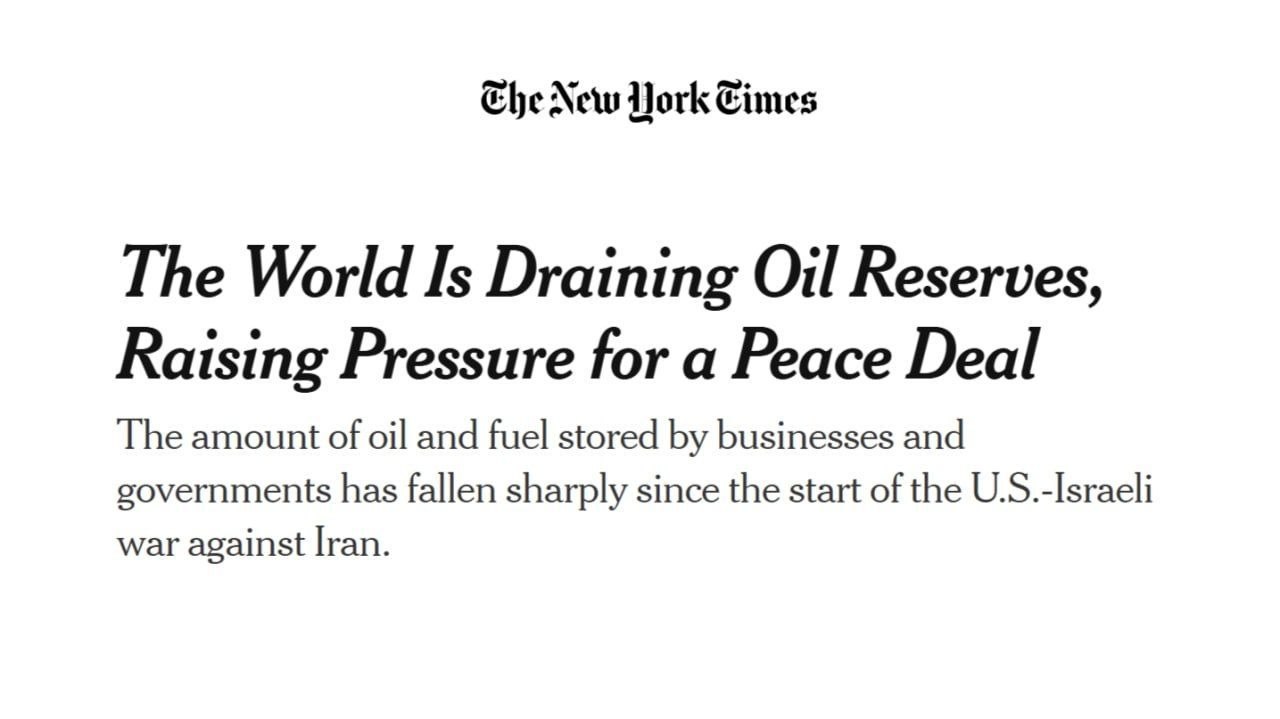
The Strait of Hormuz is 21 miles wide at its narrowest point between Oman and Iran. It is the single most critical maritime chokepoint in the world energy system. Any disruption — whether from conflict, interdiction, or political tension — creates immediate price shocks in global oil markets. On 7 May 2026, as news of the confrontation circulated, Brent crude futures moved sharply before partially retracing as markets absorbed reports that the situation was contained.
This economic significance is the reason the strait has been a flashpoint for decades and why both Washington and Tehran treat it as a site of strategic contest. The US has sought to demonstrate that its navy can operate freely in waters it regards as international, regardless of Iranian claims to authority over portions of the Persian Gulf. Iran has sought to demonstrate that it can impose costs on that presence — not through a conventional military contest it cannot win, but through the asymmetric leverage that control of a critical chokepoint confers.
The structural logic is straightforward: the more dependent the global economy is on a single narrow passage, the more leverage the state controlling one side of that passage possesses. Iran has understood this since the revolution. The US has understood it since the early Cold War. The confrontation on 7 May 2026 is not an anomaly — it is the predictable product of a structural condition that has not changed and will not change without a fundamental alteration in the regional balance or the energy infrastructure that makes the strait so critical.
Precedent and the Risk of Miscalculation
The most dangerous moment in any series of confrontations between two powers operating continuously in the same contested space is not the first incident but the one where the threshold shifts. The 1988 US-Iranian naval exchanges during Operation Earnest Will — when a US warship mistakenly shot down an Iranian civilian airliner, killing 290 passengers — remain the starkest illustration of how quickly controlled confrontation can become catastrophe. The January 2016 incident in which the US Navy fired warning shots at Iranian vessels in the northern Persian Gulf is a smaller-scale example of the same dynamic: warnings that were intended to de-escalate produced, momentarily, a real risk of exchange.
On 7 May 2026, the US destroyers withdrew and Iranian state media reported a return to normal. The Americans did not press the engagement; the Iranians did not pursue. Both sides appear to have managed the moment within their respective comfort zones. Whether that remains true depends on factors that the available sources do not yet illuminate — the standing orders given to commanders on both sides, the state of back-channel communication between the two governments, and the degree to which domestic political pressures in either capital are pushing decision-makers toward demonstrations of force.
What Remains Uncertain
The sources available to this publication at time of writing are limited to Iranian state media reports, open-source intelligence accounts of the engagement, and the initial American characterisation conveyed through US officials to OSINT observers. Official American statements from CENTCOM or the Pentagon had not been published as of the filing deadline. Independent maritime tracking data — AIS records from commercial vessels in the vicinity — had not been publicly released or analysed at time of writing. The sequence of events inside the first hour of the confrontation, including which side fired first and under what circumstances, cannot be fully established from the sources currently available.
The question of what prompted the Iranian Navy's missile and drone response — whether it was a direct retaliation for attacks on Iranian oil tankers, as Tehran claims, or a post-hoc framing to give a defensive engagement the appearance of a proportional response — is similarly unresolvable from the current evidence. Iranian state media has not published documentary evidence of attacks on its tankers. American officials have not confirmed such attacks. Both claims may be true, both may be false, or the truth may lie in the murky space between — a disputed incident that each side is using to justify its own narrative.
What can be said with confidence is that the structural conditions producing these confrontations remain fully intact. The Strait of Hormuz will continue to host the friction between an American navy committed to freedom of navigation and an Iranian state committed to asserting control over its maritime neighbourhood. The confrontation of 7 May 2026 was contained. The next one may not be.
This publication covered the incident as a naval and energy-security story. Western wire services led with the maritime dynamics. Iranian state media framed the engagement as an American provocation met with lawful force. The structural analysis — that Hormuz is an intrinsic source of leverage that neither side will voluntarily relinquish — received limited attention in the initial coverage.
Wire provenance
This editorial synthesis draws on the following public wire/social posts:
- https://t.me/presstv/9874
- https://t.me/presstv/9872
- https://t.me/Middle_East_Spectator/4521
- https://t.me/osintlive/8912