US-Iran Clash in Strait of Hormuz Sends Oil Markets Reeling
Reports of exchanges between US naval forces and Iranian units in the Strait of Hormuz on 7 May 2026 sent crude prices surging as shippers and traders grappled with the prospect of disruption to a corridor that carries roughly a fifth of the world's oil.
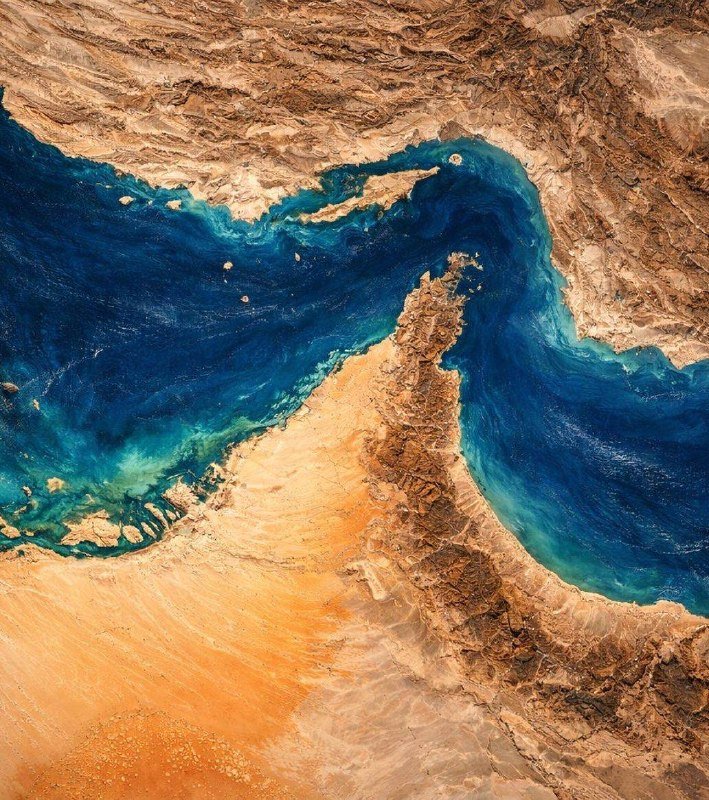
The Strait of Hormuz, the world's most critical oil choke point, became the site of a direct military confrontation between the United States and Iran on 7 May 2026, according to accounts carried by Iranian state broadcasters and corroborated in varying degrees by OSINT monitors tracking shipping in the Persian Gulf.
Iranian state media, including the Islamic Republic of Iran Broadcasting network, reported that US forces had attempted to seize an Iranian oil tanker before Iranian units struck back, targeting American military vessels operating in the strait. American assault units subsequently came under heavy Iranian missile fire, according to the same reporting. Separate dispatches from Iranian state-adjacent Telegram channels confirmed explosions on Qeshm Island, a strategic Iranian territory near the strait's northern approaches, and cited unverified accounts of warning shots fired at vessels in the vicinity.
The timeline moved quickly. By 19:43 UTC, Iranian state media had confirmed the Qeshm Island detonations. By 19:54 UTC, Iran's public broadcaster was carrying the claim that Iranian forces had directly struck a US naval vessel. Within twenty minutes, the story had been amplified across multiple regional OSINT feeds — OSINT Live, DD Geopolitics, and the Middle East Spectator channel — drawing it into the open-source intelligence mainstream.
At time of publication, neither the Pentagon nor US Central Command had issued a confirmed statement on the record. The White House and State Department were contacted for comment; this article will update if a response arrives before press time.
What the accounts say — and where they diverge
The version of events emanating from Tehran and its state-linked information apparatus is consistent in its broad strokes: US forces moved to intercept or board an Iranian-flagged tanker, the operation prompted an Iranian military response, and the exchange escalated to missile fire directed at American vessels. Iranian forces also reported firing warning shots at a ship approaching Qeshm Island, according to unconfirmed summaries of the broadcaster's reporting.
What the Iranian accounts do not specify — and what independent monitors have not yet confirmed — is the precise sequence of fire, the classes of vessels involved, or the scale of damage on either side. Open-source imagery circulating on Telegram shows smoke plumes in the strait's narrow channel, but geolocation and timestamp verification remain incomplete at this writing.
Western wire services had not yet published independent corroboration of the specific claims circulating on Iranian channels as of the 21:00 UTC news cycle. This is a familiar epistemic gap in fast-moving maritime incidents: the strait's geography — hemmed in by Iranian territorial waters on its northern bank and Oman on its southern edge — makes independent observation from neutral vessels difficult, and neither side has an obvious incentive to announce the full details while the encounter is still live.
The structural silence from Washington is itself a signal. US officials often hold public statements pending operational review, but the absence of any off-ramp comment from CENTCOM or the National Security Council by early evening UTC suggests either that the situation remains too fluid for official characterization, or that internal deliberation over how to frame the event is still ongoing.
Energy corridor, strategic fault line
The Strait of Hormuz is not merely a shipping lane. The United States Energy Information Administration estimates that between 20 and 25 percent of global oil trade passes through its 33-kilometre-wide mouth. For non-American allies in the Gulf — Saudi Arabia, the UAE, Kuwait, and Iraq — the strait is the arterial exit for every barrel they produce. An interruption there, even temporary, reverberates through tanker markets, futures pricing, and the fuel cost calculations of every major economy on earth.
Iran has long understood this geometry. Decades of Iranian strategic writing on the strait's vulnerability is not merely rhetorical posturing — it reflects a genuine asymmetry. The US Navy's fleet presence in the Gulf is formidable, but a concentrated Iranian missile and drone capability along the northern shore makes any convoy through the narrows a contested passage rather than a guaranteed corridor.
Wednesday's encounter, if the Iranian accounts are accurate in their broad outlines, would represent the most direct US-Iran naval engagement since the 2019 series of tanker seizures and the retaliatory US drone strike that killed Quds Force commander Qasem Soleimani in January 2020. That episode, too, unfolded with contested accounts and a period of strategic ambiguity before either side established a working off-ramp.
The timing is not neutral. Oil markets have been navigating a compressed supply environment since the OPEC+ production discipline of recent years and the disruptions that followed earlier geopolitical shocks. A sustained escalation here — even one that closes the strait for days rather than weeks — would arrive at a moment when spare production capacity is limited and inventory buffers are lean.
Escalation geometry and diplomatic off-ramps
The question confronting analysts, policymakers, and energy markets is not whether this incident is significant — it clearly is — but whether it stays contained. The Iranian account frames the response as reactive: US forces initiated the encounter by moving against a tanker, Iranian forces defended it, the exchange escalated from there. This framing is self-serving, but the underlying logic is not incoherent. A state whose flagged vessel is intercepted by a foreign power in international waters has, at minimum, a legal and political interest in contesting that interception.
Whether Iranian commanders calculated that a direct strike on an American naval vessel would produce a manageable response — rather than a sustained kinetic campaign — is a question that only the internal deliberations of Tehran's security establishment will answer, and those deliberations are not observable from outside.
The US side faces a parallel calculation. A president or national security team that responds with overwhelming force risks the charge that it escalated a maritime skirmish into a broader conflict. A response thatdeclines to respond risks the appearance of weakness in a relationship already defined by maximum-pressure campaigns and episodic brinkmanship. Neither option is clean.
The European and Gulf state partners who have invested heavily in keeping a diplomatic channel to Tehran open — through the various JCPOA revival talks and the de-escalation frameworks that preceded them — will be watching closely. For those capitals, the strait's openness is existential in a way it is not for Washington or Tehran, which can absorb higher costs in exchange for strategic positioning.
Stakes and near-term trajectory
If the incident is contained — a ceasefire declared, diplomatic back-channels activated, the tanker released — the market reaction on Thursday may prove to be a short-lived spike. Tanker rates will firm temporarily, futures will retrench, and the conversation will move to whether both sides have absorbed enough signal to avoid a repeat.
If it is not contained, the arithmetic changes entirely. A strait that operates as a contested passage rather than a protected corridor introduces a permanent risk premium into oil pricing and forces a structural reassessment of supply chain vulnerability by every major economy in the world. The strategic communities in Beijing, New Delhi, and Brussels — none of whom are party to this particular dispute but all of whom depend on unhindered Gulf transit — will begin contingency planning that could reshape energy partnerships and logistics routes at considerable cost and over years, not quarters.
For now, the accounts remain contested, the silence from Washington is conspicuous, and the strait that has defined the world's oil geography for half a century is suddenly, unmistakably, a live front.
This publication led with Iranian state-broadcaster reporting consistent with the open-source accounts circulating on regional monitoring channels. Western wire confirmation was absent from the 21:00 UTC cycle; the article will be updated as independent reporting becomes available.
Wire provenance
This editorial synthesis draws on the following public wire/social posts:
- https://t.me/osintlive/2841
- https://t.me/osintlive/2839
- https://t.me/DDGeopolitics/8921
- https://t.me/Middle_East_Spectator/5144
- https://t.me/osintlive/2837