US Strikes Iranian Port Infrastructure in Escalation That Officials Insist Is Not War
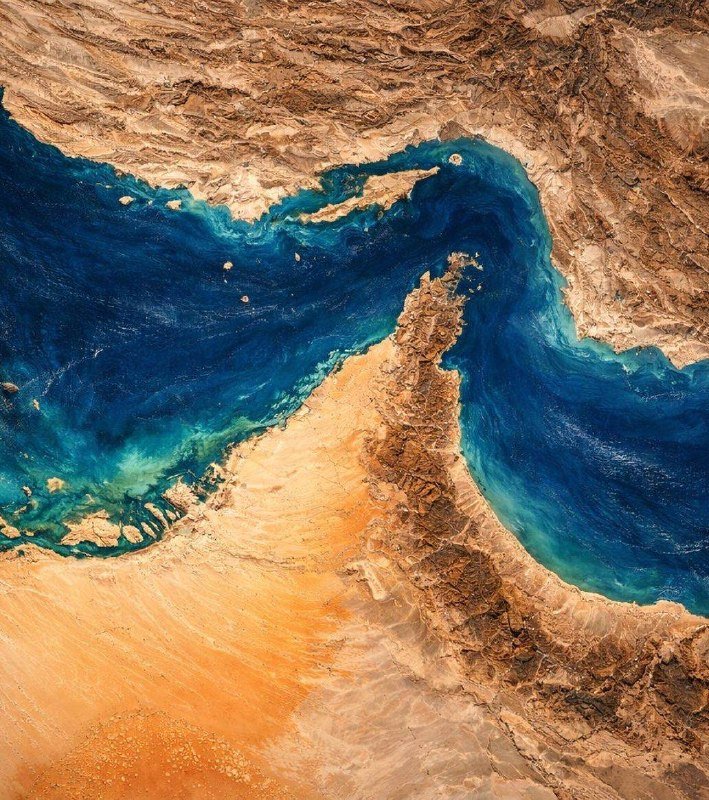
American forces struck Iran's Qeshm Port and Bandar Abbas on 7 May 2026, according to a senior U.S. official who spoke to Fox News on condition of anonymity. The strikes targeted maritime infrastructure on Qeshm Island and at the mainland port of Bandar Abbas, marking a direct assault on Iranian military-adjacent facilities inside Iranian territory. No American boots entered Iranian soil. No broad air campaign followed. But for several hours on the evening of 7 May, the sound of explosions along Iran's southern coast carried a question that Western and regional officials are still struggling to answer: what exactly is the scope of what the Trump administration has just done?
That question matters because the answer will determine whether these strikes hold as a defined episode or prove to be the opening move in something far larger. Senior officials in Washington moved quickly to constrain that interpretation. According to the senior official who briefed reporters, the operations "do not signal a renewed war." The language was deliberate, a direct counter to the most alarming read of the moment. The administration wants the strikes to be understood as a calibrated message — a demonstration of resolve aimed at Iran, at its regional proxies, and at allies in the Gulf who have been pressing Washington for a more muscular posture.
What Was Struck — and Why Now
The targets were named without equivocation. Qeshm Port on Qeshm Island and the naval and commercial complex at Bandar Abbas are not peripheral installations. Qeshm Island sits inside the Strait of Hormuz corridor, one of the world's most monitored waterways, and hosts maritime operations that Western intelligence has long associated with the Islamic Revolutionary Guard Corps naval arm. Bandar Abbas is Iran's primary deepwater port on the Persian Gulf, home to naval commands and infrastructure that features in IRGC maritime planning. Striking both in a single evening signals a level of planning and deliberate scope.
The timing is not random. The strikes follow the collapse of renewed nuclear talks in Vienna, where Iranian negotiators and American intermediaries failed to bridge differences over uranium enrichment limits and sanctions relief. That breakdown had been brewing for weeks. Iranian officials had returned to maximalist positions; the Trump administration had begun signaling frustration with a process that was yielding little. The strikes land precisely in that gap — the moment when diplomatic patience in Washington appears to have run out.
What remains unclear from the available reporting is the specific damage assessment, the weapons systems used, and whether the strikes were exclusively naval or part of a broader kinetic package that included other vectors. The sources do not specify which platforms carried out the strikes or whether Iranian air defenses engaged. There is no confirmation of casualties. Iranian state media has not issued a formal response as of publication. Those gaps will close — but they matter for how the next 48 hours unfold.
The Official Caveat — and Its Limits
The senior official's insistence that the strikes "do not signal a renewed war" is the most carefully parsed sentence in a day of terse official communications. It is also the most contested. The Trump administration has spent months signaling that it intends to bring Iran "to its knees," in the president's own phrasing, and that the military option has been on the table alongside tariffs and diplomatic isolation. A strike on Iranian sovereign territory that targets military infrastructure fits inside that framing. The caveat is a communication tool, not a policy constraint.
The official's framing likely serves several audiences simultaneously. Domestic political calculations — midterm pressure, an Iran-weary base, a regional partner audience watching for commitment — all shape how the strikes are narrated from Washington. The goal, according to one reading, is to project strength without triggering the kind of Iranian response that would force a larger commitment. Deterrence, not escalation, is the stated aim. Whether Tehran reads it that way is an entirely separate question.
Iran's calculations will turn on whether the strikes represent a one-time demonstration or the first in a sequence. Iranian retaliation doctrine — historically calibrated to avoid triggering a conflict Tehran cannot win but eager to impose costs on American assets — will be tested immediately. Regional proxies in Iraq, Yemen, and Lebanon have the capacity to act in ways that complicate the "not a war" narrative. The caveat buys time. It does not guarantee it.
The Structural Pattern — and Who It Benefits
This is the third significant military action against Iranian-linked targets since the beginning of the current administration, and the most direct strike on Iranian sovereign infrastructure. The progression is not random. Each action has been framed as limited, proportionate, and designed to degrade specific threats. Each has stopped short of the broader air and sea campaign that would constitute full-scale conflict. And each has left Iran with a decision about whether to absorb the cost quietly or respond in kind.
The structural logic is familiar from other flashpoint corridors: a great power applying pressure through precision operations while avoiding the massive commitment that a full war would require. The goal is not territorial control. It is signaling — to Iran, to regional allies who demand evidence of American engagement, and to domestic audiences watching for resolve. The strikes also operate as leverage, demonstrating capability ahead of whatever diplomatic channel eventually reopens.
Whether that strategy works depends on whether the target reads it as deterrence or provocation. Evidence from analogous episodes — limited strikes on Syrian government facilities in 2017 and 2018, targeted operations against Iranian proxies in Iraq — offers a mixed ledger. Some produce temporary quiet. Others trigger cycles of retaliation that eventually force the original actor to escalate or eat the cost. The strikes on Qeshm and Bandar Abbas enter that ledger now. Their outcome will write the precedent.
Forward Stakes — and the Questions That Remain Open
The immediate question is whether Iran responds, and how. The secondary question is whether the administration has the bandwidth — political and military — to sustain pressure across multiple theaters if Iran escalates in kind. A third question, largely absent from official statements, is whether these strikes affect the nuclear timeline. Qeshm is not a nuclear site. Bandar Abbas is not a centrifuge facility. The strikes address IRGC maritime posture, not enrichment capacity. Whether that distinction holds in Tehran's calculus is unknowable right now.
The regional stakes are concrete. Gulf monarchies that have invested heavily in American security guarantees are watching for whether these strikes represent a durable American willingness to use force or another episode of calibrated pressure that ultimately yields to negotiation. That audience rewards demonstrated commitment. It punishes inconsistency. The strikes pass the commitment test — for now.
What comes next depends on variables the sources do not yet illuminate: Iranian command decisions, IRGC retaliatory options, proxy responses, and the administration's own willingness to absorb the costs of escalation if Iran chooses not to absorb the strikes quietly. The official caveat about "not a war" was the opening statement in that conversation. The response from Tehran will be the next one.
This publication's wire coverage has emphasized the senior official's clarification language while noting the structural contradiction between "limited operation" framing and strikes on sovereign Iranian territory — a gap the wire did not foreground.
Wire provenance
This editorial synthesis draws on the following public wire/social posts:
- https://t.me/ClashReport/58432
- https://t.me/osintlive/12847
- https://t.me/osintlive/12846
- https://t.me/osintlive/12845
- https://t.me/Visioner_news/38912
- https://t.me/sprinterpress/20987
- https://t.me/ClashReport/58431