US Strikes Iranian Port Infrastructure at Qeshm and Bandar Abbas, Fox News Reports
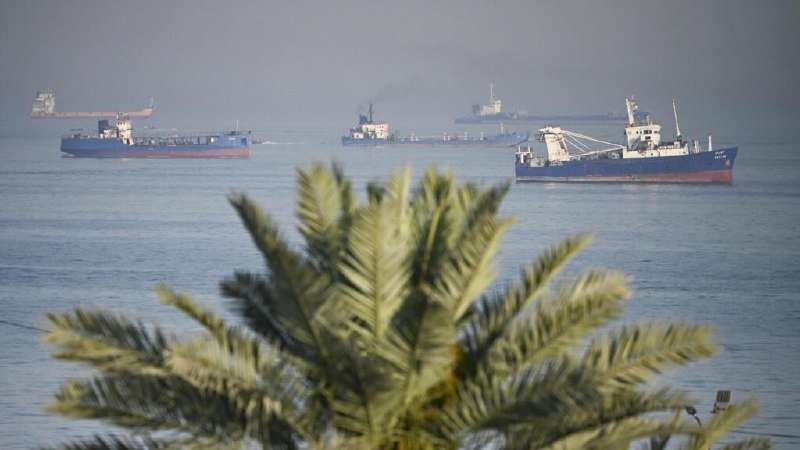
Fresh explosions detonated across southern Iran's strategic port corridor on the evening of 7 May 2026. Multiple independent monitoring feeds confirmed detonations at Bandar Abbas, Minab, and Qeshm Island beginning at approximately 20:47 UTC, with renewed blast waves recorded through 21:17 UTC. Fox News correspondent Lucas Manatos, citing a senior American official, reported that United States military forces had executed strikes against port infrastructure at Qeshm and Bandar Abbas. Official channels in Washington had not issued formal confirmation as this publication went to press.
The strikes, if confirmed, target infrastructure central to Iran's maritime export architecture. Bandar Abbas handles the majority of Iran's crude-oil loading operations and serves as the primary naval hub for the Islamic Republic Navy in the Persian Gulf. Qeshm Island, positioned at the mouth of the Gulf near the Strait of Hormuz chokepoint, hosts free-trade zone facilities and a substantial transshipment operation.
Immediate Context: A Dated, Sourced Escalation
The reporting sequence followed a now-familiar pattern. Fox News published its initial account shortly after 20:47 UTC, citing a high-ranking American source and naming Qeshm Port and Bandar Abbas as targets. Within minutes, Telegram-based open-source monitoring accounts—DDGeopolitics, WarMonitors, Middle East Spectator, and GeoPWatch—began carrying reports of explosion sounds in Bandar Abbas, Minab, and Qeshm, with some feeds recording secondary detonations consistent with secondary fires or stored cargo igniting.
The Spectator Index, among the most-widely followed geopolitical accounts on social media, amplified the Fox News reporting at 20:47 UTC. Sprinter Press, a real-time wire-tracking service, confirmed the port names at 20:56 UTC and noted that the Fox News correspondent had acknowledged the information was "partial"—a caveat that did not appear in all subsequent reshares. The distinction matters: at time of writing, the targets and the attribution to American forces rest on a single national-security correspondent's sourcing, not on a Department of Defense statement or a formal intelligence community assessment.
Counter-Narrative: What Remains Unconfirmed
Iranian state media had not issued an official response as of 21:30 UTC, a silence that admits competing interpretations. Tehran may be managing an active information operation, choosing to deny or minimise reporting while damage assessments proceed internally. Alternatively, the Islamic Revolutionary Guard Corps and civilian port authorities may still be accounting for casualties and infrastructure damage before a public statement is cleared through the appropriate command chain.
The partial-confirmation caveat embedded in the original Fox News report is analytically significant. In Gulf escalation incidents over the past decade, preliminary attribution to American or allied forces has sometimes preceded formal confirmation by hours; in other cases, initial reports proved to be misattribution, civilian incidents, or intelligence community briefings that were subsequently walked back. The absence of a Joint Chiefs or Pentagon press statement as this article was prepared for publication is not dispositive—operational security considerations routinely delay official acknowledgment—but it means the evidentiary base for all downstream claims remains preliminary.
The scale of the strikes also remains unconfirmed. Targeted port infrastructure, as opposed to naval vessels or petroleum terminals, would suggest a calibrated operation aimed at degrading revenue-generating capacity rather than inflicting human casualties or destroying high-value military assets. Whether the strikes involved aircraft carriers, submarine-launched missiles, or land-based assets is not reported in the available sourcing.
Structural Frame: Dollar Politics and the Hormuz Chokepoint
The Strait of Hormuz is the world's most critical oil chokepoint, carrying roughly one-fifth of global crude trade. Any disruption to transshipment capacity at Bandar Abbas and Qeshm—regardless of whether strikes were surgical or extensive—sends a signal through tanker markets that supply-chain risk has materially increased. The structural logic is not incidental: a disruption of Iranian crude exports tightens the supply side of a market already under pressure from OPEC+ production discipline and sanctions enforcement.
This is the underlying currency of the decision. American dollar hegemony operates in part through the architecture of sanctions: the ability to cut a target state off from dollar-denominated trade settlement effectively excommunicates it from the formal global financial system. That lever has been applied with increasing precision against Iran since 2018, but it operates on the revenue side—constricting what Tehran earns. The strikes, if they targeted port loading infrastructure, operate on the shipping side: constricting what Tehran can physically move. Together, the financial and kinetic instruments form a compression strategy aimed at forcing Iranian concessions on nuclear enrichment and regional proxy activity.
The counter-argument is structural too. Each escalation step along this path increases the probability that Iran—which has invested heavily in retaliatory capabilities including anti-ship missiles, drone swarms, and allied networks across Iraq, Yemen, and Lebanon—chooses to activate pre-positioned response options. The Hormuz chokepoint works in both directions; a sustained Iranian disruption of tanker traffic would dwarf the current port-strike scenario in market impact. The question is whether the compression strategy achieves its intended coercive effect or whether it systematically forecloses diplomatic off-ramps.
Stakes: Who Bears the Cost
The proximate losers are Iran's petroleum-revenue apparatus and the port workers, logistics employees, and shipping personnel present at the targeted facilities. The casualty dimension has not been reported; any loss of life at commercial port infrastructure deserves separate treatment once figures are available through credible channels.
The broader losers are less visible but equally real. Global crude markets reacted to the initial reporting: even before formal confirmation, tanker futures and energy equities showed volatility consistent with a supply-side shock. Asian refineries that rely on Iranian crude—operating under waivers or through intermediary arrangements—are the next exposed entities. European energy consumers, still managing post-2022 structural adjustment costs, face renewed price uncertainty heading into summer demand season.
The winners are more diffuse. American defense contractors and Gulf state customers for American military hardware will see increased demand for littoral strike and maritime-domain awareness capabilities. The Israeli defense establishment, which has expressed persistent concern about Iran's nuclear programme and regional reach, gains a demonstration that kinetic options exist and can be deployed without triggering the kind of regional conflagration that analysts have long feared.
The clock on escalation control is running. Iranian responses to American strikes—if they come—will be shaped by calculations about domestic audience, Revolutionary Guard Corps institutional interests, and Supreme Leader Ali Khamenei's risk tolerance. American calculations will be shaped by whether the strikes achieve their intended coercive signal or whether they trigger the symmetric response that the compression strategy is designed to avoid.
Monexus covers the Gulf escalation beat from established wire reporting, supplemented by Telegram-based open-source feeds that provided real-time ground corroboration ahead of official channels. Iranian state media did not publish an official response during the reporting window. The structural frame—sanctions compression, Hormuz chokepoint politics, and the escalation ladder—follows from the available evidence; the article acknowledges where that evidence remains partial and where the available sources disagree.
Wire provenance
This editorial synthesis draws on the following public wire/social posts:
- https://t.me/osintlive
- https://t.me/WarMonitors
- https://t.me/DDGeopolitics
- https://t.me/Middle_East_Spectator
- https://t.me/GeoPWatch