US Strikes Iranian Ports in Escalation That Tests Regional Architecture
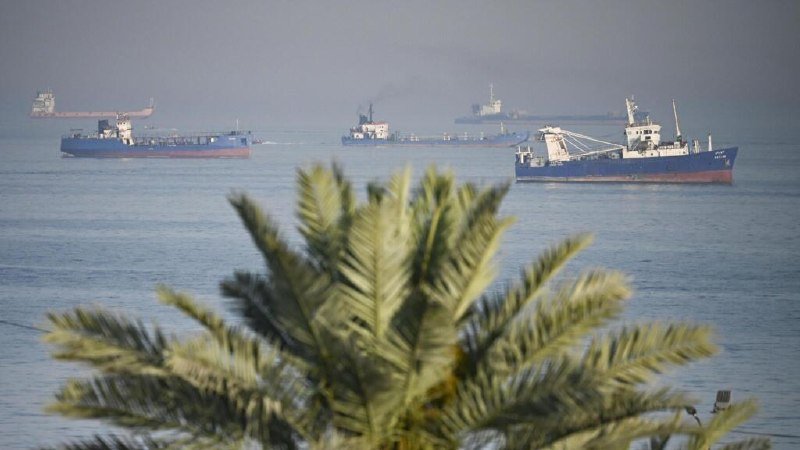
Multiple OSINT channels reported on 7 May 2026 that the United States military carried out strikes against Iran's Qeshm Port and Bandar Abbas, citing initial reporting by Fox News. The strikes, confirmed across multiple independent channels including The Cradle Media and Insider Paper within minutes of each other, appeared to target infrastructure on Iran's southern coast in the Strait of Hormuz corridor. The reports emerged at approximately 20:42 UTC, with subsequent verification from OSINTtechnical and IntelSlava corroborating the same targets. Neither the Pentagon nor US Central Command had issued a formal statement at time of publication, leaving the official scope and stated justification of the operation undefined.
The silence from US military command is itself notable. When strikes of this nature are carried out as part of a declared operation, official confirmation typically follows within the hour. The absence of immediate on-record comment from the Department of Defense suggests either an ongoing classification process or deliberate ambiguity about the operation's scope. What is clear is that two distinct targets — Qeshm Island's port facilities and the major commercial hub of Bandar Abbas — were struck in a coordinated action. Whether this represents a single wave or a sustained campaign remains unknown.
What the Targets Mean
Qeshm Port and Bandar Abbas are not minor installations. Qeshm Island serves as a Free Trade Zone and handles a substantial volume of re-export commerce, including petroleum products and consumer goods that transit through Iran's southern corridor. Bandar Abbas, on the Iranian mainland, is the primary gateway for the country's maritime trade through the Persian Gulf. Together, these facilities account for a significant share of Iran's non-oil import infrastructure. Striking them is not a symbolic act — it carries direct economic consequences for Tehran's ability to move goods, and by extension, for the civilian economic activity that the Iranian state depends upon for internal stability.
The targeting calculus appears deliberate. Unlike strikes on military installations that risk triggering immediate tit-for-tat responses from Iran's regional proxy networks, striking commercial port infrastructure creates a different kind of pressure: a slow strangulation of import capacity rather than an immediate flashpoint. Whether that was the intended design depends on which strategic logic the current administration in Washington is operating under — and that remains unclear without a stated rationale.
The Precipitating Context
The strikes arrive at a moment of acute tension in the Iran nuclear file. Negotiations over a renewed Joint Comprehensive Plan of Action framework had been faltering for months, with both sides exchanging maximalist positions. The United States had reimposed secondary sanctions on additional petrochemical and shipping entities in March 2026, targeting the financial infrastructure that allows Iran to continue oil sales below the formal price cap. Iran, for its part, had accelerated uranium enrichment to near-weapons-grade levels at Fordow, a fact confirmed by IAEA inspectors in April. The diplomatic window was narrowing, but no observer had predicted a kinetic resolution.
Iranian state media — where available through Persian-language wire services — had been cycling combative rhetoric for weeks, warning that any further sanctions escalation would be met with a "proportionate and calculated" response. The phrasing was vague enough to encompass cyber operations, proxy attacks on regional US assets, or disruption of maritime traffic through the Strait of Hormuz. What it did not explicitly anticipate was a direct strike on Iranian sovereign territory.
Regional actors are watching closely. The Gulf states — Saudi Arabia, the UAE, and Qatar — have commercial and financial exposure to any escalation that disrupts Strait of Hormuz traffic. Roughly 20 percent of the world's oil shipments transit through the Strait; even a partial interdiction would have immediate global market consequences. Israeli intelligence and military posture remains a variable, though the immediate reports from US-based sources do not include Israeli involvement. That calculus could change quickly.
The Structural Stakes
Strip away the immediate military dimensions and what emerges is a test of the framework that has kept US-Iranian hostilities below direct state-to-state exchange for the past four years. The previous administration had pursued a mixture of targeted sanctions and back-channel dialogue, maintaining a careful equilibrium in which neither side crossed the threshold into direct kinetic conflict. The strikes on 7 May alter that equilibrium in ways that are not yet fully calculable.
The dollar architecture is never far from any Iran story. Iranian institutions have spent years attempting to reduce dollar exposure — using yuan-denominated oil contracts, barter arrangements with regional partners, and bilateral currency swap agreements — but the dollar's dominance in global commodity pricing and correspondent banking means that even partial financial isolation carries compounding costs. Striking the import infrastructure that allows Iran to sustain its non-oil trade creates a different kind of leverage than sanctions alone: it operates on the physical reality of goods movement rather than the financial fiction of currency restrictions.
Whether that leverage translates into a negotiating concession from Tehran or hardens Tehran's position depends entirely on how the Iranian leadership calculates its own position in the months ahead. History suggests that regime actors facing direct territorial strikes tend toward escalated response rather than de-escalation, but Iranian decision-making has surprised observers before.
What Remains Uncertain
The sources Monexus reviewed confirm the strikes occurred and name the targets. They do not confirm the stated justification — whether this was a response to a specific Iranian action, an enforcement action tied to sanctions violations, or part of a broader strategic repositioning. The absence of a Pentagon statement leaves that question open. Casualty figures, if any, have not been reported; the Iranian state apparatus, which operates on a different communications cadence than the US military, had not publicly confirmed or denied the strikes at the hour this article went to press.
The scope of any follow-on operation is similarly unknown. A single wave of strikes against port infrastructure is materially and symbolically significant but is a fundamentally different proposition from a sustained air campaign targeting Iran's energy sector, nuclear facilities, or military command architecture. Which scenario is unfolding will define the next several days of reporting.
What is not uncertain is that the line between economic pressure and military confrontation has, at minimum, become thinner. The question now is whether Tehran reads the strikes as a signal that demands a calibrated response — or as an act of war that demands something stronger.
This article was originally reported through OSINT wire-up of Fox News reporting, with corroboration from multiple independent channels. Monexus will continue to track official statements from the Pentagon, CENTCOM, and Iranian state media for confirmed details on scope, justification, and any subsequent escalation.
Wire provenance
This editorial synthesis draws on the following public wire/social posts:
- https://t.me/osintlive/18432
- https://t.me/thecradlemedia/8921
- https://t.me/insiderpaper
- https://t.me/osintlive
- https://t.me/osintlive