Venice's Art World Enters the Fray: Protests and a Cultural Strike Over Israel's Biennale Participation
A 24-hour cultural strike and protests outside the Giardini and Arsenale venues mark a new phase in the campaign to weaponise cultural exclusion as political protest — and test whether the art world's premier institution will bend to pressure.
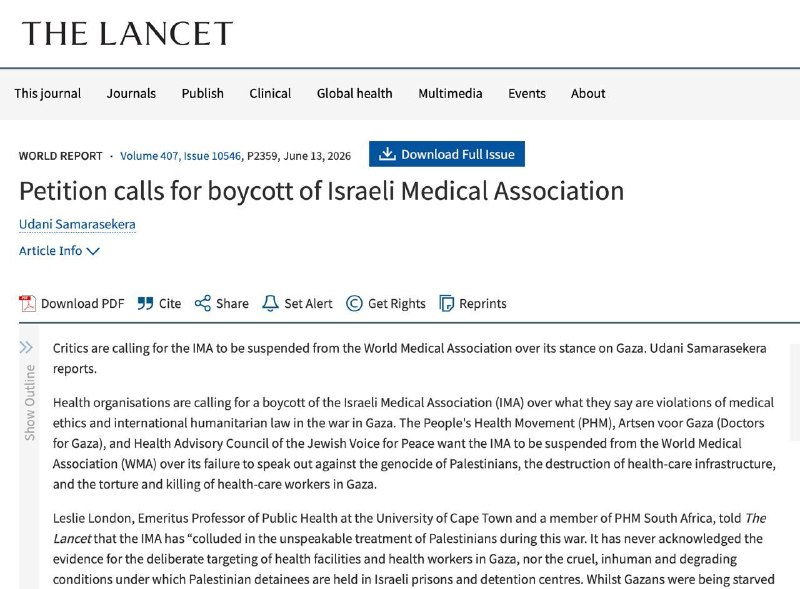
The Venice Biennale has long presented itself as the art world's most rarified political stage — a place where nations arrive as cultural guests, and where artists routinely use their national pavilions to make statements their governments would prefer to suppress. On Friday, that carefully managed tension between art and diplomacy faces a more direct challenge. A coalition of Italian and international unions and activist groups has called a 24-hour cultural strike and organised protests at the Giardini and Arsenale venues, demanding that Israel be excluded from this year's exhibition. The action marks a significant escalation in a campaign that has been building since October 2023, when Israel's military offensive in Gaza ignited a wave of cultural boycotts across Europe.
The immediate trigger is Israel's participation in the Biennale itself — a presence that boycott advocates argue amounts to complicity in acts that the International Court of Justice has ruled plausibly constitute genocide. Whether or not one accepts that framing, the underlying logic is clear: the art world is being asked to choose between its ethos of open exchange and a growing body of opinion that some states have forfeited their right to participate in it. What began as petitions and open letters has now hardened into a full cultural stoppage. The question is not merely whether Israel should be in Venice. It is who gets to decide which nations are welcome in the world's most prestigious cultural rooms.
The Strike and Its Demands
The 24-hour cultural strike called for Friday represents the most concrete form of pressure applied to the Biennale over Israel's participation. Unlike an open letter or a petition — instruments that have circulated for months — a strike means physically stopping work. Venues may face picket lines. Artists, curators, and support staff aligned with the coalition are being asked to withhold their labour for a full day. The coordinated nature of the action, spanning Italian unions and international activist networks, signals planning and collective resolve.
The coalition's argument is straightforward in its terms: Israel's military actions in Gaza constitute grounds for exclusion from cultural life on the same grounds that apartheid South Africa or Putin's Russia were targeted for boycotts. Proponents note that the International Court of Justice's January 2026 order for Israel to halt its offensive in Rafah — and subsequent findings of plausibly genocidal intent — establishes a legal threshold that the Biennale cannot ethically ignore. The institution's silence, they argue, is itself a statement.
The Counterargument: Art as Diplomatic Space
The Biennale Foundation has not publicly acceded to exclusion demands. Its position, to the extent one has been articulated, rests on the Biennale's founding premise: that cultural exchange across national lines is itself a form of peace-making, and that excluding a state's artists punishes individuals for the actions of governments they may oppose. This argument has historical weight. The Biennale's national pavilion format was designed, in part, as a Cold War-era instrument of soft power — a way of allowing societies to present themselves to each other without the mediation of military or economic pressure. German reunification was marked by a prominent German pavilion; the Soviet Union and its satellites participated for decades under conditions of ideological opposition.
Critics of the boycott counter that the campaign conflates the Israeli state with Israeli civil society — and that excluding Israeli artists, curators, and cultural workers from the world's most important art gathering serves neither the cause of Palestinian rights nor the values of the cultural institutions claiming to champion them. Some Israeli artists have themselves been vocal critics of their government's policies. The Biennale's tradition of national pavilions was explicitly designed to allow societies — including those in conflict — to speak to one another through culture rather than through weapons.
The Biennale as Political Arena
The Venice Biennale has never been a purely aesthetic enterprise. Its national pavilion format was established in the early twentieth century partly as a diplomatic instrument, and the institution has navigated political controversies throughout its history. German pavilions were restructured after the Nazi period. The Soviet Union and its satellites maintained a presence throughout the Cold War. In 1934, the festival was used as a fascist propaganda vehicle. After 1945, it repositioned itself as a post-war bridge between Western Europe and the Soviet sphere.
What is new is the specific alignment of forces. The cultural boycott of Israel draws on a playbook developed during the anti-apartheid movement and applied most recently to Russia following its full-scale invasion of Ukraine. In both earlier cases, the boycotts operated on a basis of broad international consensus — the anti-apartheid campaign had the support of the UN General Assembly and a significant portion of Western public opinion, while the Russia boycott followed a unanimous EU sanctions regime. The current campaign against Israel is more divided. Western governments have not endorsed the cultural isolation of Israel in the way they did with apartheid South Africa or Putin's Russia. The geopolitical alignment cuts differently.
Stakes: Precedent and Fracture
If the Biennale Foundation yields to pressure and takes any action against Israel's participation, it sets a precedent that will be cited in every future cultural dispute where advocates can muster sufficient institutional pressure. If it holds firm, it preserves the principle that national pavilions represent societies, not governments — but risks deepening a fracture between the art world and a broad swathe of global public opinion that views the Biennale's stance as moral cowardice.
What seems clear is that the era of the Biennale as an apolitical aesthetic commons is over, if it ever truly existed. The institution has been asked to take a position. Its response — whatever form it takes — will define what the Biennale is for the next generation of artists, curators, and audiences. Friday's strike is not simply a protest. It is a claim on what cultural institutions are for in a time of geopolitical rupture.
This article draws on Middle East Eye reporting on the protests and cultural strike. The Biennale Foundation had not issued a formal public statement at time of publication.
Wire provenance
This editorial synthesis draws on the following public wire/social posts:
- https://x.com/middleeasteye/status/1920847212344230108
- https://en.wikipedia.org/wiki/Venice_Biennale
- https://en.wikipedia.org/wiki/Israeli_pavilion_(Venice_Biennale)
- https://en.wikipedia.org/wiki/Cultural_boycott_of_Israel