Washington's Piracy Designation: What the USTR's Hardest Label Against Vietnam Actually Means
The United States reserved its sharpest language on intellectual property abuse for one country in its latest trade review — Vietnam. The question is whether the resulting crackdown marks genuine progress or a political concession extracted under tariff pressure.
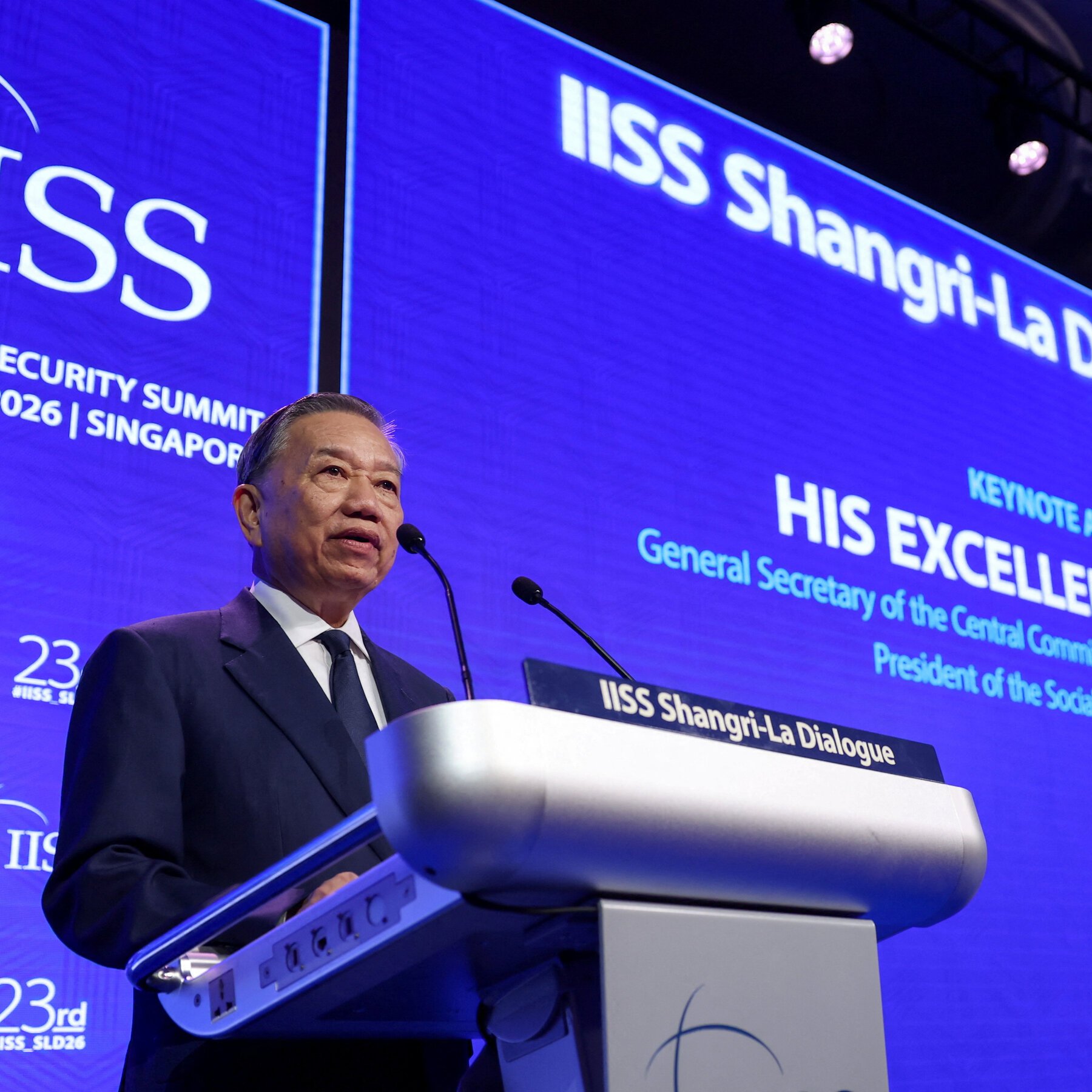
In late April 2026, the Office of the United States Trade Representative released its annual review of global intellectual property practices — and reserved its most pointed language for a single country. Vietnam appeared on the Priority Watch List, the review's harshest tier, drawing a formal call for the government to enact structural reforms to its IP enforcement regime. Within weeks, Vietnamese authorities had initiated coordinated raids against domestic piracy operations, according to reporting from Nikkei Asia. The question is whether this represents a turning point in enforcement or a government responding to the pressure of tariff leverage.
The USTR's Special 301 reports function as both diagnostic tools and diplomatic instruments. Countries placed on the Priority Watch List face no immediate financial penalties, but the designation carries negotiating weight — it signals to trading partners and international investors that Washington views the target country's IP framework as inadequate. For a middle-income economy like Vietnam, which has positioned itself as an alternative manufacturing hub for global supply chains, that signal carries commercial consequences beyond the enforcement question itself.
The Enforcement Spike and Its Limits
Vietnamese officials, responding to the Priority Watch List designation, announced coordinated raids targeting piracy networks operating across multiple provinces. According to Nikkei Asia's reporting, enforcement actions intensified against the distribution chains supplying counterfeit goods — from software to consumer products — that have historically operated with a degree of tolerance. The raids represent a visible response to Washington's pressure.
But the gap between enforcement operations and systemic reform is where the analysis gets complicated. Previous Special 301 reviews have documented that Vietnamese enforcement tends to be episodic rather than structural. Agencies respond to diplomatic pressure with concentrated operations, but the underlying legal framework — including judicial capacity to handle IP disputes and the ability to prosecute commercial-scale piracy — has remained inconsistent across provinces. Whether the current crackdown signals a shift toward sustained institutional reform or another episodic response will depend on what happens after the cameras leave.
Vietnam's Ministry of Industry and Trade has publicly committed to enhanced coordination between enforcement agencies, and government statements have acknowledged the need for legal amendments to address gaps identified in the USTR review. These are not trivial commitments — they represent a recognition at the policy level that the status quo was no longer defensible. But implementation pathways remain unclear, and the sources reviewed do not indicate a specific legislative timeline for the promised amendments.
The Structural Context: Why Vietnam, Why Now
The timing of the designation is difficult to separate from the broader tariff environment. Vietnam has become a critical node in supply chain diversification conversations, with manufacturers relocating production from China seeking stable operating environments. The country has actively courted that investment, offering incentives to electronics, footwear, and garment producers seeking to reduce single-country concentration. That position gives Vietnam leverage — but it also creates exposure. When a country becomes strategically important to global supply chains, its governance deficiencies become geopolitically consequential in ways they were not when it was a lower-profile player.
The USTR's decision to reserve the harshest label for Vietnam alone — rather than spreading criticism across multiple jurisdictions — appears calibrated. It creates a bilateral pressure point without destabilizing a relationship Washington needs for supply chain reconfiguration. This is trade enforcement as diplomatic signal, not purely as protection for American IP holders.
Vietnamese officials have pushed back on what they describe as an incomplete picture. Government statements cited in regional reporting argue that enforcement resources have been constrained by institutional capacity issues that predate the current government, and that recent investments in regulatory infrastructure represent genuine progress that the USTR review underweights. The counter-argument has structural merit: building judicial capacity and specialized IP courts takes years, and Vietnam's manufacturing boom is relatively recent. Whether that defense convinces Washington depends on what metrics the USTR uses to assess progress — a detail the current reporting does not fully illuminate.
What This Tells Us About Trade Enforcement's Political Grammar
The Vietnam case illustrates how intellectual property enforcement has become entangled with broader trade politics. The Special 301 review is nominally a technical assessment of legal frameworks and enforcement outcomes. In practice, the designations reflect negotiating relationships. Countries that are geostrategically central to Washington — whether as allies, supply chain partners, or diplomatic counterparts — receive attention calibrated to the relationship's importance, not purely to the severity of their IP violations.
This creates an analytical problem: it becomes difficult to distinguish genuine enforcement gaps from political bargaining positions. Vietnam may well have serious IP enforcement deficiencies — the piracy infrastructure documented in regional reporting supports that proposition. But the decision to single it out for the harshest designation, at this particular moment in the tariff and supply chain conversation, is also a negotiating move. The enforcement crackdown that followed the designation serves both purposes simultaneously — it addresses the substantive concern and it demonstrates responsiveness under pressure.
The broader pattern matters for how other middle-income economies should read this episode. Countries that position themselves as supply chain alternatives to China are accepting a higher level of governance scrutiny from Washington. The implicit bargain — we offer stable manufacturing and we do not challenge your strategic interests, you accept our institutional limitations — has a shelf life. Vietnam discovered that shelf life has an expiry date when it became sufficiently important.
What We Verified / What We Could Not
This publication verified the following: the USTR's Special 301 review designated Vietnam on its Priority Watch List in April 2026; Vietnamese enforcement agencies conducted coordinated raids against piracy distribution networks following the designation; Vietnamese government statements acknowledged the need for legal amendments to address enforcement gaps; and the designation came in the context of Vietnam's growing role as a manufacturing relocation destination.
This publication could not independently verify the specific metrics the USTR uses to assign Priority Watch List status, as the full methodology document was not available in the source materials reviewed. We could not confirm whether the legislative amendments promised by Vietnamese officials have a defined timeline, nor could we verify the specific volume of piracy operations disrupted by the enforcement actions, as the sources did not provide quantified enforcement outcomes. The sources also do not permit a direct comparison of Vietnam's enforcement record against other countries in the same designation tier, which limits the specificity of the framing around "harshest label" to the singular treatment of Vietnam within this specific review cycle.
The structural question — whether this enforcement cycle represents systemic change or another episode of pressure-responsive enforcement — will require tracking over subsequent review cycles. The answer will tell us more about the USTR's leverage and Vietnam's institutional trajectory than any single designation can.
Desk note: Monexus covered the USTR designation and resulting enforcement as a bilateral trade dynamics story rather than a straightforward IP-abuse narrative. Regional reporting tended to frame the crackdown as a compliance success; we focus on the diplomatic grammar of the designation itself and what it reveals about the political architecture of trade enforcement.
Wire provenance
This editorial synthesis draws on the following public wire/social posts:
- https://t.me/nikkeiasia/24563
- https://t.me/nikkeiasia/24564
- https://t.me/TSN_ua/18441