The Signal Washington Is Sending Iran — and the Risk It Cannot Control
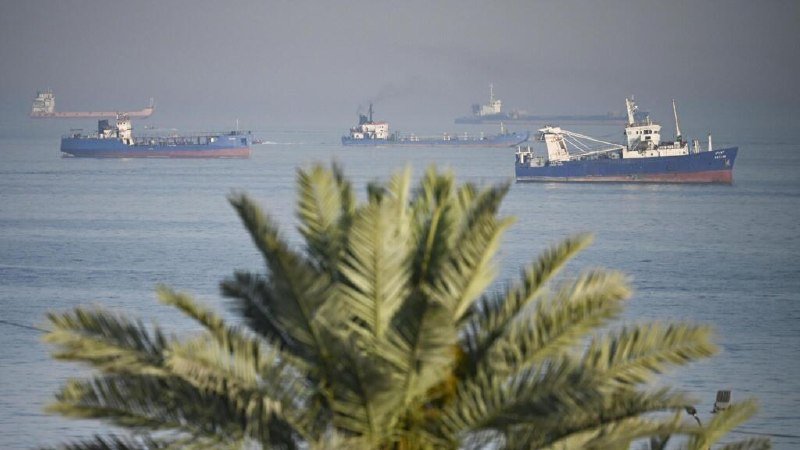
On the evening of May 7, 2026, the United States military struck Iran's Qeshm Port and Bandar Abbas — two facilities located in the country's southern littoral, in the Strait of Hormoz approaches. The Pentagon confirmed the action to Fox News. A senior American official, speaking to multiple wire services, was quick to frame the operation: this was not a new war, and it was not the end of any ceasefire. It was, in the administration's preferred language, a signal.
That word does a lot of work in Washington. It is meant to communicate resolve without triggering the chain of consequences that actual conflict would set in motion. But signals are not self-executing. They require a receiver willing to decode them as intended — and a credible threat that the alternative interpretation carries greater cost. Whether Iran receives Wednesday's strikes in the spirit the official described is an open question that will define the next several weeks of Middle Eastern security architecture.
What the Targets Tell Us
Qeshm Island and Bandar Abbas are not random picks on a naval chart. Both facilities sit at or near the Strait of Hormoz — the chokepoint through which roughly a fifth of the world's oil shipments pass. Qeshm, in particular, has featured prominently in sanctions evasion networks targeting Iranian oil exports. Bandar Abbas, a major naval base and commercial hub, is where the Islamic Revolutionary Guard Corps maintains substantial maritime infrastructure.
The selection of dual-use civilian-military infrastructure, rather than purely military command centers, is deliberate. It says: we can reach your commerce. We can reach your guard infrastructure. We chose not to destroy everything — only to demonstrate that everything is within reach. This is the grammar of coercive diplomacy: impose costs, leave room for the target to absorb the lesson without being cornered into a response that forecloses further options.
Whether that grammar translates is another matter. Iranian state media confirmed the strikes occurred — they did not play them down or deny them. Air defenses were reported active over Tehran during the same window. That is not the profile of a message received calmly.
The Doctrine of Deniable Escalation
The official caveat — no new war, no end to ceasefire — is itself part of the signal. It is designed to give the administration room to manage the political fallout in Washington and across allied capitals while maintaining the deterrent effect in Tehran. Call it escalation management: move, but leave the dial on the table.
This approach has a track record. Limited strikes against Syrian government facilities, against proxies in Iraq, against Iranian-adjacent targets in the Gulf — each calibrated to impose costs without crossing thresholds that would trigger Iranian retaliation in kind. The logic holds as long as the target believes the next step up the ladder is worse than absorbing the current one.
The risk is accumulation. Each signal builds on the last. The target calibrates its own threshold — when does absorption become concession, and when does concession become invitation for the next signal? There is no fixed point in that logic. The administration may intend a ceiling; the adversary may read a floor. Somewhere in that gap, incidents happen.
Regional Dimensions Beyond the Binary
The strikes land in a more crowded regional picture than the official framing suggests. Multiple Gulf monarchies, Israel's security apparatus, and several NATO members with forces in the region have equities in whatever posture the United States adopts toward Iran. Each will read the strikes through their own lens — some welcoming demonstration of American commitment, others calculating their own exposure if the signal misfires and Iranian retaliation follows.
The ceasefire language referenced by the senior official points to ongoing negotiations or diplomatic understandings that have kept the Gulf from outright conflict since at least 2023. Those frameworks are not public documents — their terms, their parties, and their enforcement mechanisms operate in private. What we know is that a strike on Iranian sovereign territory while those frameworks exist is not a neutral act. It either reinforces the deterrent backbone that makes the frameworks credible, or it destabilizes them by introducing a precedent that Iran can use to renegotiate from a position of grievance.
That ambiguity is not a bug. It is the point. But it places enormous weight on signals Tehran has every incentive to read as weakness if they can be made to appear so.
The Stakes If the Signal Misfires
If Iran interprets the strikes as the opening move of a broader pressure campaign rather than a bounded demonstration, the escalation ladder goes up fast. Retaliation against US assets in the Gulf, against Gulf Cooperation Council shipping, or against American personnel in Iraq or Syria would force an administration that promised no new war into exactly that posture. The gap between stated intent and operational reality would narrow to zero — and the political cost of walking that back would be immense.
If Iran absorbs the strikes without visible response, the administration gets its deterrent at low cost — but Iranian analysts and regional observers will note that the red line, whatever it was, has moved. The lesson cuts both ways.
What is certain is that Wednesday's strikes have altered the landscape. The question of whether they narrow or widen the space for diplomacy is one the next news cycle will not answer. The sources do not specify what diplomatic channels are active, what back-channel communications exist, or what Iran's internal deliberations look like. Those gaps are where miscalculation lives.
The strikes on Qeshm and Bandar Abbas are, in the administration's framing, a sentence punctuated with a period. Whether Iran reads it that way — or as an exclamation point at the start of something longer — is the calculation that will define the coming weeks.
Wire provenance
This editorial synthesis draws on the following public wire/social posts:
- https://t.me/osintlive/89432
- https://t.me/insiderpaper/45121
- https://t.me/bricsnews/78234
- https://t.me/wfwitness/2341
- https://t.me/noel_reports/12098