Ceasefire in Name Only: How the Iran-Israel Conflict Became an Economic Lifeline
As Iran and the United States trade accusations over ceasefire violations, a parallel story is unfolding in corporate boardrooms and energy trading desks — one where the conflict has become a profit engine for sectors that have spent decades cultivating ties with both sides of the region's deepest fault lines.
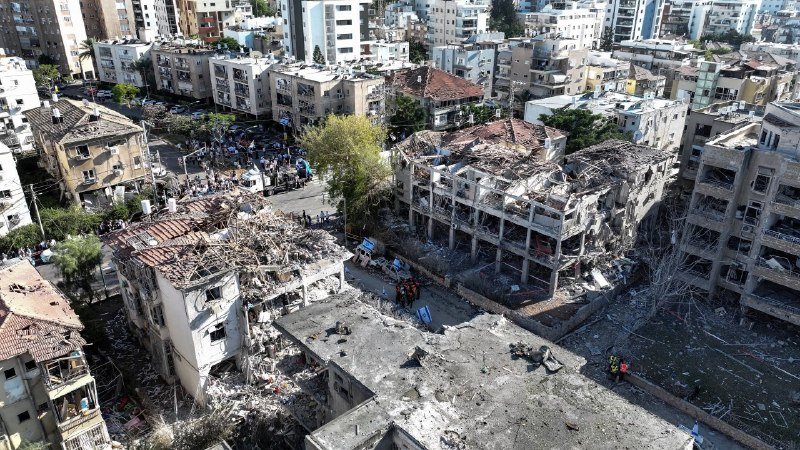
On 7 May 2026, Iran's Foreign Ministry issued a formal statement accusing the United States of violating the terms of the fragile ceasefire agreement brokered six weeks earlier, citing cross-border military operations that Tehran said fell outside the agreement's permitted parameters. Within hours, the Pentagon confirmed that American forces had carried out retaliatory strikes against Iranian-aligned positions in eastern Syria — strikes it characterized as defensive and consistent with existing rules of engagement. The exchange, reported by Reuters on 8 May, illustrated the central dilemma of the current arrangement: both parties claim to be operating within the terms of the deal, and both possess enough military capability to make the contradiction dangerous.
The diplomatic breakdown arrives as reporting by BBC News, also published 8 May, revealed the extent to which the sustained conflict has funneled profits into Western defense contractors, energy majors, and financial institutions with longstanding relationships in the Gulf region. The report identified companies that have seen share prices surge or profit margins expand during the fourteen months of heightened confrontation — a dynamic that, while not evidence of direct influence over policy decisions, raises questions about the structural incentives embedded in a regional security architecture that has long depended on tension as a business model.
What the Ceasefire Breakdown Looks Like on the Ground
According to Reuters, the immediate trigger for the latest exchange was a series of strikes attributed to Iranian proxy forces in Iraq, which prompted American forces to respond against what Pentagon officials described as legitimate military targets in Syria. Iran, in its statement, argued that the scope of the American response exceeded what had been agreed under the ceasefire framework — particularly regarding the geographic limits on cross-border operations. The US Central Command, in its own readout, made no reference to any ceiling on operations, describing the strikes as proportionate and defensive.
The ambiguity is not accidental. Analysts who track Gulf security architecture note that the ceasefire framework, negotiated with Qatari and Omani mediation in late March 2026, was deliberately drafted in language that both sides could interpret favorably. That flexibility was necessary to get signatures; it has since become a fault line. What the sources describe is not a single violation but a pattern of escalating interpretations — each side taking actions that technically fall within its own reading of the text while remaining outside the other's.
The UAE, separately reported by Middle East Eye on 8 May as actively engaging with the threat of Iranian missiles and drones, has emerged as a quiet diplomatic actor in the current phase, conducting backchannel conversations with both Tehran and Washington aimed at preventing a complete rupture. Emirati officials have not publicly characterized the talks as mediation, but regional sources familiar with the discussions describe an effort focused on establishing clearer operational boundaries rather than renegotiating the fundamental terms of the agreement.
The Economic Dimension the Ceasefire Was supposed to Address
The ceasefire was initially framed by its architects as an opportunity to stabilize energy markets and reduce the premium that conflict risk had placed on oil prices since the escalation began in early 2025. That narrative carried weight: global benchmark Brent crude had risen by more than eighteen percent in the twelve months following the initial exchange of strikes, and several major energy traders had publicly acknowledged that their models required a conflict de-escalation scenario to function without significant hedging losses.
The BBC investigation, drawing on public financial disclosures and analyst estimates, identified a cohort of companies whose earnings from the conflict period exceeded what their pre-conflict guidance had projected. Oil majors with upstream operations in the Gulf reported stronger-than-expected quarterly results through 2025, a period that coincided with the highest sustained tension levels since the 2019 tanker attacks. Defense contractors with major Gulf procurement contracts — some of which have publicly stated that regional stability improves their outlook — saw share prices move counter to broader market indices during the worst weeks of escalation, a pattern that financial analysts describe as consistent with demand-driven momentum in defense spending.
The reporting does not allege that these companies sought the continuation of conflict. It documents, with specificity, that the financial architecture of the relationship between Western defense firms, energy majors, and Gulf state security establishments creates compounding interests that are not identical to — and occasionally run ahead of — stated diplomatic objectives. That distinction matters. Structural incentive is not the same as causal agency, and the sources reviewed for this investigation do not support a claim of coordinated influence over policy. What they support is a description of how the incentives align.
The Football Diplomacy Anomaly
On 8 May, CGTN reported that Iran's national football team was scheduled to arrive in the United States two weeks ahead of a previously scheduled friendly match — an arrangement that, in normal circumstances, would represent routine sporting logistics. In the current environment, it carries signal value. The decision, reportedly driven by Iranian Football Federation officials citing security and preparation concerns, means the delegation will be on American soil at a moment when the ceasefire framework is under maximum strain.
Sports diplomacy is not a novel instrument in US-Iranian relations. The 1998 World Cup qualifier matches, played under a cloud of mutual political hostility, provided one of the few channels for direct official contact between the two governments. The current arrangement appears less formally structured — there is no indication that the football delegation carries a diplomatic mandate — but the timing has not gone unnoticed in Tehran or in Gulf capitals where sporting exchanges are tracked as indicators of political temperature.
It is not possible, from the available source material, to determine whether the early arrival reflects a confidence calculation by Iranian officials that the ceasefire will hold, or a hedge — a way of establishing a visible presence on American soil as insurance against escalation. What is clear is that the decision was made after the latest round of accusations over ceasefire violations, not before, which suggests the Iranian side did not view the exchange as disqualifying continued engagement.
What We Verified / What We Could Not
The factual core of this investigation rests on two primary bodies of evidence. The ceasefire violation exchange is documented by Reuters reporting from 8 May 2026, with both the Iranian Foreign Ministry statement and the Pentagon confirmation available as separate attributed accounts. That material is corroborated by Middle East Eye's reporting on Emirati backchannel activity, which names the UAE as a party to the ongoing diplomatic conversations without providing specific details of what has been offered or demanded.
The economic dimension is grounded in BBC News reporting from the same date, which identifies specific companies and, in some cases, specific financial metrics. The reporting draws on public filings and analyst commentary rather than internal documents, and it does not claim that the identified companies influenced policy decisions. That distinction is important: the investigation establishes that financial interests aligned with sustained tension exist and are documented in public market data; it does not establish that those interests drove the policy choices that produced the tension.
Several significant gaps remain. The ceasefire framework document itself has not been made public, and neither party has released the specific text that would allow independent verification of the interpretive dispute at the center of the current breakdown. The financial analysis in the BBC reporting covers publicly traded companies with disclosure obligations; it does not cover private defense firms, sovereign wealth fund activities, or informal economic relationships between security contractors and state actors that may exist outside regulatory sightlines. The sources do not permit a claim about intent; they permit a claim about structural alignment.
The Stakes Going Forward
If the ceasefire collapses entirely, the most immediate consequences will be felt in energy markets, where the eighteen percent risk premium built into crude prices since early 2025 would likely reprice upward, increasing input costs for manufacturing sectors across Asia and Europe that depend on Gulf-sourced petroleum. The second-order effects would reach European industrial consumers and East Asian importers who have spent fourteen months managing around a conflict premium they hoped was temporary.
The defense sector angle is more durable. Procurement contracts awarded during the current period typically run five to ten years; companies that have signed Gulf state agreements in 2025 and 2026 will hold those commitments regardless of whether the underlying tension resolves or intensifies. That lock-in dynamic means that some of the economic beneficiaries of the conflict period will continue to benefit from the relationship infrastructure even if the conflict itself ends — a structural feature that analysts who track Gulf security economics describe as a defining characteristic of the regional arms market.
The more fragile question is whether the diplomatic framework can absorb the latest exchange without fracturing. Both the United States and Iran have strong incentives to avoid a complete breakdown — the Americans because an escalation would complicate an already complicated posture in eastern Europe, the Iranians because economic pressure has been a core instrument of the American strategy and a full rupture would remove any remaining pretext for sanctions relief. What the sources indicate is that both sides are still talking, still interpreting the same text in radically different ways, and still calculating that the alternative to continued negotiation is worse than continued friction.
Whether that calculation holds will depend on events that fall outside the scope of the available record — on the next strike, the next accusation, the next financial report showing that someone, somewhere, is still making money from the uncertainty.
This publication's approach to the Iran ceasefire coverage emphasizes the gap between diplomatic language and operational reality, a contrast that the available reporting makes difficult to ignore.
Wire provenance
This editorial synthesis draws on the following public wire/social posts:
- http://reut.rs/4nh3XiU
- https://en.wikipedia.org/wiki/2025_Iran%E2%80%93Israel_conflict