Ceasefire Fractures: Hezbollah Drone Strikes and Israeli Counter-Raids Deepen South Lebanon Instability
Hezbollah's coordinated drone strikes on Israeli positions—claiming to respond to ceasefire violations—have drawn Israeli retaliatory raids that Lebanese sources say killed two civilians. The exchange underscores a ceasefire agreement that both parties treat as conditional rather than binding.
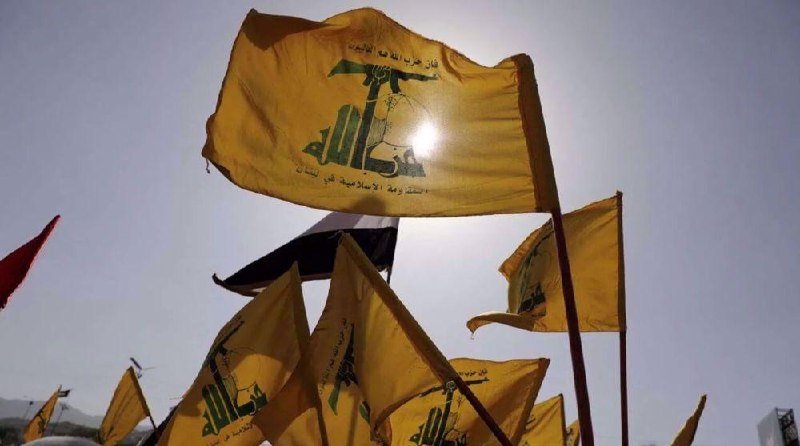
At least two people were killed in Israeli strikes on southern Lebanese towns on the morning of 8 May 2026, according to reporting by Middle East Eye, an attack that Lebanese officials and the Hezbollah media apparatus described as retaliation for the previous day's drone offensive the group launched against Israeli forces. The spiral began when the Israel Defense Forces confirmed that one of its soldiers sustained serious injuries and two others were wounded in two separate explosive drone attacks attributed to Hezbollah—one of which struck Israeli territory itself.
The IDF Spokesperson's unit confirmed the casualties in a statement carried by wire and social media accounts tracking the exchange. Hezbollah, in a series of statements reported via its affiliated media channels, framed its operations as a response to what it called Israeli ceasefire violations and attacks on villages in southern Lebanon. The group has not issued casualty figures for its own fighters. The result is a twenty-four-hour cycle of strikes that has revived questions about whether the broader Israel–Hezbollah ceasefire arrangement—brokered under pressure from Washington and Paris in early 2025—has collapsed into a de facto state of sustained low-intensity conflict.
The Drone Assault and Its Aftermath
Hezbollah's statements, distributed through the War on Fake Witness Telegram channel and verified by Middle East Eye's live coverage feed, described a coordinated operation. The group said it carried out multiple drone strikes in response to what it characterised as Israeli violations of the ceasefire's terms, specifically citing attacks on villages in southern Lebanon. The IDF confirmed that one of the two drone strikes struck Israeli territory—a notable escalation given that the ceasefire framework was intended to push militant infrastructure north of the Litani River. Israeli authorities have not publicly disclosed which specific communities were hit in those strikes or what response, if any, they authorised in the immediate aftermath.
Israeli strikes that Lebanese sources attributed to the IDF followed, striking towns in the south. Middle East Eye reported on 8 May 2026 that two people were killed in those attacks. The identity of the casualties has not been independently confirmed by international humanitarian organisations as of this report. The IDF has not commented publicly on the civilian death toll, and the Lebanese authorities have not issued a formal statement through verified government channels.
The pattern—Israeli injury, Lebanese death—mirrors several previous ceasefire violation episodes documented since the agreement took effect. What distinguishes the current exchange is the explicit, documented admission from the IDF Spokesperson's office that one of the drone strikes landed inside Israeli territory, suggesting Hezbollah's operational reach is not confined to the border zone that the ceasefire was designed to neutralise.
Competing Interpretations of Ceasefire Obligations
Both parties to the arrangement are operating from fundamentally different readings of what the ceasefire requires. Hezbollah's framing treats Israeli military activity in southern Lebanon—particularly operations the group characterises as attacks on villages—as a material breach that triggers a right to respond. Israel's position, articulated through IDF briefings and implied in its retaliatory posture, treats any Hezbollah strike as an unacceptable provocation regardless of the prior context.
International mediators who backed the 2025 ceasefire did so on the premise that both sides would exercise proportionality and restraint. The agreement did not include an enforcement mechanism with teeth, and neither Washington nor Paris has indicated it is prepared to re-enter the diplomatic heavy lifting required to clarify the terms. The result is a ceasefire that functions as a political ceiling rather than a legal floor—each side reserves the right to interpret violations and respond accordingly, and each response becomes the provocation for the next exchange.
This ambiguity is not accidental. Both the Israeli and Hezbollah calculations appear to treat the ceasefire as a tool of ongoing deterrence rather than a committed endpoint. Israel uses it to maintain pressure on Hezbollah's north while conducting operations it deems defensive; Hezbollah uses it to sustain its position as a resistance actor with standing to act when Lebanese interests are, in its assessment, threatened.
The Litani River and the Territorial Question
Israeli officials have stated publicly that Israel intends to control bridges and areas south of the Litani River—a position that directly contradicts the ceasefire's implicit territorial logic, which envisions Lebanese state authority extending to that line. The IDF Spokesperson referenced this operational intent in recent briefings, according to Middle East Eye's live reporting. If Israel is asserting de facto control over crossings and transit points south of the Litani, that is not a ceasefire interpretation—it is a territorial claim.
Hezbollah's response, citing attacks on villages as its stated trigger, suggests the group is not willing to cede that ground either. The two casualties reported on 8 May are likely to be presented by Hezbollah's media apparatus as evidence that Israeli operations inside Lebanese territory continue unabated, reinforcing the group's narrative that the ceasefire serves Israeli interests alone.
The structural dynamic here is not new to the region: ceasefire lines that are disputed, unpatrolled, and undefined become zones of constant friction. Without a neutral monitoring mechanism with real access and the backing of an international body capable of enforcing findings, the agreement's longevity depends entirely on whether both sides find it more costly to violate than to maintain. The evidence from 8 May suggests neither side is yet paying a price high enough to stop.
What Remains Uncertain
The sources available for this report do not include casualty identification for those killed in the Lebanese strikes, the specific locations of the villages Hezbollah cited as being under Israeli attack, or any statement from the UN Interim Force in Lebanon (UNIFIL), which has a mandate to monitor the cessation of hostilities. IDF statements referenced by wire services do not address the civilian death toll. It is not yet clear whether any international mediation effort is underway, or whether either Washington or Paris views the current exchange as a breach warranting intervention.
The ceasefire has survived previous violations. What the 8 May exchange demonstrates is that both parties have operational latitude they are willing to use, and neither has so far been subjected to consequences significant enough to persuade them to stop. The question is not whether the ceasefire will be tested again—it is whether the price of testing it will eventually exceed what either side is prepared to pay.
Monexus covered this exchange as a ceasefire-violation cycle rooted in disputed territorial interpretation. Wire framing tended to present the incidents as isolated tit-for-tat violence. This publication's analysis treats both the drone strikes and the Lebanese civilian deaths as products of a structurally ambiguous agreement rather than aberrant behaviour by either party.
Wire provenance
This editorial synthesis draws on the following public wire/social posts:
- https://t.me/wfwitness
- https://t.me/englishabuali