The civilians pay the price when ceasefire lines are treated as suggestions
Israeli airstrikes reported on 8 May 2026 killed at least four people and wounded eight more in southern Lebanon — territory nominally covered by a ceasefire agreement. The pattern is not incidental. It is structural.
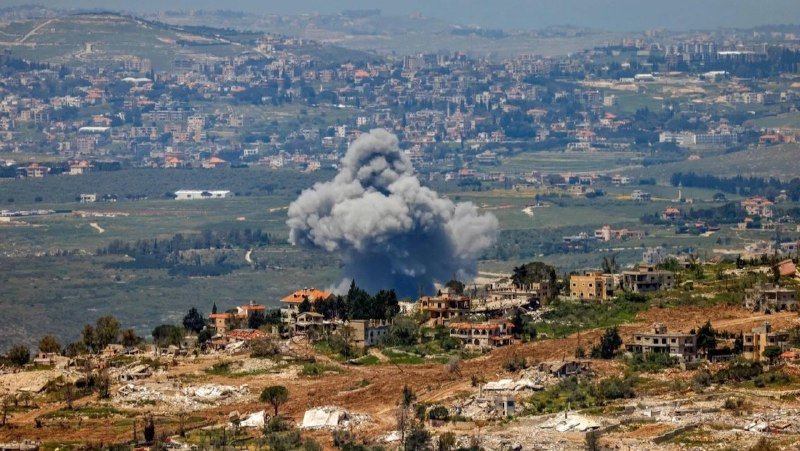
The Telegram channels began updating shortly before noon on 8 May 2026. Within thirty minutes, at least four separate Israeli airstrikes had been reported across southern Lebanon — in Hadatha, Touline, and Houmin al Tahta. A motorcycle was targeted in Houmin al Tahta. A civilian vehicle, by another account, was struck nearby. By the time the wire services had confirmed the basic coordinates, at least four people were dead and eight more injured, according to Iranian state-run PressTV, which cited local medical sources. The strikes were described as ceasefire violations.
This is not a new story. It is a recurring one.
The pattern is the story
Ceasefire agreements covering southern Lebanon have been fragile instruments since the 2006 war. The November 2024 understandings — brokered through Washington and Paris, monitored in theory by the U.S.-led Monitoring Group and UNIFIL peacekeepers — established rules of engagement along the Blue Line. They were never designed to be robust. They were designed to hold just enough to allow both sides political cover for something that resembled de-escalation. The moment either party decided the costs of restraint outweighed the benefits, the architecture had no enforcement spine to resist.
What happened on the morning of 8 May 2026 fits a documented pattern. The IDF has repeatedly conducted what it terms "targeted operations" against figures it designates as threats in Lebanese territory. The targeting of a motorcycle in Houmin al Tahta — a civilian carrying method — is not a precision strike against a confirmed combatant. It is an assassination attempt at speed, with predictable blast-radius consequences for anyone within fifteen metres. When those metres include bystanders, the legal category shifts from targeted operation to potential war crime — a distinction that only ever seems to matter when Western media decides to apply it.
Why this keeps happening
The structural answer is straightforward: there is no credible enforcement mechanism for the ceasefire's red lines. UNIFIL's peacekeepers are present but constrained by their mandate, which requires Israeli consent for movement in areas where the IDF operates. The Monitoring Group reports to Washington, which has shown no appetite to use leverage against Tel Aviv. French involvement is diplomatic but without follow-through. The result is a ceasefire that functions as a one-way pressure release valve — Israel strikes when it chooses, absorbs international statements that say nothing actionable, and waits for the news cycle to move.
Lebanese civilians in the south understand this dynamic intimately. They live in territory that is nominally protected by an agreement their government signed, under conditions their government did not control. The strikes of 8 May landed in communities whose residents have been displaced, returned, displaced again, and told repeatedly that their safety has been guaranteed. Each guarantee erodes the credibility of the next.
There is also a political economy to these operations. IDF strikes serve domestic signalling functions — they demonstrate continued operational tempo to a population that has been told the northern border is being managed, not abandoned. They satisfy the stated objective of preventing Hezbollah reconstitution. Whether they actually degrade Hezbollah's military capacity is a separate question that rarely intrudes on the political calculus of approving another strike.
The international response, or its absence
The English-language wire services have yet to publish a definitive account of the 8 May strikes at the time of this writing. The IDF has not issued a public statement confirming the operations. Statements attributed to UNIFIL and the Monitoring Group are not yet in circulation. This is the normal lag — and it is consequential. When strikes happen and authoritative confirmation takes hours, the gap is filled by unverified Telegram posts, regional wire services, and whatever framing the IDF chooses to issue retroactively. By the time a Western reader encounters the story, the Israeli framing has had a head start measured in news cycles.
The coverage gap is not random. The outlets with the largest bureaus in Israel — the ones whose reporting sets the agenda for the Washington Post, the BBC, CNN — are oriented toward Tel Aviv. Their source access depends on institutional relationships with the IDF Spokesperson's office. Strikes in southern Lebanon that kill civilians rarely generate the same story-building urgency as incidents inside Israel proper. The asymmetry is structural, not conspiratorial: it follows the gravitational pull of editorial access.
What the consequences look like
The longer the ceasefire is treated as a provisional arrangement rather than a binding legal instrument, the more the ground shifts beneath it. Lebanese communities that returned to their villages in the south did so on the understanding that the November 2024 understandings created a zone of protection. Each confirmed violation — and the 8 May strikes appear to qualify — makes the next return more reluctant, the next displacement more permanent.
Hezbollah, for its part, gains a propaganda resource every time a civilian casualty is documented and no consequence follows. The group that the IDF strikes are nominally meant to weaken retains a recruiting argument that precision operations cannot silence. The operational logic and the political logic of the strikes are in tension, and they have been in tension since 2006.
Washington's position matters most here. The U.S.-brokered ceasefire framework depends on American willingness to apply pressure — financial, diplomatic, strategic — when either party deviates. That pressure has been applied against Hezbollah. It has not been applied against Israel. The absence is not a neutral fact. It is a policy signal that the ceasefire's enforcement is selective, and that selectivity corrodes its durability.
Four people dead, eight wounded, in strikes that took place before noon on a Thursday in May. The names will emerge. The investigation, if it comes, will take months. The next strike, by historical pattern, will take days.
Wire provenance
This editorial synthesis draws on the following public wire/social posts:
- https://t.me/wfwitness/2841
- https://t.me/presstv/19842
- https://t.me/wfwitness/2839
- https://t.me/wfwitness/2837