The Dollar, the Passport, and the Decline: What Global Markets Are Telling Us About American Credibility
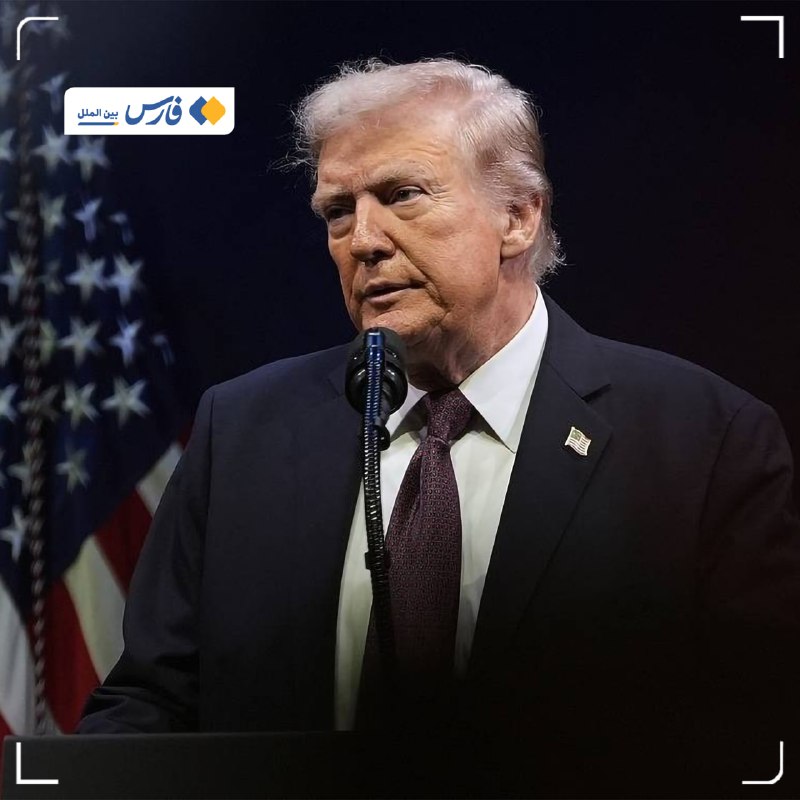
Something strange is happening at the intersection of public opinion and prediction markets. The Reuters/Ipsos Global Perceptions Survey, published on 8 May 2026, found that global confidence in US leadership has fallen below Russia's — a milestone that would have been unthinkable five years ago. Meanwhile, Polymarket, the decentralized prediction platform that has become an unlikely barometer of geopolitical risk, shows a 44 percent probability that the United States lifts its Hormuz Strait blockade before month's end, and a 73 percent probability that American passports issued by July will feature the current president's face. These are not the numbers of a country that investors and foreign governments consider predictable. They are the numbers of a country in the early stages of a credibility crisis — one that is already reshaping how the rest of the world prices risk.
The Reuters findings are not an outlier. They sit within a broader pattern of erosion that the survey itself frames in stark terms: under the Trump administration, the United States has become, in the eyes of international respondents, a less reliable ally and a more erratic actor on the world stage. The question is not whether the perception has shifted — the data makes that clear. The question is what follows from it, and whether the damage is reversible or structural.
The Anatomy of a Credibility Deficit
Credibility in international relations is not a soft concept. It is the currency that makes alliances credible, treaties enforceable, and currency reserves stable. When a state's word is reliable, partners invest in long-term arrangements — trade agreements, defense commitments, currency pegs — knowing the terms will hold. When that word becomes contingent on the mood of a single administration, rational actors begin to hedge. The Reuters survey captures the downstream effect of that hedging: a world that is quietly repositioning away from dollar-denominated assumptions.
What is different this time is the speed. Previous administrations — Bush, Obama, even the more transactional Clinton years — maintained a baseline consistency in foreign policy signaling. The current White House has, in the space of fourteen months, exited or threatened to exit multilateral frameworks, imposed tariffs with minimal consultation, and publicly contradicted its own cabinet secretaries. For governments and sovereign wealth funds that plan in decades, this volatility is not noise. It is a signal to diversify.
What Polymarket Reveals That Surveys Cannot
Opinion surveys tell us what people think. Prediction markets tell us what people are willing to stake money on. The distinction matters. When 73 percent of Polymarket's user base — skewed toward financially sophisticated, internationally distributed participants — assigns non-trivial odds to the proposition that American travel documents will be reissued with a president's portrait, the market is not merely predicting a policy outcome. It is registering that the normal institutional constraints on executive personalism have weakened to the point where such an outcome is plausible enough to trade.
Similarly, the 44 percent probability attached to a Hormuz blockade lift reflects a market reading of administration behavior: one that has shown willingness to employ economic coercion as a first-order tool of statecraft and has demonstrated limited sensitivity to the international reaction such a move would provoke. Prediction markets are not making a normative claim — they are aggregating probabilistic judgments from thousands of independent participants. When those judgments cluster around outcomes that five years ago would have been dismissed as fringe scenarios, the market is reporting something real.
The Structural Frame: A Hegemon That Has Stopped Acting Like One
The dominant framework for understanding American decline has tended toward two extremes: those who see it as manufactured by hostile state media, and those who see it as inevitable and already complete. Neither is accurate. What is happening is more specific and more fixable: the institutional architecture that made American commitments credible — regularized diplomatic channels, consistent rhetorical norms, subordination of personal loyalty to procedural process — is being replaced by something ad hoc and personality-driven. This is not a transition from hegemony to multipolarity in the orderly sense that scholars of international relations once modeled. It is a disorderly withdrawal in which the hegemon does not so much abdicate as become an unreliable actor within its own system.
The countries best positioned to benefit from this are not those with grievances against the existing order — though those grievances are real — but those with the institutional discipline to offer predictability where the United States no longer can. That list includes, by any honest accounting, several states that Washington has designated as strategic rivals. The irony is not lost on foreign ministries in Beijing, Moscow, or Tehran, all of which have spent years arguing that American reliability was contingent and self-interested. They are now being handed evidence they did not need.
The Dollar Problem Is Downstream of the Credibility Problem
There is a tendency to discuss dollar hegemony as a function of financial architecture — the centrality of SWIFT, the depth of US Treasury markets, the absence of viable alternatives. That architecture matters. But it is sustained by a prior condition: confidence that the political system producing the dollar is stable and rule-bound. When that confidence erodes — as the Reuters survey suggests it is, and as Polymarket contracts imply — the financial architecture begins to look less like a feature and more like a vulnerability. Sovereign holders of dollar reserves do not panic. They rebalance. Slowly, deliberately, and in ways that are difficult to reverse once the momentum builds.
The stakes, then, are not primarily about optics or diplomatic inconvenience. They are about whether the next decade sees an orderly transition in global reserve currency arrangements or a disorderly one — and whether the United States retains any influence over the terms of that transition, or is simply overtaken by it. The Reuters data says the world is watching. The Polymarket numbers say some of that world is already betting on the outcome.
Monexus framed this story as a structural credibility question rather than a partisan one. The Reuters survey and Polymarket data point in the same direction without requiring editorial judgment about which administration is responsible — the numbers speak for themselves.
Wire provenance
This editorial synthesis draws on the following public wire/social posts:
- http://reut.rs/498I9R5