Drone Attack on Grozny Draws Scrutiny as Russian Air Defences Report Mixed Results
Reports of a drone strike on Grozny circulated on local Telegram channels on 8 May 2026, raising questions about the effectiveness of Russian air defence systems in protecting infrastructure deep inside federally administered territories.
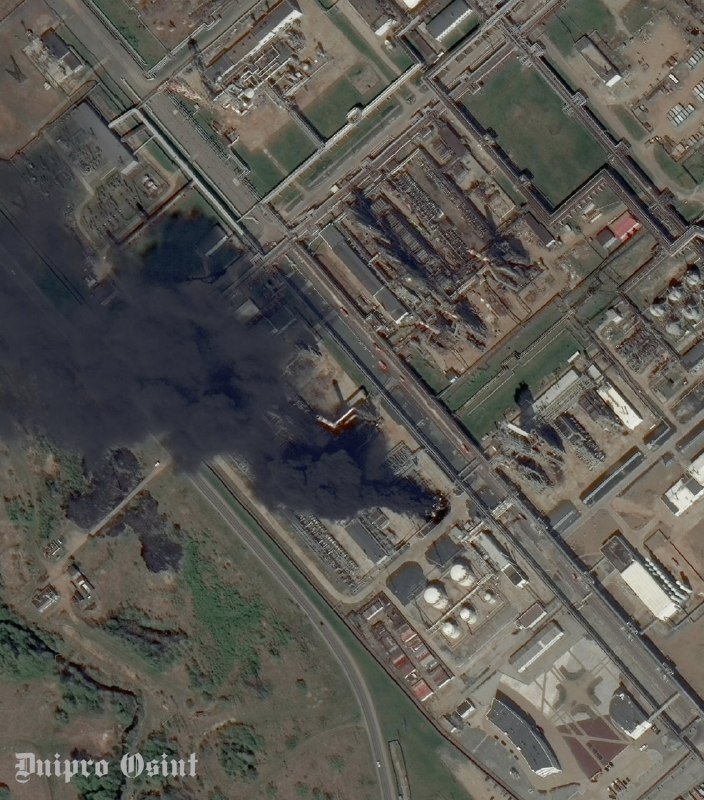
Local Telegram channels reported a drone attack on Grozny, the capital of the Chechen Republic, on the morning of 8 May 2026. Video circulated on the platform showed what appeared to be remnants of an aerial device consistent in appearance with unmanned systems deployed in the wider Ukraine conflict. The reports could not be independently verified against official Russian or Ukrainian military briefings as of 10:00 UTC that day.
Russian state media had not published confirmed details of the incident by the time of this report. Whether Grozny was a deliberate target or the object of an errant or misdirected flight path remains unresolved. The Chechen Republic sits deep inside Russia's southern federal structure, approximately 1,400 kilometres from the Ukrainian front line — a distance that would require either a long-range platform or a launch point inside Russian territory to reach.
What the sources do and do not confirm
The Grozny incident rests on a single类别 of sourcing: local Telegram channels posting video material alongside brief textual reports. Such channels have provided accurate early reporting on incidents across the Russian interior before, but they also have a documented tendency to amplify unconfirmed or partial information during periods of heightened tension. Monexus has been unable to corroborate the strike against official Ukrainian military communications, which have not listed Grozny among publicly acknowledged targets in recent weeks.
What the sources do not specify: the number of drones involved, whether any struck their intended objective, whether there were casualties, or what air defence response, if any, was activated. They also do not establish whether Ukrainian military planners have publicly stated this was an intended operation.
Air defence gaps in Russia's interior
The broader question the incident surfaces — even at this stage of incomplete verification — is the structural vulnerability of Russian air space beyond the principal combat zone. Russia's layered air defence architecture is concentrated around Moscow, the Crimean peninsula, and forward operating areas bordering Ukraine. The interior has been treated as largely deniable territory in terms of strike risk, a posture that may have allocated less sophisticated or less dense coverage to cities like Grozny.
Independent analysts tracking the conflict have noted that Ukrainian long-range drone programmes have progressively extended their reach since 2024. Early models were assessed as capable of ranges approaching 600 kilometres; later variants have been claimed by Ukrainian officials to exceed 1,000 kilometres. If those range claims hold, Grozny falls within theoretical reach from northern Ukrainian launch positions. Whether the operational economics of such a strike — the cost of a long-range platform versus the military gain — make it rational remains a question analysts have not resolved.
Grozny's specific position in the conflict landscape
Grozny is not merely a domestic Russian city. It is the seat of the Kadyrov family, whose head Ramzan Kadyrov commands the Chechen Akhmat special forces unit — one of the most consistently deployed formations fighting on Russia's behalf in Ukraine. Targeting Grozny would carry a symbolic dimension distinct from striking a civilian centre without military leadership attached. Ukrainian military communications have previously distinguished between infrastructure strikes and operations aimed at command nodes, even when both involve the same geographic location.
The Chechen leadership has maintained a close personal relationship with the Kremlin throughout the full-scale invasion. Any strike perceived as targeting that relationship, rather than generic Russian rear-area infrastructure, would carry a different political signal than one on a civilian objective in, say, Saratov or Novosibirsk.
Counterpoint and alternate readings
One plausible alternate interpretation is that the Grozny report reflects an operational failure — a drone launched from a location inside Russia or Belarus that went off-course rather than a deliberate targeting decision by Ukrainian planners. Long-range drone operations are sensitive to navigation errors, electronic countermeasures, and atmospheric conditions over distance. A device that loses GPS lock or suffers a jammed guidance signal mid-flight could drift hundreds of kilometres off intended heading.
If that reading is correct, the incident tells us less about Ukrainian strategic choices and more about the growing unpredictability introduced by even modestly capable unmanned systems operating at extreme range. The distinction matters: an intentional strike on Grozny signals deliberate escalation of target sets; an errant platform signals the unintended consequences of an attritional long-range campaign stretching beyond planned parameters.
What we verified / what we could not
Verified:
- Local Telegram channels reported a drone attack on Grozny on 8 May 2026, at approximately 08:52 UTC
- Video circulated on the platform depicting remnants consistent with unmanned aerial systems
Could not be verified:
- Official confirmation from Russian defence ministry or Kremlin communications
- Official acknowledgement from Ukrainian military or intelligence entities
- Casualty figures, structural damage, or specific military objects affected
- Whether this was an intentional Ukrainian military operation or an off-course navigation event
- Current status of air defence systems in the Chechen Republic
Unresolved questions for readers:
- Did Russian air defence systems activate over Grozny on the morning of 8 May 2026?
- Has Ukrainian long-range drone doctrine formally incorporated interior Russian cities as legitimate targets?
- What is the current effective range of Ukrainian indigenous unmanned systems, and how is that range calculated against operational loss rates?
Forward stakes
The broader trajectory of long-range drone warfare has been one of gradual extension — deeper into Russian territory, against a wider range of infrastructure categories, with diminishing political resistance inside Ukraine to striking targets that Western partners had initially counseled against. If Grozny represents a new category of target rather than a navigation error, the pattern is likely to continue. Russian domestic messaging, which has maintained a careful framing of the conflict as one fought largely outside Russian borders, would face a distinct challenge if strikes on federal republic capitals become routine.
The question for observers is whether the Kadyrov apparatus's dual role — as domestic political anchor and front-line combat force — makes Grozny a one-time symbolic objective or the leading edge of a deliberate expansion of targeting doctrine.
This publication will continue to monitor for official statements from the Russian Defence Ministry, the Ukrainian General Staff, and independent open-source analysts tracking drone activity across the conflict zone.
Wire provenance
This editorial synthesis draws on the following public wire/social posts:
- https://x.com/sprinterpress/status/2052672987728322567
- https://x.com/sknerus_/status/2052454481212616707
- https://x.com/ekonomat_pl/status/2052422359252934662