England's Rugby Dominance Poses Existential Question for Women's Game
England's Red Roses have won 36 consecutive matches and not lost a Six Nations game since 2020, prompting calls for structural change as rivals struggle to close the gap.
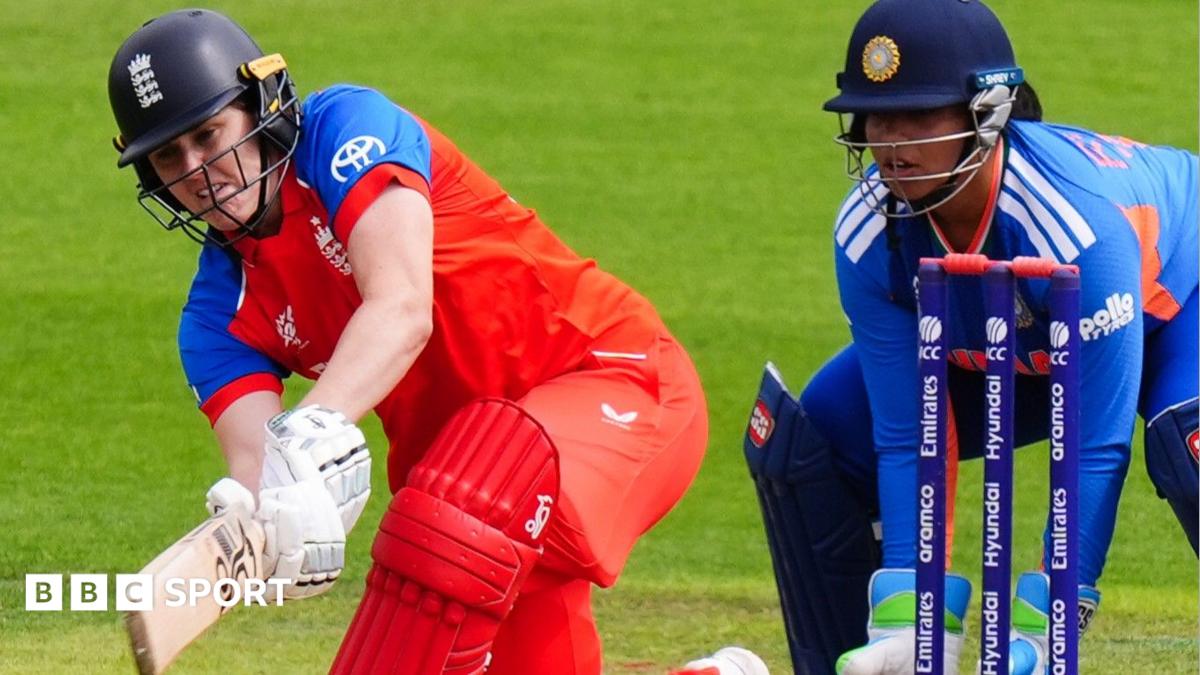
England's Red Roses have not lost a Six Nations match in six years. That statement is not a figure of speech — it is a statistic that increasingly defines, and perhaps destabilises, the women's rugby landscape. The world champion side stretched their winning sequence to 36 matches on 8 May 2026, yet the conversation inside the sport has shifted from celebration to concern. The question being asked in boardrooms, coaching circles and among the sport's governing bodies is whether one team's dominance has become an existential problem for the competition itself.
The Red Roses' grip on the Six Nations is not accidental. It is the product of sustained, deliberate investment in professional contracts, world-class facilities and a pathway system that has produced a conveyor belt of international-quality players. England now fields a side that trains full-time, while several of their Six Nations rivals still rely on amateur or semi-professional setups. The gap is structural, not cyclical.
Scotland's head coach, named in source coverage as having spoken publicly about the challenge, described the disparity as a "different sport entirely" when playing against England. That is not a criticism of England's ambition — it is an acknowledgement that the investment model has outpaced the competitive balance the tournament was designed to produce. Wales and Italy have shown recent signs of development, but neither possesses the depth to sustain a result against the Red Roses' first-choice side.
The counterargument, often advanced by England's own coaching staff and RFU leadership, is that dominance at the top drives standards across the board. The logic holds that raising the ceiling forces other nations to elevate their training environments, recruitment strategies and tactical sophistication. There is evidence for this: Ireland and France have both closed the gap against England in individual matches over the past two years, and France's women's programme has received significant government and federation investment specifically in response to England's ascendancy.
Whether that trickle-down effect is sufficient to sustain viewer interest and commercial viability for the competition is the more pressing concern. Broadcast partners, sponsors and fans have expressed unease about predictable outcomes. A contest that concludes with the result widely expected before kickoff does not generate the narrative tension that sustains a sport's cultural relevance. Several European rugby administrators, speaking off-record, have flagged that the Six Nations' growth strategy depends on competitive uncertainty — and that England's dominance threatens the core product.
One proposed remedy involves salary caps or a luxury tax on player registrations, designed to redistribute talent across the championship. Another suggestion, modelled loosely on the Rugby Union landscape in New Zealand, is a formalised central contracts system that ensures elite players are available for all international windows across the Six Nations and the WXV tournament. Neither proposal has moved beyond preliminary discussion, and the RFU has shown little appetite for mechanisms that would constrain its own programme.
The stakes extend beyond the Six Nations. England travel to the 2027 Women's Rugby World Cup as clear favourites, and a seventh consecutive championship title would intensify pressure on World Rugby to examine the structural conditions that have allowed one nation to establish such a commanding lead. Smaller rugby nations have voiced concern that without intervention, the sport risks bifurcating into a tier of competitive nations and a second tier that functions as development fodder for the top tier's continued dominance.
What remains uncertain is whether the appetite for reform exists among the federations best positioned to implement it. England, predictably, benefits from the status quo. Nations with less structural investment have limited leverage to push for changes that would constrain England's advantages. And World Rugby, acutely aware of the commercial value attached to England's continued success, has given no indication of imminent intervention. The Red Roses will begin their next Six Nations campaign as the team to beat — and the tournament they dominate will have to decide whether that is a problem worth solving.
The thread from 8 May 2026 captured a sport in internal debate about its own future. One nation's dominance has produced world-class athletes and enviable standards. It has also produced a competition increasingly uncertain of its own competitive integrity. The solution, if one exists, requires cooperation from the very nation whose dominance makes it necessary — and that, as any administrator will quietly acknowledge, is where the difficulty lies.
Monexus covered this story as a governance and competitive-balance question, while several wire outlets framed it primarily as a celebration of English achievement. The gap in framing reflects a sport still working out whether dominance is a feature or a flaw.
Wire provenance
This editorial synthesis draws on the following public wire/social posts:
- https://t.me/TheBrokenSpoke_news