Fire and Oil: Inside the Strait of Hormuz Confrontation and Its Global Stakes
Naval exchanges between Washington and Tehran in the world's most critical oil corridor have renewed questions about the durability of the Strait of Hormuz as a transit chokepoint — and about whose leverage in a blockade scenario is actually stronger than it appears.
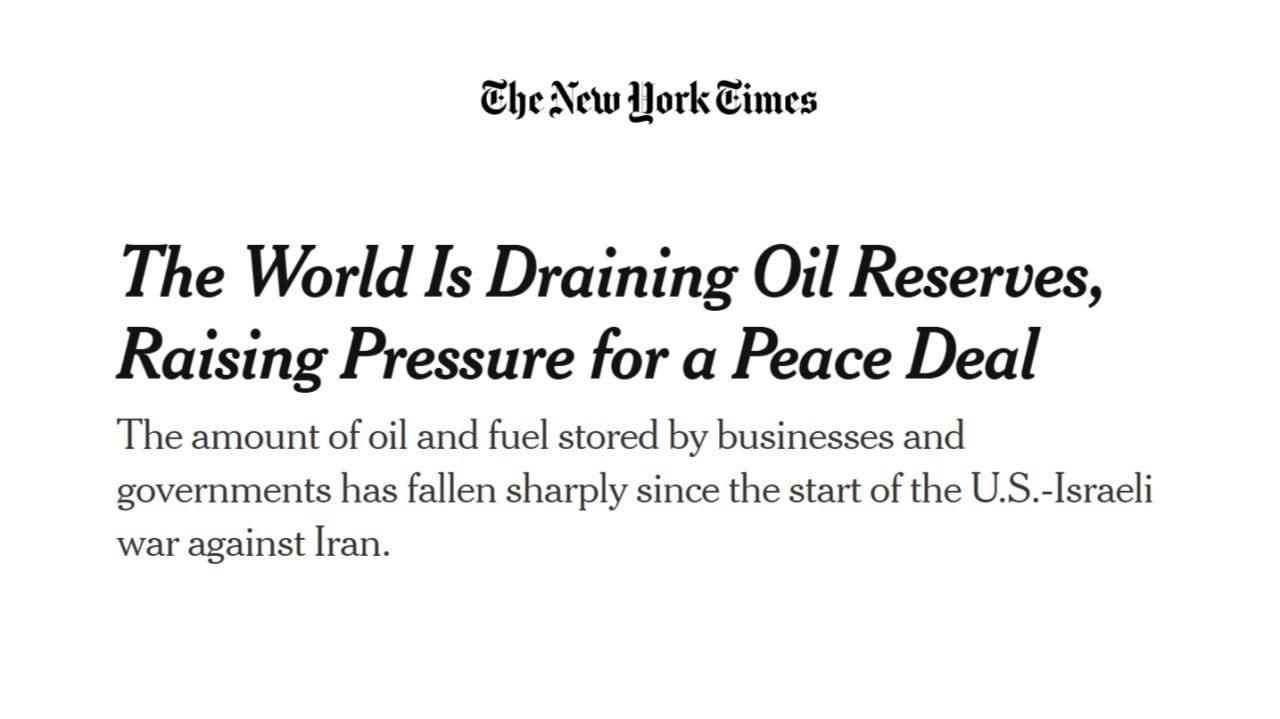
On the night of 7 May 2026, the world's most consequential stretch of water became the site of its latest US–Iranian naval exchange. US forces intercepted Iranian attacks in the Strait of Hormuz and struck back at military targets, according to a statement from the US military. Tehran's own accounts described a responding action. NASA's FIRMS satellite fire-detection system — monitored by open-source intelligence analysts — picked up multiple fires in the corridor overnight. The incident, though not yet confirmed as the opening salvo of a broader escalation, landed in markets and foreign ministries as a reminder that the twenty-mile-wide passage through which roughly a fifth of the world's oil and gas flows remains the world's most acute energy chokepoint.
The immediate exchange obscures a longer structural question that the confrontation has now forced into the open: who can actually sustain a blockade of the Hormuz longer — the United States, or Iran? Reporting by The Washington Post, cited by both Middle East Eye and the Tasnim News agency, suggests that Iranian strategists believe Tehran can outlast a US naval blockade for three to four months. That is not a small claim. It reframes the conventional Western assumption that an Iranian blockade of the strait would be an act of self-strangulation — and suggests instead that an extended confrontation would test Western energy resilience and political cohesion at least as hard as it would test Iranian state finances.
The Geography of Leverage
The Strait of Hormuz is not simply a shipping lane. It is a political fact. Approximately 21 million barrels of oil per day transited the passage in 2025, alongside substantial volumes of liquefied natural gas from Qatar's North Field. The waterway is narrow enough — at its narrowest, roughly 21 nautical miles wide — that a determined actor can impose severe disruption without controlling the entire corridor. Western naval doctrine has long assumed that containing Iranian naval assets in the Gulf would be sufficient to keep the strait open. The US Fifth Fleet maintains a persistent presence in the region precisely for this purpose.
But the geography is more complicated than a contest of fleet positioning. Iran controls the northern shore. Its Revolutionary Guard Corps Navy operates fast patrol boats, drone vessels, and a substantial arsenal of anti-ship missiles positioned along the coast and on islands it administers. Naval interdiction in the classic sense — sinking ships that try to run a blockade — is one scenario. What Iran's military planners have clearly developed is a layered denial architecture: mines, drone swarms, precision missile volleys, and the ability to threaten commercial shipping across a wide area simultaneously. The Washington Post finding that Iranian estimates of their own endurance run to several months suggests this architecture is not theoretical.
The American Calculus
The US position rests on several pillars: the Fifth Fleet's conventional naval superiority, the capacity to strike Iranian coastal installations, and the ability to rally an international coalition to keep commercial shipping lanes open. The American response to the May 7 exchange was calibrated to communicate resolve without crossing thresholds that would trigger a broader exchange. That calibration reflects the core US challenge in the Hormuz: superior firepower does not automatically translate into superior leverage when the adversary can impose costs on the global economy simply by maintaining a posture.
The White House has not publicly released a formal assessment of the blockade-duration question. But US military planning documents made public in prior years have acknowledged that a sustained Iranian denial campaign — rather than a blockade per se — would create severe complications for any US response. The distinction matters: a blockade is an act of war. A denial posture, involving missile systems, drone activity, and harassment of commercial vessels, can be calibrated below that threshold. Iran's framing of its own actions has historically leaned toward the latter description. Whether the events of May 7 represent a departure from that calibrated denial, or simply its latest iteration, is among the questions that remain unresolved as this story develops.
Energy Markets and the Price of Uncertainty
The immediate market response was predictable: futures on Brent crude rose on the news. Gasoline prices in the United States are expected to remain elevated, according to the Washington Post analysis picked up by Tasnim. The framing from Western outlets has focused on pump prices and the political implications for consuming nations heading into what is already a contested year in several major democracies. That framing is not wrong. A sustained disruption of Hormuz transit — even a partial one, even a temporary one — transmits rapidly into consumer prices globally.
But the energy story runs in both directions. Iran itself has a structural interest in keeping the strait open for its own exports. The Islamic Republic exports between one and two million barrels per day, almost all of which must pass through or near the Hormuz corridor. A blockade — whether imposed by the US or imposed by Iran in kind — would devastate Iranian state revenue at a moment when the Rouhani-era economic opening has already been severely damaged by maximum-pressure sanctions and regional conflict. Iranian state media framing of the confrontation, which describes the US action as provocative and frames Iranian response as measured, reflects an awareness that escalation that closes the strait is not obviously in Tehran's interest.
What the confrontation in fact reveals is not a simple contest of who wants the strait closed, but rather a contest of calibrated pressure. Both sides have reasons to signal capability and willingness while avoiding the act that triggers the sustained closure both say they are prepared to absorb. The satellite imagery of fires in the strait on the night of May 7 is the most visible evidence yet that this calibration is becoming harder to maintain.
What Remains Unresolved
The sources consulted for this article do not yet provide a consensus account of the precise sequence of events in the May 7 exchange. The US military described intercepting Iranian attacks and striking back; Iranian state media described a responding action, language that leaves ambiguity about which party initiated and which responded. US Central Command had not published a full after-action assessment as of publication. Open-source satellite analysis confirmed fires but has not yet provided independent verification of the scale or attribution of the weapons involved. Casualty figures and damage assessments, where they exist, have not been independently corroborated.
The Washington Post reporting on Iranian endurance estimates — three to four months — comes with the caveat that such assessments are strategic communications as much as intelligence judgments. Tehran may have an interest in projecting resilience; Washington may have an interest in the assessment becoming known. The intelligence basis for the figure, and whether it represents the assessment of Iranian planners or a US interpretation of those planners' estimates, is not specified in the available reporting. Readers should treat the three-to-four-month figure as a reported claim requiring corroboration, not an established fact.
What is established is the structural fact: the Strait of Hormuz is again the site of kinetic exchange between two parties with decades of mutual hostility, and the global economy will continue to price in that instability until a diplomatic off-ramp — or a broader collapse of the current equilibrium — clarifies which direction the confrontation is heading.
This publication covered the Hormuz confrontation with emphasis on the energy chokepoint dynamics that Western wire framing tends to treat as a consumer-price story rather than a geopolitical structural story. The three-to-four-month endurance estimate from the Washington Post — carried in Iranian state media and open-source analysis — warranted prominent placement as the most concrete strategic signal available in the current reporting.
Wire provenance
This editorial synthesis draws on the following public wire/social posts:
- https://t.me/tasnimnews_en
- https://twitter.com/Osinttechnical/status/2052596359052796326/photo