Fire in the Gulf: Iran and the US Navy Trade Shots at the World's Most Vital Chokepoint
On the evening of 7 May 2026, three US Navy destroyers transited the Strait of Hormuz under fire from Iranian missile and drone units — an exchange that has sent crude oil markets climbing and exposed the fragility of a corridor no替代 alternative has ever been able to replicate.
The Strait of Hormuz is seventeen miles wide at its narrowest. On the evening of 7 May 2026, three US Navy destroyers moved through it. According to a post on the social media platform formerly known as Twitter, President Trump announced shortly before 22:43 UTC that the vessels had crossed "very successfully" despite Iranian fire. Within hours, the exchange was being described in sharply divergent terms by Washington and Tehran — and the world's oil markets were already reacting.
The US Central Command characterised Iran's actions as unprovoked attacks on American warships in an international waterway. An Iranian military source, cited by Iranian state-linked outlets, offered a different sequence of events: US forces had first struck an Iranian oil tanker in the same general area, and the naval response that followed was retaliatory. Tehran's framing carried a specific legal implication — that its forces were acting in defence of sovereign property under attack, not initiating hostilities. Both accounts are in the public record. Neither has been independently verified in full. What is beyond dispute is that military hardware was deployed, vessels were struck or targeted, and the global energy corridor that moves roughly one-fifth of the world's oil each day briefly became the world's most acute flashpoint.
This publication has reviewed the available wire reports, US government-adjacent commentary, and Iranian state-media accounts. The picture that emerges is one where the familiar choreography of Gulf escalation — mutual finger-pointing, calibrated strikes, carefully worded denials — has for the moment been replaced by something rawer. The question is not whether this incident will pass. It is whether the rules of engagement in the world's most surveilled shipping lane have quietly changed.
The Immediate Exchange
The timeline, reconstructed from multiple reports posted on 7 May 2026, runs roughly as follows. US forces engaged an Iranian oil tanker in or near the strait. Iranian naval units responded with missile and drone fire directed at the American destroyer group. The three destroyers — Arleigh Burke-class vessels, according to standard US Navy configuration for such operations — pressed forward and completed their transit, which the President later described on social media as a success.
The language each side chose was itself significant. Washington's framing, as summarised in the CENTCOM-adjacent reporting, emphasised that the attacks were "unprovoked" — a term designed to establish legal and moral priority. Tehran's framing, articulated through Iranian state media, presented the tanker strike as the provocation and its own response as a legitimate reaction to aggression against Iranian property. Neither side used the word "war." Neither side used the word "ceasefire." Both sides described their own actions in the present tense, as ongoing and justified.
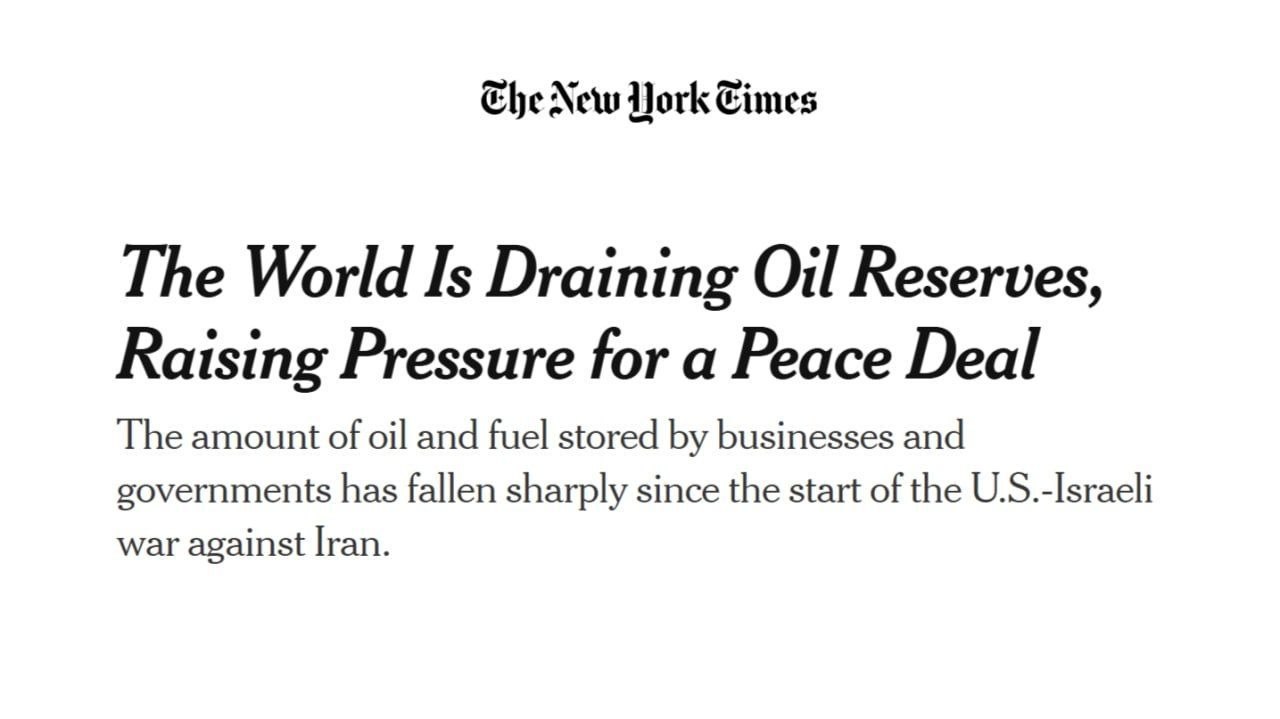
The crude oil market reaction was swift and measurable. Brent futures moved higher on the uncertainty, reflecting what traders universally understand about the strait's centrality to global supply chains. A sustained closure — an outcome no analyst was as of this writing prepared to project — would force a rerouting of tankers around the Cape of Good Hope, adding days to transit times and tens of dollars per barrel to effective costs. The International Energy Agency has for years described the strait as the world's most critical single chokepoint. Markets were reminded of that fact within hours.
Iran's Claim: A Tanker First
The Iranian military source's account — that US forces struck an Iranian oil tanker before the naval exchange began — is the variable that most complicates the Washington narrative. If accurate, it would reframe the entire incident from an unprovoked Iranian attack on US vessels to a US-initiated strike on commercial shipping that provoked a defensive response. The distinction matters legally, politically, and in terms of how third parties — particularly Gulf Arab states that rely on the same waterway — process the event.
The sources reviewed do not independently corroborate the tanker strike claim beyond the Iranian account. No commercial shipping tracker had as of this writing posted a verified incident report at the relevant timestamp. No allied government had publicly confirmed the tanker targeting described by Tehran. This does not mean the strike did not occur. It means the public record is, for now, incomplete.
Iranian state media, including PressTV, quoted what it described as a military source saying Iran had "bared fangs" in response to US aggression against Iranian oil tankers. The phrasing was deliberate — framed as restraint under pressure rather than escalation. It is the kind of language that plays domestically and across the wider Shia-led axis that Tehran has cultivated across two decades of regional confrontation with the United States.
There is a structural reason to take the Iranian account seriously as a competing framing, even before independent verification arrives. The Hormuz corridor has been the site of a long-running tit-for-tat between Washington and Tehran that has never been formally resolved. Iran has periodically threatened to close the strait. The US has periodically reinforced its naval presence in the Gulf. Each side has developed a vocabulary of signalling that stops short of outright war but maintains pressure. An incident in which US forces first struck an Iranian commercial vessel would fit an established pattern of provocation — one that, if accurate, would make Iran's subsequent naval response legally analogous to the responses Western states routinely describe as defensive when their vessels are targeted.
The Geopolitical Backdrop
To understand why the strait matters beyond this single incident, the structural picture is necessary. The Strait of Hormuz connects the Persian Gulf to the Gulf of Oman. Iran sits on its northern shore. Oman controls the southern shore, with whom the US maintains a longstanding relationship centred on the port of Salalah. The seventeen-mile width sounds manageable until one considers that the approaches are heavily mined in any war scenario, that Iranian anti-ship missiles cover the approaches from the north, and that the prevailing currents in the northern approaches run toward Iran's coast — meaning a major pollution event from a sunken tanker would drift toward Iranian waters first.
Every Gulf littoral state — Saudi Arabia, the UAE, Kuwait, Iraq — exports most of its crude through this corridor. So does Iran itself, when its tanker fleet is operational. The paradox at the centre of any strait closure scenario is that Iran suffers as much as anyone from a genuine blockade: it cannot sell its own oil if the waterway is impassable. This has historically been the constraint that has kept the tit-for-tat below the threshold of full closure. Tehran threatens, Washington reinforces, and normal traffic eventually resumes.
What has changed incrementally is the broader environment. The US-Saudi relationship, which for decades anchored Gulf security architecture, has become more transactional under successive administrations. The Abraham Accords normalised some Arab-Israeli diplomatic ties but left the Gulf monarchies with no formal security guarantee against a regional actor with Iran's arsenal. The question of who fills the vacuum in Gulf deterrence — and on whose terms — has been open for several years. This incident sits inside that uncertainty.
What This Means for Naval Warfare and Energy Security
The technical dimensions of the exchange deserve attention. Anti-ship missiles and loitering munitions fired at a group of Arleigh Burke-class destroyers that nonetheless completed their mission suggest a capability gap — one that has been widening for a decade as precision-strike technology proliferates. US naval vessels are not defenceless. AEGIS combat systems are designed to handle saturation missile attacks. But the calculus changes if the salvo is large enough, or if the opening strike disables targeting and communications systems before the interceptors can engage.
Iran has invested heavily in asymmetric naval warfare doctrine precisely because it cannot match US carrier groups in conventional terms. Fast attack craft, naval mines, anti-ship ballistic missiles, and drone swarms are the tools of a force designed to deny the Gulf rather than win a fleet action. The fact that three destroyers transited successfully does not disprove the doctrine. It tests it. The next test may come with a larger salvo, or against a less capable vessel group.
For energy markets, the implications are more immediate. Even a forty-eight-hour disruption to Hormuz traffic would be felt in spot markets within days. Longer disruptions would force the rerouting noted above, with freight cost increases that disproportionately affect importers least able to absorb them — South and Southeast Asian refining economies, not European or American ones. The leverage that Iran holds over global energy prices is not theoretical. It is structural, and it is exercised every time a tanker is boarded, a drone is launched, or a salvo is fired across a seventeen-mile corridor.
What Remains Uncertain
Several material questions lack verified answers as of this writing. Whether the Iranian oil tanker strike described by Tehran's military source occurred, and if so what vessel was targeted and what damage was sustained, is not confirmed by independent shipping data or third-party reporting. The extent of damage to any US vessel involved in the exchange has not been publicly confirmed by CENTCOM or the Pentagon. The precise munitions used by Iranian forces — whether the salvo consisted of anti-ship cruise missiles, ballistic missiles in a maritime role, or a combination of loitering munitions and drones — is not established. The broader US diplomatic response, including whether any additional forces are being repositioned toward the Gulf, remains undisclosed.
The pattern of recent Gulf incidents suggests that the public record will lag the operational reality by hours or days. Initial accounts are shaped by the interests of the parties involved. The Iranian framing emphasises victimhood and proportionate response. The American framing emphasises aggression and successful deterrence. The truth, as is typically the case in contested incidents, is likely somewhere that neither side is incentivised to describe accurately.
What is not uncertain is that the Strait of Hormuz remains the world's most contested seventeen miles of water, and that the balance of威慑 in the Gulf is under continuous pressure from both sides. The events of 7 May 2026 are unlikely to be the last exchange of their kind.
This publication covered the Hormuz exchange using available wire reports, Iranian state-media posts, and US government-adjacent commentary on social media. As of this writing, no independent maritime incident report had been filed with the relevant tracking agencies. Monexus will update this piece as verified information becomes available.
Wire provenance
This editorial synthesis draws on the following public wire/social posts:
- https://t.me/presstv/78941
- https://x.com/Polymarket/status/1932845719282348165
- https://x.com/unusual_whales/status/1932819428348461156
- https://x.com/unusual_whales/status/1932789548263518466