The Gulf's Quiet Geometry: How Abu Dhabi Manages the Iran-West Fracture
The UAE's handling of this week's missile alert reveals a pattern older than the latest crisis: Gulf monarchies absorb pressure from all directions while keeping every corridor open. That playbook is under strain.
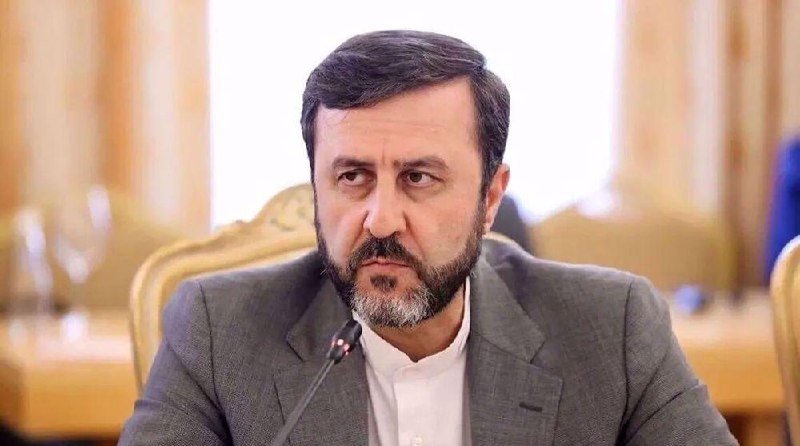
On the morning of 8 May, missile and drone warning systems activated across the United Arab Emirates. By mid-morning UAE time, the alert had been lifted. The official account was minimal: a possible Iranian strike on a vessel, no confirmed attack on Emirati territory, no casualties reported. What the episode did not reveal turns out to be more instructive than what it did.
Gulf monarchies have spent decades threading a needle between Washington and Tehran. The UAE's alert system, activated and then quietly deactivated without a formal public statement attributing fault, is a familiar script. It reflects a strategic posture that has become increasingly central to how the region's capitals manage a confrontation that neither they nor Washington can fully control.
The Hedging Architecture
Gulf governments have long understood that their security depends on managing the space between two mutually hostile powers. The US provides the regional security umbrella; Iran provides the ideological and military challenge that justifies it. Gulf capitals have built their foreign policy around not choosing between those poles, even as the pressure to do so intensifies.
The mechanism is partly institutional. UAE and Saudi defence ministries maintain active communication channels with both Washington and Tehran — or with intermediaries acting on Tehran's behalf. When an incident occurs, the first diplomatic work happens before any public statement. The question is not whether to respond but how to frame the response so that neither side's broader agenda is served at the Gulf state's expense.
This has produced, over two decades, a specific regional equilibrium: incidents get contained. Iranian missiles and drones appear in Gulf skies periodically. The US presence in the Gulf — at Al-Udeid, at tapped-out naval stations — remains intact. Gulf governments absorb the pressure, issue minimal public statements, and keep the channel open.
The pattern has limits. In January 2022, Houthi forces — an Iranian-backed group operating from Yemen — struck Abu Dhabi with drones and a missile. Three people were killed. The UAE went public, spoke of escalation, and demanded international action. The response was real but contained: a brief period of heightened Gulf security rhetoric, a flurry of US and European statements, and then a return to the status quo within weeks. By mid-2023, UAE normalisation talks with Iran were progressing quietly.
The Diplomatic Layer
The question of who controls the Gulf's narrative matters because the region has become, over the past decade, a diplomatic intersection point rather than a peripheral theatre. Saudi Arabia has positioned itself — with enough success that Western capitals have accepted it — as a potential broker on Ukraine. The UAE has maintained relationships with Moscow and Beijing that remain functional even as those powers run into friction with the West. Qatar's dialogue with Tehran has never fully broken, even at the height of the GCC embargo era.
None of this is secret. But it complicates the way Washington frames the region: as a zone of clear US interest, to be managed through alliance architecture, sanctions, and military presence. The Gulf capitals read the same situation and draw different conclusions about their own interests.
The IMF, in a Financial Times-sourced warning published on 7 May 2026, noted that new AI models posed a systemic risk to financial stability. The framing — that algorithmic systems were developing capabilities faster than regulatory frameworks could adapt — maps onto a broader theme: the global financial architecture is being reshaped by forces that no single state fully controls. Gulf sovereign wealth funds, already among the world's largest institutional investors, sit inside that turbulence. Their governments have a structural interest in the stability of the dollar-based financial order, but also a growing interest in alternatives.
The US Passport Signal
On the same day the IMF warning circulated, an AP report picked up by financial wires noted that the US would begin revoking passports from citizens who owed more than $100,000 in child support arrears, with expansion of the policy to follow. The enforcement mechanism — using travel documentation as leverage — sits inside a larger pattern of state capacity being deployed on domestic fronts while American influence faces structural constraints abroad.
Gulf governments watch these signals. The unilateral revocation of financial access — whether through sanctions designation, SWIFT exclusion, or passport mechanics — is a tool the US has used with increasing frequency against adversaries. But the precedent, once established, travels. And Gulf capitals, many of which have experienced US financial pressure in some form over the past decade, have an interest in a financial architecture that is less dependent on any single state's administrative decisions.
That is one structural reason the Gulf has deepened engagement with China on infrastructure and trade, and with Russia on energy and diplomatic positioning. Not because they have abandoned the US alliance — they have not — but because they are building optionality into a system that is becoming less stable than it was a decade ago.
What the Alert Tells Us
The UAE's response to the 8 May alert — absorb, contain, do not escalate — is a demonstration of the old playbook functioning in near-real-time. Missile alerts were triggered. The situation was resolved. No blame was assigned publicly. The channel with Tehran — whatever form it takes — kept working.
The limits of that approach are not visible in a single incident. They emerge over time, as the pressure from both poles of the confrontation intensifies. The US is asking Gulf states to take sides in a broader contest with China. Iran is asking them, through proxies and economic relationships, to remain open. China and Russia are offering alternative frameworks that do not require alignment with Washington. The Gulf's response — to absorb, contain, and keep every corridor open — is rational given the stakes. But the architecture of absorption has a structural limit: eventually, the pressure from both directions becomes too large to manage without taking a side.
The missile alert on 8 May was not that moment. But the next incident, or the one after it, may be closer to it than Gulf governments are prepared to acknowledge.
This publication framed the incident through the lens of Gulf state agency and the structural constraints on Western alliance management — rather than as another chapter in a Washington-Tehran binary narrative.
Wire provenance
This editorial synthesis draws on the following public wire/social posts:
- https://t.me/Middle_East_Spectator/3842
- https://t.me/Middle_East_Spectator/3839
- https://x.com/unusual_whales/status/1921968498765045912
- https://x.com/unusual_whales/status/1921955528190693594