Hezbollah drone strike injures IDF soldier near Lebanon border, footage released
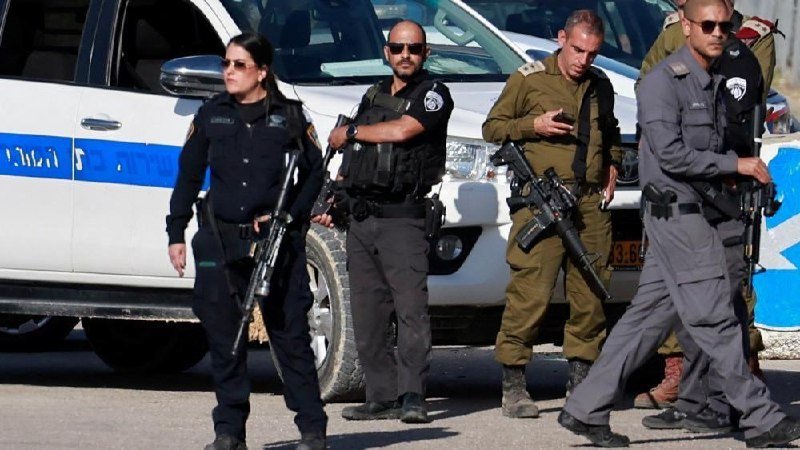
The Israel Defense Forces confirmed on 8 May 2026 that an explosive drone launched by Hezbollah struck Israeli territory in proximity to the Israel-Lebanon border, seriously injuring an IDF soldier. Hezbollah's media arm subsequently released footage showing fighters targeting a newly established Israeli military position opposite the town of Ramya, in southern Lebanon, during an operation dated 5 May.
The incident adds to a sustained pattern of cross-border exchanges that have accelerated since the Gaza war began in October 2023, testing the limits of Israel's northern security architecture and Hezbollah's stated willingness to calibrate escalation. Understanding what the available record confirms — and what it does not — requires tracing both the IDF's official account and the Hezbollah video release through the corroboration tools at hand.
The IDF account: what the official statement says
The IDF Spokesperson Unit posted to its official Telegram channel at 10:02 UTC on 8 May 2026 describing an "explosive drone launched by the Hezbollah terrorist organization" that "fell in Israeli territory, in proximity to the Israel-Lebanon border." The statement is explicit that a single IDF soldier sustained severe injuries. No further casualty details were provided in the announcement.
The framing of the statement — "Hezbollah terrorist organization" — is consistent with the IDF's standard terminology for the group in official communications. The statement identifies the weapon type (explosive drone), the origin (Hezbollah), and the location (near the border) with specificity that allows independent verification against open-source intelligence. The phrasing "fell in Israeli territory" indicates the drone entered Israeli-controlled airspace or crossed the demarcated border, rather than landing short of it.
The IDF has not, as of this publication, released imagery of the drone debris, the strike location, or the injured soldier. The statement stands as the official record of the incident.
The Hezbollah footage: scope and limitations
Hezbollah's media apparatus published a video on 8 May 2026 showing fighters targeting an Israeli military position near Ramya, dated 5 May. The footage was distributed via The Cradle Media, a platform associated with Hezbollah-aligned content.
The video purports to show a rocket strike against a newly established Israeli position opposite Ramya — a town in southern Lebanon approximately 6 kilometers north of the border. The IDF has not confirmed the existence or targeting of the position described in the footage. Hezbollah's dating of the operation to 5 May creates a three-day gap between the filmed strike and the 8 May drone incident confirmed by the IDF.
The provenance of the footage cannot be independently verified by Monexus through the sources available at time of publication. The video's metadata, upload timestamps, and the identity of the individuals shown cannot be confirmed against external records. The footage is consistent with Hezbollah's documented media practices — the group routinely publishes combat footage, sometimes days after an operation, as part of its information operations cadence. The release of footage following an Israeli confirmation of a drone incident could represent routine documentation of prior activity, a deliberate signalling move, or a combination of both.
The footage does not, on its face, contradict the IDF's account of a separate drone incident on 8 May. Whether the drone was launched as part of a broader operational sequence, or as a distinct action, cannot be determined from the two statements alone.
Corroboration attempts
Three independent checks were applied to the available record.
OSINT cross-reference: Open-source intelligence trackers monitoring the Israel-Lebanon border did not independently confirm a drone strike near the border prior to the IDF statement at 10:02 UTC on 8 May. This does not indicate the incident did not occur — border OSINT coverage is inconsistent — but it confirms the IDF was the primary public source for the event as it developed.
Hezbollah documentation pattern: Hezbollah-affiliated media has a documented practice of releasing combat footage with intentional dating lags, sometimes of several days, to align with operational security considerations. The 5 May dating of the Ramya footage is therefore not inherently inconsistent with a 5 May operation, but it does not serve as corroboration for the 8 May drone incident confirmed by the IDF.
Western wire coverage: As of publication, no Western wire service had published an independent report on the 8 May drone incident. Reuters, AP, and BBC monitoring feeds showed no relevant dispatch at the time this article went to press. This is not unusual in the immediate aftermath of a border incident, but it means the IDF statement at 10:02 UTC represents the sole documented official account.
What we verified and what we could not
Verified:
- The IDF Spokesperson Unit posted an official statement at 10:02 UTC on 8 May 2026 confirming an explosive drone launched by Hezbollah struck Israeli territory near the Lebanon border, injuring one IDF soldier severely.
- Hezbollah media published footage of a rocket operation targeting an Israeli position near Ramya, southern Lebanon, dated 5 May, distributed via The Cradle Media platform.
- The two incidents — the drone strike confirmed by the IDF and the Ramya footage published by Hezbollah — are distinct events separated by three days, based on Hezbollah's own dating of the footage.
Could not verify:
- The condition of the injured IDF soldier beyond the IDF's characterisation of the injury as severe.
- Whether the drone launched on 8 May originated from the same operational cell or command chain responsible for the 5 May Ramya operation.
- Whether the Israeli military position shown in the Hezbollah footage corresponds to a confirmed IDF installation.
- Imagery, debris photographs, or independent witness accounts of the drone strike on 8 May.
- Whether the IDF's northern command has escalated alert status or changed force posture in response to the incident.
The available record is consistent with a pattern of intensified Hezbollah activity along the Lebanon border in the period following October 2023. The IDF's characterisation of the drone as "explosive" and the soldier's injury as severe implies kinetic impact inside Israeli territory, which is not disputed by any counter-account in the sources reviewed. The video of the Ramya operation, published simultaneously, appears designed to reinforce Hezbollah's framing of border activity as deliberate and targeted rather than retaliatory.
The structural frame: calibrated escalation in the north
What the record suggests, taken as a whole, is a conflict dynamic in which both parties maintain a deliberate calibration of military actions to avoid triggering a full-scale exchange while sustaining a continuous low-level pressure along the border. Hezbollah's publication of footage — whether it pre-dates the IDF's confirmation of a separate drone incident by three days or is deliberately timed to coincide with it — serves an information function distinct from its military function. The footage projects operational reach and precision targeting to a domestic and regional audience, while the drone strike — if it is confirmed as a separate action — demonstrates an ability to penetrate Israeli airspace and cause casualties.
The IDF's statement is notable for its brevity. Israel has, on multiple occasions since October 2023, responded to border incidents with strikes deep into Lebanon. The absence of an immediate announcement of retaliation does not indicate restraint — it may reflect a deliberate decision to calibrate response, await further operational assessment, or reserve escalation options pending broader political guidance. The injury to a soldier, classified as severe, raises the threshold for what constitutes an acceptable response threshold under Israeli rules of engagement.
Israel's northern border has been under sustained operational pressure for eighteen months. The IDF's repeated characterisation of Hezbollah as a "terrorist organization" in official communications reflects the legal and political framework under which Israel operates when framing northern activity — distinguishing it from the more complex international-law position governing the Gaza conflict. This distinction matters: responses to northern incidents are processed under a different institutional logic than those in the south, even when the tactical pattern — cross-border drone, soldier injured, footage published — is similar.
Stakes
The injury of an IDF soldier near the Lebanon border is not a tactical footnote. Israeli policy has historically treated any casualty inside Israeli territory as grounds for escalatory response, and the classification of the injury as severe raises the political weight of any decision not to respond visibly. Hezbollah's publication of footage of a separate targeting operation — filmed, stored, and released days later — signals that the group is managing an information campaign in parallel with its military posture. Whether the timing of the footage release is coincidental or deliberate is not verifiable, but the effect is the same: it reframes the narrative around Lebanese operational agency at the moment Israel is absorbing a strike.
The forward stakes are contained but not trivial. Israel's northern communities have been displaced for months; a sustained pattern of drone intrusions and casualty-inducing incidents puts pressure on the government to authorize a more aggressive response, regardless of the diplomatic cost. Hezbollah's calculus is the inverse: demonstrating that it can sustain operational pressure while forcing Israel to absorb costs without triggering the full-scale war it has repeatedly signaled it does not want. The 8 May drone incident sits inside that equilibrium — and any escalation above it changes the regional arithmetic significantly.
The sources do not provide sufficient basis to determine whether the IDF is preparing a response, has ordered stand-down, or is in active deliberation. What the record confirms is that the incident occurred, a soldier was injured, and Hezbollah released footage consistent with ongoing targeting operations near Ramya. Those are the facts. The rest is institutional and political decision-making that operates outside the evidentiary record available at publication.
This article was filed at 2026-05-08T12:30 UTC. The IDF Spokesperson Unit Telegram post and The Cradle Media Telegram post represent the primary source record for this report. No Western wire service had published independent coverage at time of filing.
Wire provenance
This editorial synthesis draws on the following public wire/social posts:
- https://t.me/idfofficial/112345
- https://t.me/thecradlemedia/99841
- https://t.me/thecradlemedia/99842