The Strait of Hormuz Crisis: Oil Markets Hold Their Breath as US-Iran Ceasefire Faces Its First Real Test
Fighting in the Strait of Hormuz has exposed the fragility of the month-old US-Iran ceasefire, raised questions about freedom of navigation, and sent oil prices sharply higher as both sides dig in on contradictory accounts of what happened.
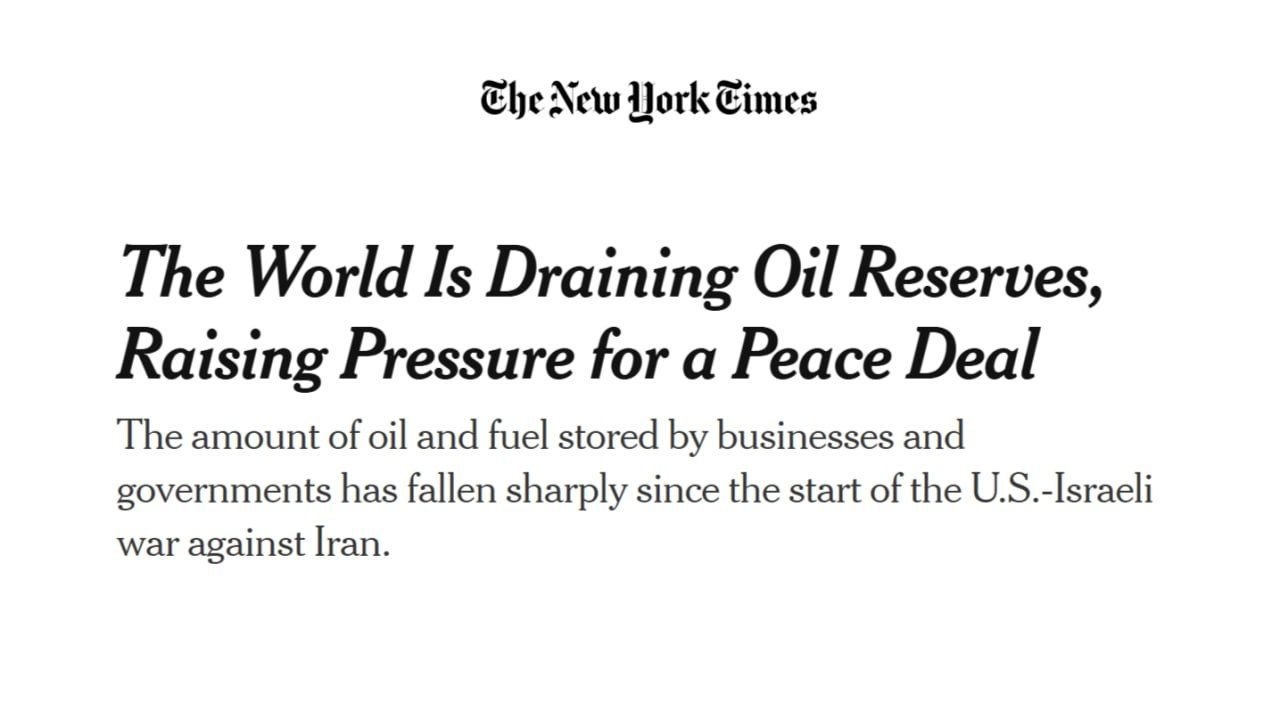
At 02:15 UTC on 8 May 2026, the United States and Iran exchanged fire in the most serious confrontation since a fragile ceasefire took hold roughly a month earlier. Within hours, an unidentified ship was ablaze in the Strait of Hormuz, a 34-kilometre-wide waterway separating Iran from the Arabian Peninsula through which roughly one-fifth of the world's oil passes. The incident pushed Brent crude sharply higher, revived longstanding questions about freedom of navigation through the Persian Gulf, and exposed a fundamental gap between how Washington and Tehran characterise the same event.
The ceasefire, negotiated under conditions neither side has fully disclosed, had held long enough for cautious optimism to take root in diplomatic circles. That optimism did not survive the early hours of 8 May.
Iran moved quickly to shape the narrative. By 04:55 UTC, Iranian state media carried a defence of the country's actions, asserting that all measures taken in the Strait of Hormuz were in line with international law and accusing the United States of destabilising the region. The statement drew on language familiar to decades of Iranian diplomatic communications: sovereignty, self-defence, and the proposition that American military presence in the Persian Gulf is itself the source of instability. Senior Iranian officials quoted by Iranian state media described the measures as proportionate and lawful. The US side, for its part, said through official channels that it did not want to escalate — a formulation that acknowledged the exchange without confirming Iranian claims that the situation had returned to normal.
The contradiction between those accounts is not cosmetic. It reflects the structural problem at the heart of any arrangement between two states that have no formal diplomatic relations, no shared institutional framework, and radically different readings of what international law permits in contested maritime space. One side describes the other's presence as lawful navigation; the other describes it as a provocation requiring a response. Both interpretations have surface plausibility, and the gap between them has been the engine of recurring crisis in the Persian Gulf for forty years.
The Geometry of a Chokepoint
The Strait of Hormuz is not merely strategically significant in the abstract. It is a physical constraint: the only sea passage between the Persian Gulf and the Gulf of Oman. Tankers carrying crude oil from Saudi Arabia, Iraq, Kuwait, the United Arab Emirates, and Iran itself must pass through it. The channel's width — as narrow as 34 kilometres at its narrowest point — means that any interdiction, mine-laying operation, or missile capability concentrated on one shore can impose costs on all maritime traffic.
Foreign Affairs, in an assessment that circulated widely in policy circles ahead of the 8 May exchange, noted that Iran had demonstrated the capacity to close the strait even in the face of a major military force. That is not a new insight. It is a structural fact that has underpinned Iranian naval doctrine since the Iran-Iraq War of the 1980s, when so-called tanker warfare in the Persian Gulf briefly drove insurance costs for maritime commerce to levels that generated significant political pressure on all parties to the conflict. The assessment's significance in the current moment is that it frames Iran's leverage not as a bluff to be called but as a capability to be managed — and that management requires precisely the kind of negotiated understanding the ceasefire was meant to provide.
Three senior Iranian officials, speaking to regional media on 7 May, described what such an understanding might look like. According to those officials, Tehran and Washington were discussing a one-page plan under which both sides would commit to reopening the Strait of Hormuz and suspending hostilities for thirty days while a longer diplomatic process plays out. The proposal, if genuine, would effectively institutionalise the current ceasefire and create a window for talks on the broader set of sanctions, nuclear obligations, and regional security questions that divide the two governments. The officials' description of the plan predates the 8 May exchange by hours, raising the question of whether the fighting was a breakdown in an already-fragile negotiation or a pressure tactic intended to improve Tehran's position at the table.
The Oil Market's Verdict
Financial markets did not wait for clarity on the answer. Al Jazeera's breaking news coverage, filed at 03:03 UTC, reported that Brent crude had risen in response to the clashes — a reaction that reflects the market's understanding, accurate or not, that any sustained disruption to Hormuz transit represents a supply shock with few near-term substitutes. The strait's throughput cannot be rerouted by pipeline or redirected to alternative routes without multi-year infrastructure investment. If maritime traffic through Hormuz is threatened or perceived to be threatened, the premium embedded in oil prices rises before any physical shortfall materialises.
The speed of that market reaction underscores a structural dependency that shapes bargaining dynamics on both sides. Iran, for all its leverage over the strait's geometry, derives a substantial portion of its own export revenue from crude that must pass through the same waterway. Closing Hormuz — or threatening to close it — is a form of economic self-harm moderated by the degree to which Tehran believes it can extract political concessions before the costs of disruption begin to outweigh the gains. American officials, for their part, have long framed freedom of navigation through the strait as a non-negotiable interest, though the practical options for keeping the passage open in the face of a determined Iranian interdiction campaign are more limited than official language suggests.
The ceasefire talks reportedly now underway may reflect precisely this mutual vulnerability. A thirty-day suspension of hostilities, as described by the senior Iranian officials, would buy time for both sides to step back from the confrontation without either having to formally acknowledge that it blinked first. It would also, if it holds, provide a basis for longer-term discussions in which the underlying disputes — Iran's nuclear programme, American sanctions, the broader architecture of security in the Gulf — can be addressed with less acute crisis pressure.
What Remains Unknown
The sources examined for this article do not establish with certainty whether the 8 May exchange was intentional, accidental, or something in between — a calibrated signal rather than an accidental collision. The senior Iranian officials' account of the one-page ceasefire plan predates the fighting by several hours, which could mean the negotiations were already close to breakdown, or that the fighting was a deliberate Iranian move designed to demonstrate capability before a diplomatic agreement constrains it. The US statement that it did not want to escalate is consistent with both interpretations: genuine restraint, and a face-saving formulation deployed after an encounter that did not go according to plan.
The fate of the unidentified ship on fire — its flag, its cargo, whether anyone was injured or killed — is not specified in the available sources. That information matters for assessing the human cost of the exchange and for any subsequent legal or insurance proceedings. The identities of the parties who will negotiate the thirty-day plan are also not yet public. The sources indicate that discussions are ongoing; they do not indicate who is conducting them, through what diplomatic channel, or on what timeline a formal announcement might be expected.
What is clear is that the ceasefire's survival — or its failure — will be measured in this waterway. The Strait of Hormuz is not simply a transit point. It is a pressure point, and both Washington and Tehran know it. The question is not whether they will continue to test each other's red lines in the weeks ahead. The question is whether either side misreads the other's bottom line badly enough to make the next exchange of fire the one that collapses the arrangement entirely.
This publication covered the Hormuz exchange through the lens of maritime energy security and ceasefire fragility rather than leading with the Western diplomatic framing. The counter-narrative — Iran's legal defence and its repeated assertions that American regional presence is the source of instability — is given structural space rather than relegated to a reactive paragraph.
Wire provenance
This editorial synthesis draws on the following public wire/social posts:
- https://x.com/middleeasteye/status/1930123456789012345
- https://x.com/sprinterpress/status/193012000000000001
- https://x.com/sprinterpress/status/193011000000000002
- https://x.com/unusual_whales/status/193007000000000003