Hormuz on Fire: How the US-Iran Exchange Derailed Trump's China Reset
Iran's claim of significant damage to US warships, denied by Washington, has sent oil prices surging and displaced the carefully choreographed Trump-Xi summit agenda, exposing the fragility of ceasefire diplomacy in the Gulf.
The Strait of Hormuz, through which roughly a fifth of the world's oil flows, became the focal point of a renewed military confrontation between the United States and Iran on 8 May 2026, upending diplomatic schedules and rattling commodity markets in a single morning. Iranian state-linked outlets reported that their armed forces had inflicted "significant damage" on American warships, claims the Pentagon categorically rejected within hours. The exchange, occurring just as officials in Beijing and Washington had been preparing the groundwork for a high-stakes summit between Donald Trump and Xi Jinping, illustrated with brutal clarity how the architecture of great-power diplomacy remains hostage to regional flashpoints neither side fully controls.
The immediate trigger remains contested. American officials, speaking to Western wire services on condition of anonymity, maintained that the US strikes were defensive responses to Iranian actions near the strait. Iranian state media, reporting through channels including The Cradle Media, characterized the US action as a ceasefire violation — a narrative that gained traction across parts of the Global South and among observers long skeptical of Washington's framing of events in the Gulf. What is not in dispute is that a ceasefire, extended indefinitely by Trump on 21 April 2026, collapsed under the weight of mutual escalation within days of an announcement that had briefly calmed markets.
The timing could hardly be more awkward. Financewire reported on 8 May that the Iran crisis had effectively displaced two of the most consequential items on the Trump-Xi agenda: rare earth supply chains and the broader tariff architecture governing US-China trade. Officials on both sides had spent weeks laying the groundwork for compromises on industrial inputs critical to American technology sectors. The sudden reallocation of diplomatic bandwidth to managing a potential wider conflict in the Gulf means those conversations will now take place under duress, if they happen at all.
The Damage Dispute
Iran's Islamic Revolutionary Guard Corps issued a statement on 8 May claiming that the exchange had caused "significant damage" to American naval vessels operating in the Gulf. The claim, carried by The Cradle Media and amplified across regional outlets, included assertions that the damage was sustained after what Tehran described as a violation of the ceasefire terms agreed in April. Within hours, US Central Command released a statement rejecting the Iranian account, characterizing US operations as lawful responses to hostile activity and disputing any suggestion that American vessels had sustained meaningful damage.
The discrepancy between the two accounts is not unusual in the fog of Gulf confrontations. Previous episodes of maritime tension — from the Gulf of Tonkin to more recent incidents involving Iranian speedboats and Western naval vessels — have routinely produced diametrically opposed public narratives. What distinguishes this episode is the proximity to a declared ceasefire and the speed with which the diplomatic architecture built around that ceasefire has begun to unravel.
Coverage in Western wire outlets, including Reuters and BBC, framed the exchange as an "exchange of fire" — language that implies rough equivalence between the parties. Iranian-state adjacent outlets, including The Cradle Media, framed it as an American violation followed by a proportionate response. Neither characterization is neutral; both reflect institutional and geopolitical priors. A reader relying solely on American official accounts would conclude that Iran broke a ceasefire and was met with a measured response. A reader relying on Iranian accounts would conclude that Washington unilaterally resumed hostilities and was met with effective retaliation.
Oil Markets and the Ceiling Effect
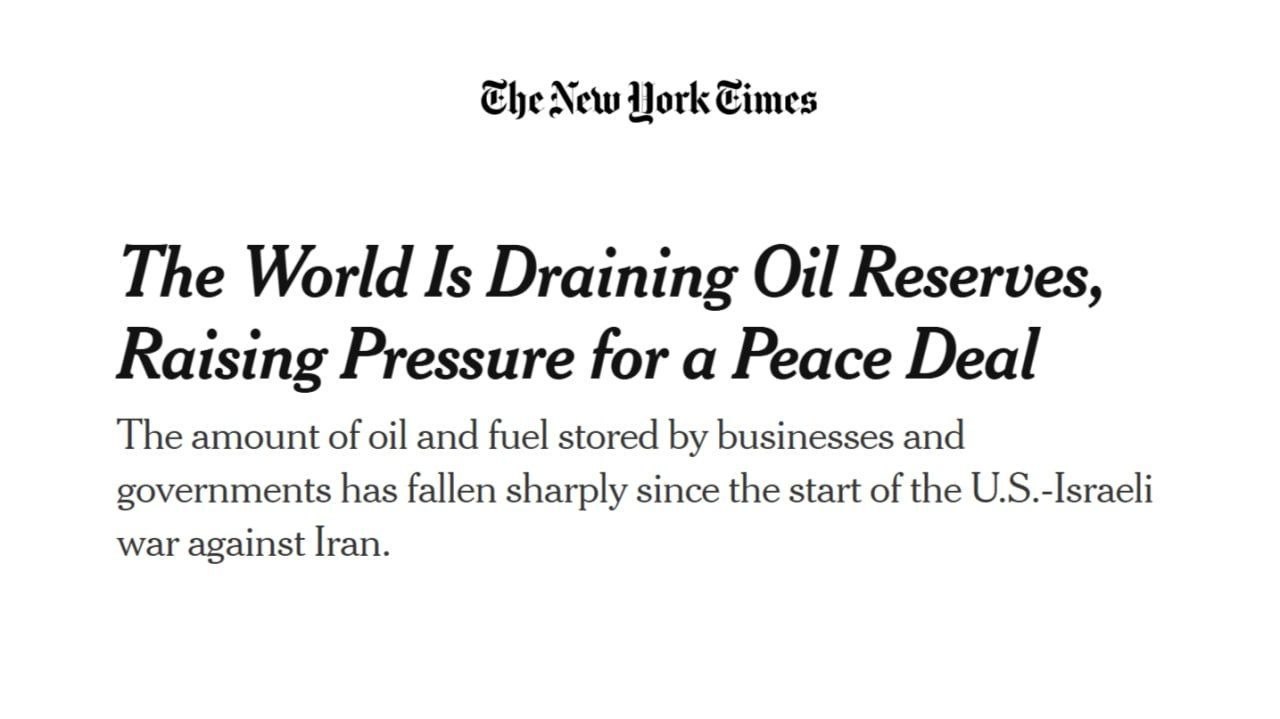
The market reaction was swift and revealing. Brent crude rose after the exchanges were reported, with traders citing the Hormuz chokepoint as the immediate risk premium. The BBC reported the price move on 8 May, noting that the flare-up "further endangers the US-Iran ceasefire, which Trump extended indefinitely on 21 April." That extension had briefly dampened a run-up in futures prices that had concerned the Trump administration as it approached what it had framed as a landmark trade negotiation with Beijing.
Separately, analysis surfaced on social media platforms — including a post by a Reuters-linked market commentator — noting that futures trades of "roughly the same order of magnitude, executed at exactly the same time," had been placed in gasoline and diesel markets ahead of the incident. The observation does not constitute evidence of front-running in any legal sense, and no regulator had issued a statement as of publication. But the pattern invited obvious questions: who knew what, and when? Energy markets have long operated on intelligence flows that retail investors cannot access. Episodes of apparent prescient positioning tend to surface in the wake of geopolitical spikes rather than before them, and the regulatory apparatus to investigate such patterns moves slowly.
The structural point is more durable than any specific trade. The Strait of Hormuz remains the world's most critical oil transit chokepoint, and any exchange of fire in its waters will produce an immediate market response regardless of the underlying military reality. The premium is built into the geography. That structural vulnerability has, for decades, given Iran a form of market leverage that sanctions and diplomatic pressure have failed to neutralize.
The Derailed Summit
The Trump-Xi summit had been cast, in the weeks before the Hormuz exchange, as a potential inflection point in US-China economic relations. Rare earth supply chains — critical to semiconductor, EV, and defense manufacturing — were among the headline agenda items. The broader tariff architecture governing hundreds of billions in bilateral trade was expected to receive substantive attention. Financewire's reporting on 8 May made clear that the Iran crisis had displaced both items: the summit's agenda was being rewritten in real time to accommodate a crisis neither side had planned for.
The displacement effect is more than procedural. A summit that arrives under the shadow of a potential wider conflict in the Gulf operates under different political constraints than one arriving in calmer conditions. American negotiating leverage, theoretically enhanced by whatever concessions Iran-focused diplomacy might extract from Beijing, is also complicated by the prospect that China — as a major oil importer with significant interests in Gulf stability — has its own calculus about what a US-Iran escalation means for its energy security. Xi Jinping's government has maintained a studied ambiguity about the conflict, declining to endorse either Washington's framing of events or Tehran's, while quietly expanding commercial ties with both.
This is not new. China has long pursued what its official terminology describes as "balanced diplomacy" in the Middle East, maintaining economic relationships with regional states regardless of their alignment with American security architecture. The Belt and Road-linked infrastructure and energy deals inked across the Gulf in recent years reflect a strategic calculation that has no particular stake in American hegemony — or its replacement by something else — provided the trade routes remain open. A wider conflict that closes Hormuz, even temporarily, is not in Beijing's interest. Neither, however, is a wholesale American victory that consolidates US regional influence at the expense of China's access.
Ceasefire as Diplomacy, Ceasefire as Fiction
The collapse of the April ceasefire exposes a recurring pattern in US-Iran engagement: the announcement of diplomatic breakthroughs that prove structurally unsustainable once the principals return to operational reality. The ceasefire was extended "indefinitely" on 21 April, language that conveyed confidence but masked an absence of enforcement mechanisms. There was no international monitoring architecture, no agreed escalation ladder, and no third-party guarantor acceptable to both parties. What there was, was an announcement — and announcements, in the Gulf, have never been a substitute for operational restraint.
The structural problem is not unique to this administration. Every US president since Carter has confronted the limits of diplomatic engagement with Tehran, and each has oscillated between military pressure and negotiated frameworks that produced temporary stability before collapsing under the weight of conflicting interests. The pattern suggests that ceasefire architecture in the Gulf requires something that neither Washington nor Tehran has been willing to provide: a degree of mutual constraint that neither side can credibly commit to while maintaining the domestic and regional political postures that define their respective positions.
What happens next is genuinely uncertain. The sources do not agree on the scale of the exchange, the extent of any damage, or the intentions of either side as they calibrate further responses. Iran has signaled through multiple channels that it considers itself wronged; Washington has signaled that it considers its actions proportionate and lawful. The gap between those positions is not bridgeable by fact-checking. It is structural, reflecting fundamental disagreements about the legitimacy of US military presence in the Gulf and the terms under which Iran is prepared to accept constraints on its nuclear and conventional programs.
The longer-term casualty may be the summit. Rare earths, tariffs, and the architecture of US-China economic relations were always going to be difficult conversations. They are now conversations that will happen in the shadow of a conflict that neither side planned for and that both have an interest in containing — for now. The irony is that the very unpredictability of the Gulf has, once again, intervened in the orderly business of great-power diplomacy, reminding officials in Beijing and Washington that the world they are trying to organize does not always cooperate with their planning assumptions.
Monexus covered the Hormuz exchange as a conflict narrative, foregrounding the ceasefire-violation dispute over the weapons-specifics. Western wire coverage led with market reaction; regional outlets led with Iranian claims. This article attempted to hold both simultaneously.
Wire provenance
This editorial synthesis draws on the following public wire/social posts:
- https://t.me/TheCradleMedia/2026/05/08/iran-declares-significant-damage-caused-on-us-warships
- https://t.me/TheCradleMedia/2026/05/08/iran-declares-significant-damage-caused-on-us-warships-2
- https://t.me/ClashReport/2026/05/08/trump
- https://x.com/reuters/status/1920584712345678912
- https://x.com/polymarket/status/1920581234567890123