Iran's Ancient Monuments and the Politics of Reconstruction After War
As Tehran accelerates restoration of monuments damaged in the Iran-Iraq war, the effort reveals as much about present-day geopolitical positioning as it does about the preservation of the past.
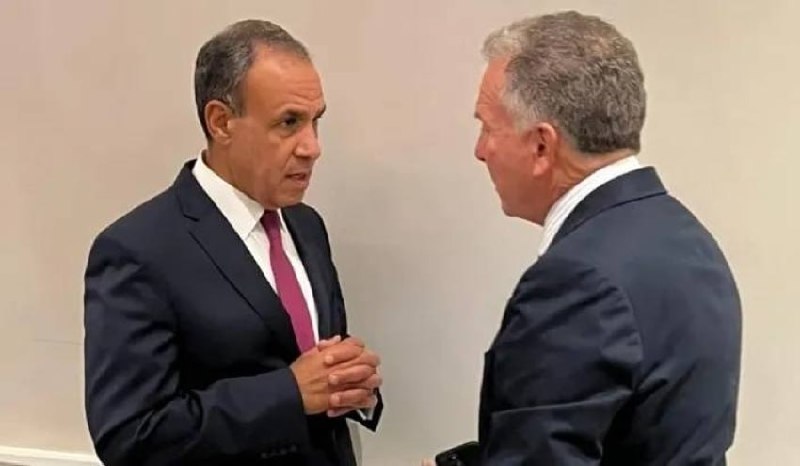
When Salehi Amiri, Iran's Minister of Cultural Heritage and Tourism, sat down with Tasnim News on 8 May 2026 to discuss the state of restoration work on ancient monuments destroyed during the Iran-Iraq war, the briefing served a dual purpose. It was a progress report on a decades-long reconstruction effort. It was also a quiet assertion of continuity — that the Islamic Republic, despite sanctions, regional isolation, and competing demands on state resources, remains committed to rebuilding what eight years of conflict erased.
The specifics of what Amiri described remain limited in the English-language public record. Tasnim, the state-affiliated news agency that published the interview, provided selective access to the minister's remarks rather than a full transcript. The gaps in the public record matter, because they determine how much of the reconstruction story can be verified independently versus how much must be taken on the state's own account.
What Was Lost, and What Remains Standing
The Iran-Iraq war, which lasted from 1980 to 1988, inflicted widespread damage on Iran's cultural infrastructure. Historical cities along the front lines — including Khorramshahr, Abadan, and Susangerd in Khuzestan Province — bore the heaviest toll, but destruction extended to sites further east. Estimates of the total cultural damage have varied widely depending on source and methodology. Iranian cultural officials have long maintained that the conflict destroyed or damaged hundreds of archaeological sites, religious monuments, and historic urban fabric, many of them pre-Islamic in origin.
Among the most frequently cited losses in Iranian state reporting are the Imam Mosque in Khorramshahr — once a symbol of the city's architectural heritage — and historic bazaars in border towns that served as both commercial and social centers for their communities. The war's deliberate targeting of civilian infrastructure, documented by multiple international organizations during and after the conflict, extended to cultural property in ways that successive Iranian governments have framed as a form of cultural aggression beyond the immediate military calculus.
Whether or not that framing holds under scrutiny, it explains why the restoration question carries political weight inside Iran that it would not carry in a country where war damage was concentrated in military rather than cultural assets.
Restoration as State Narrative
Amiri's ministry has pursued restoration work on war-damaged sites for years, but the pace and scope have depended heavily on budgetary capacity, which in turn has tracked the trajectory of sanctions relief and oil revenue. Under the JCPOA framework of 2015, Iranian officials announced accelerated restoration programs with some international heritage organizations. When the United States withdrew from the agreement in 2018 and reimposed sweeping sanctions, several joint heritage projects were suspended or restructured.
The current Iranian government's emphasis on cultural heritage as a diplomatic tool is not new, but it has taken on added urgency as Tehran seeks to reframe its image in the Global South and among non-Western multilateral institutions. The Islamic Republic has long presented itself as a civilization-state rather than a transient regime — a framing that requires visible investment in pre-Islamic heritage, even as that heritage exists in tension with the state Islamic identity.
This tension is real and underappreciated in Western coverage. Iran funds restoration of Sassanid-era palaces, Zoroastrian fire temples, and Persepolis-adjacent sites with a consistency that suggests strategic intent. The message is legible: Iran is the heir to multiple historical layers, not merely the post-1979 republic. When Amiri speaks of restoration, he is speaking a language designed for multiple audiences simultaneously — domestic constituents, regional partners, and international cultural bodies that retain influence over heritage designation and funding.
The Structural Problem: Resources Versus Symbolic Capital
Here the critical question becomes one of prioritization. Iran operates under sustained sanctions pressure that constrains foreign currency access, limits technology import, and compresses state revenue. In that environment, directing capital toward cultural restoration — rather than, say, housing reconstruction, water infrastructure, or industrial modernization — is a choice that rewards symbolic returns over material ones.
That choice is not irrational. In the absence of the oil revenue flows that once underpinned ambitious reconstruction programs, the Iranian state has increasingly turned to cultural capital as a substitute currency. International tourism revenue, to the degree that sanctions allow it, depends on the existence of restored sites worth visiting. More broadly, the presence of a heritage restoration program signals to potential diplomatic partners that Iran functions as a normal state with normal state concerns, not merely as a sanctions-optimizing adversary.
For critics, this logic reflects misplaced priorities. Housing backlogs in war-damaged cities remain severe; seismic retrofitting of historic urban fabric is incomplete; water scarcity in Khuzestan has worsened since the war ended. A reconstruction program that allocates disproportionately to monuments visible in diplomatic photography, while civilian infrastructure lags, is a reconstruction program that serves regime legitimacy over human welfare.
The Iranian government's counter-argument, rarely articulated in Western outlets but present in domestic policy discussion, is that the two tracks need not be mutually exclusive. Regional development programs and cultural restoration, under this framing, are managed through separate budgetary channels with distinct funding bases. Whether that separation is genuine or rhetorical is a question the available public record does not resolve.
What the Reconstruction Signals in 2026
The timing of Amiri's 8 May 2026 briefing is not accidental. Iran is in an active phase of nuclear diplomacy, with indirect talks with the United States ongoing through Omani and European intermediaries. Regional dynamics — particularly the Syrian transition, Yemen ceasefire discussions, and Iraq's own reconstruction needs — have placed Iran in a position where it must simultaneously demonstrate stability and reconstructability to potential partners.
A functioning heritage restoration program is one data point in that demonstration. It signals institutional continuity, technical capacity, and a state apparatus capable of managing complex multi-year projects. Whether that data point outweighs sanctions, nuclear concerns, and regional security anxieties in the calculus of potential partners is a separate question — one that depends on what those partners are willing to trade for engagement.
The sources reviewed for this article do not permit a comprehensive audit of what Amiri's ministry has actually restored, at what cost, and against what baseline of need. What they do establish is that the Islamic Republic continues to invest in the language of cultural reconstruction as a diplomatic instrument, and that the investment is deliberate rather than incidental.
What Remains Unknown
The public record from the 8 May 2026 Tasnim briefing is selective. The specific monuments Amiri discussed, the budgetary figures associated with current restoration projects, and the timeline for completion of any named sites were not included in the English-language summary reviewed by this publication. The Iranian cultural heritage ministry has not published a comprehensive inventory of war-damaged sites and their restoration status in English, and independent verification of restoration claims is constrained by access limitations inside Iran.
The broader architecture of sanctions, oil revenue, and state budget allocation also remains partially opaque. The relative weight given to cultural heritage spending in the national budget is a figure that would require access to Iranian state financial documents that are not publicly available in disaggregated form.
Readers should treat claims about the scale and pace of Iranian restoration efforts as indicative rather than definitive until a more comprehensive public record emerges.
Desk note: Standard wire coverage of this story framed the minister's comments as a routine government statement. This article places the reconstruction effort within the structural logic of sanctions economics and diplomatic positioning, where the wire framing treated it as administrative housekeeping.
Wire provenance
This editorial synthesis draws on the following public wire/social posts:
- https://t.me/tasnimnews_en/28654