Iran's Araghchi Dismisses US Intelligence, Warns of Reckless US 'Military Adventure'
Iran's Foreign Minister Abbas Araghchi publicly rejected CIA assessments of Iranian missile capabilities on 8 May 2026, declaring Tehran's programme at '120 percent' while accusing Washington of systematically choosing military over diplomatic solutions.
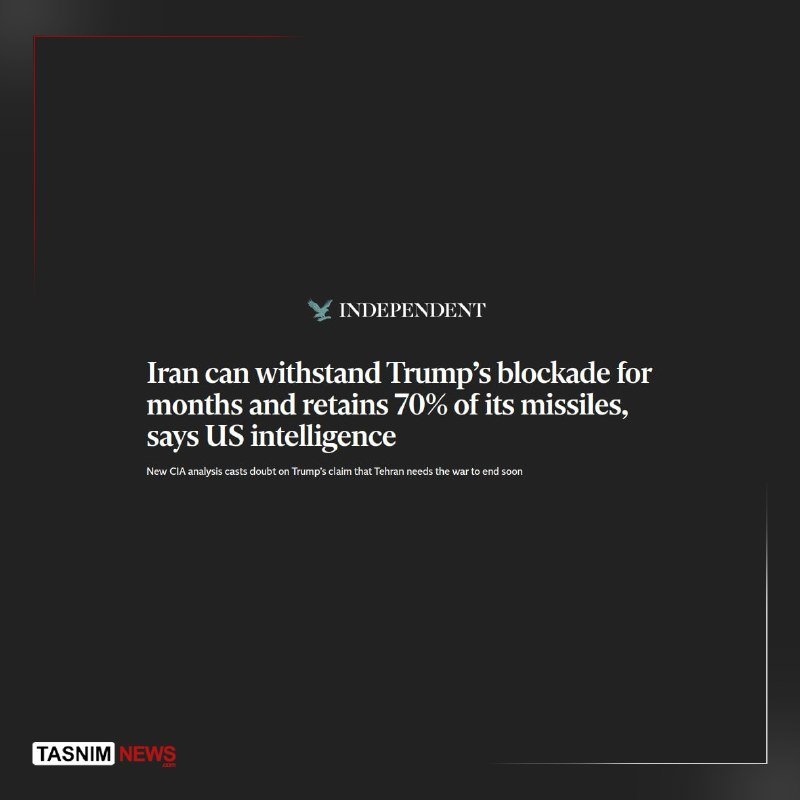
Iran's Foreign Minister Seyed Abbas Araghchi issued a direct repudiation of American intelligence assessments on 8 May 2026, posting on X that Tehran's missile capabilities stood at "120 percent" and accusing the CIA of systematic miscalculation. The statements, which drew on so-called intelligence assessments published by American media outlets in preceding weeks, landed at a moment of acute tension between the two governments with no functioning diplomatic channel and a stack of unresolved nuclear commitments on both sides.
The core of Araghchi's intervention was blunt: "Every time a diplomatic solution is on the table, the U.S. opts for a reckless military adventure." He added that "Iranians never bow to pressure and d —" the post cutting off mid-sentence, though subsequent reporting by Iran's official IRNA news agency confirmed the full formulation to be "Iranians never bow to pressure and do not accept threats." The framing placed the Islamic Republic squarely in the role of a patient, rational actor being pushed toward confrontation by a superpower with a documented preference for pressure over dialogue. Whether that framing holds up against the available evidence is a separate question from whether it resonates inside Tehran or across the Gulf states — where it almost certainly does.
What Araghchi Said and Why It Matters Now
The statements emerged in a concentrated burst across social media platforms between 11:27 and 12:30 UTC on 8 May 2026, a timing that suggests coordinated public diplomacy rather than spontaneous reaction. Multiple open-source intelligence monitoring accounts — including OSINTdefender, GeoPWatch, and ClashReport — captured the posts within minutes of each other, indicating that Araghchi's office had prepared and pre-scheduled the release.
The references to "intelligence assessments published by various American media outlets" point to a body of reporting that has circulated in US and allied publications over the preceding months, broadly asserting that Iranian ballistic missile programmes have advanced faster than previously estimated and that Iran has accumulated sufficient fissile material for multiple warhead configurations. Iranian officials have consistently characterised such reporting as fabricated or deliberately exaggerated; Araghchi's Thursday post went further, targeting the CIA by name as the proximate source of what he called "wrong assessments."
The '120 Percent' Claim: Capability, Defiance, or Diplomatic Theatre?
Araghchi's declaration that Iranian missile capabilities stand at "120 percent" is, on its face, an unusual metric. Ballistic missile programmes are not typically measured against a notional baseline of 100 percent in any established technical literature. The phrasing functions more as a political signal than a weapons-assessment datum — a deliberate provocation aimed at domestic and regional audiences rather than at defence analysts. The language echoes a broader pattern in Iranian official communications under the current administration, which has shifted toward maximally defiant public posture following the collapse of the 2015 nuclear deal's formal architecture.
The claim cannot be independently verified from open sources. Iran's missile programme operates under significant opacity, and while UN International Atomic Energy Agency inspectors retain some access to declared nuclear sites, the ballistic missile side of the inventory is not subject to the same monitoring regime. US intelligence assessments — to the extent they are reflected in media reporting — represent a different epistemic category: institutional analysis informed by satellite imagery, signals intelligence, and human sources, not on-the-record Iranian government statements. The gap between what Tehran announces and what US agencies estimate is, by design, unresolvable from outside both systems.
A Pattern Washington Recognises — and Tehran Resents
The historical record underlying Araghchi's accusation is not invented. In 2003, the United States rejected a package of Iranian nuclear concessions and pressed instead for regime-change logic that left the nuclear question to fester for a decade. In 2006 and 2007, the same pattern repeated at the European- brokered negotiating table. The JCPOA negotiations of 2013–2015 did produce an agreement — but one that the Trump administration exited in 2018, reimposing the full scope of sanctions and stripping away the diplomatic architecture Iran had spent years building toward. That withdrawal is cited by Iranian officials as the foundational grievance of the current hardline posture, and it is cited accurately.
What Araghchi elides is the sequence of events between 2019 and 2025: Iran's serial violations of the JCPOA's enrichment limits, its attacks on commercial shipping in the Gulf, its supplying of drones to Russian forces in Ukraine, and its accelerating uranium enrichment to weapons-adjacent levels. These are not disputed facts — they appear in the IAEA's own quarterly reports and in statements from multiple Western governments. The question of who bears primary responsibility for the diplomatic collapse is genuinely contested, and Araghchi's formulation — while rhetorically effective — simplifies a history that resists clean allocation of blame to either side.
What We Verified / What We Could Not
Verified from thread sources:
- Araghchi posted on X on 8 May 2026 that "Every time a diplomatic solution is on the table, the U.S. opts for a reckless military adventure" — confirmed across OSINTdefender, wfwitness, ClashReport, and myLordBebo.
- Araghchi stated "Iranians never bow to pressure" — confirmed via IRNA and wfwitness.
- Araghchi referenced "intelligence assessments published by various American media outlets" and declared the CIA wrong in those assessments — confirmed via englishabuali.
- Araghchi described Iranian missile capabilities as at "120 percent" — confirmed via GeoPWatch citing Araghchi's X post.
Could not verify:
- The specific content of the CIA assessments Araghchi referenced. The thread contains no US government source confirming, denying, or detailing what those assessments contain.
- Whether "120 percent" corresponds to any defined weapons programme milestone. No independent technical source appears in the thread to contextualise the claim.
- The precise diplomatic offers Araghchi characterises as having been on the table. Iranian state media has not published a specific list of proposals the US rejected.
- The broader context of current US-Iran diplomatic back-channel status. No source in the thread addresses whether talks are ongoing through intermediaries.
The Structural Frame: Dollar Architecture and Diplomatic Collapse
The US-Iran standoff is, at one level, a bilateral dispute over enrichment rights, sanctions, and regional influence. At a structural level, it is inseparable from the architecture of dollar-denominated global finance — an architecture the United States has weaponised with increasing directness since 2018, using SWIFT exclusion and secondary sanctions to sever Iran's central bank from global clearing systems. Tehran's turn toward nuclear ambiguity is not separable from the collapse of its financial access; both are downstream effects of a single coercive strategy. Araghchi's language of "pressure" and "reckless military adventure" maps onto a genuine structural constraint: without the ability to conduct ordinary international commerce, Iran has less to lose from crossing thresholds that would trigger further financial isolation.
The United States, for its part, operates from a posture of treating Iran's nuclear programme as an existential threat to regional allies — principally Israel and Saudi Arabia — and therefore as a problem requiring containment and maximum pressure rather than negotiated accommodation. That assessment has not changed across administrations, and Araghchi knows it. His Thursday posts were not directed at Washington; they were directed at Beijing, Moscow, the Gulf capitals, and the non-aligned world — audiences for whom the language of American overreach and diplomatic bad faith resonates as a structural argument about unipolar power.
Stakes: What Escalation Looks Like
If the current trajectory holds, several outcomes become more likely over a twelve-to-eighteen-month horizon. Iran's enrichment levels continue advancing toward the technical threshold for a weapons capability, which narrows the window for any future negotiated freeze. The United States, confronting an Iran with de facto breakout capacity, faces a choice between accepting that reality or launching air strikes that would almost certainly not achieve complete denuclearisation and would almost certainly trigger a regional war involving Hezbollah, Iraqi militia networks, and Houthi forces already engaged in low-intensity conflict with US naval assets.
Israel has stated publicly — in statements reflected across regional wire services — that it will not accept an Iranian nuclear weapon. Saudi Arabia has made the same point more quietly. The credibility of those commitments is the variable that makes the current moment structurally different from the 2015 deal period. Iran appears to be calculating that the cost of crossing the threshold is manageable; the United States and its partners appear to be calculating that the cost of allowing the crossing is not. That arithmetic does not resolve through statements on X.
Tehran's declaration that it will not bow to pressure is, at minimum, consistent with four decades of Iranian behaviour. The more urgent question — one Araghchi's posts do not address — is whether a posture of irreducible defiance serves Iranian interests better than a negotiated restoration of the JCPOA framework, or whether the current Iranian leadership has concluded, with some justification, that the US negotiating position is not in good faith and never will be. The evidence points toward the latter. Whether that conclusion is correct is something the available sources do not resolve.
This publication has followed the wire closely on the US-Iran intelligence dispute, noting that while American outlets have published detailed assessments, no US government official has spoken on the record to confirm or contextualise those assessments as of 8 May 2026. Monexus has relied on Iranian official and quasi-official sources — IRNA, Araghchi's X account — for the content of Tehran's response, which it treats as primary-source statements of Iranian government position rather than independently verified facts about programme status.
Wire provenance
This editorial synthesis draws on the following public wire/social posts:
- https://t.me/englishabuali/1243
- https://t.me/GeoPWatch/4521
- https://t.me/osintlive/8891
- https://t.me/wfwitness/7762
- https://t.me/Irna_en/3301
- https://t.me/ClashReport/9924