The Iran Gambit: How Trump Arrived at Beijing's Door With a Loaded Gun
When military action precedes a great-power summit, the message sent to Beijing is not one of strength but of chaos — and Xi Jinping knows exactly how to exploit that distinction.
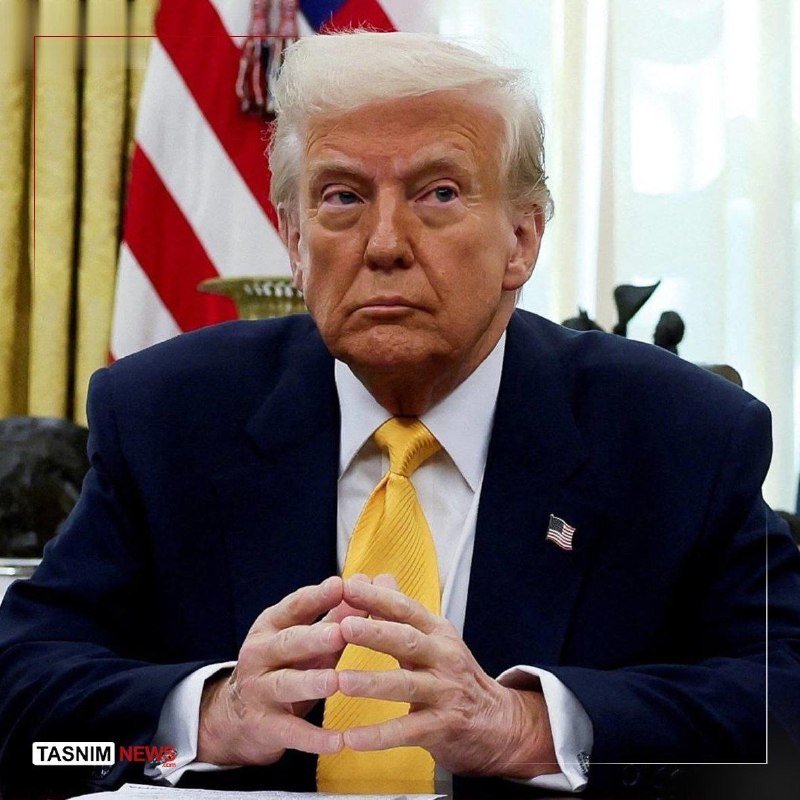
Donald Trump landed in China on 8 May 2026 carrying the wreckage of the Strait of Hormuz in his briefcase. Hours earlier, his administration had confirmed that what it called a retaliatory strike against Iranian targets was real — not a negotiating bluff, not a warning shot, but the actual thing. The ceasefire, such as it is, holds. But the president himself described it in terms that leave no room for ambiguity: "They trifled with us today. We blew 'em away." And if Iran does not sign the deal on offer? "You're not going to have to know," Trump said. "You will just look at one big glow."
The summit with Xi Jinping was announced as a landmark reset — a moment to stabilize a trade relationship worth hundreds of billions and to put guardrails around a technology cold war neither side can fully extricate itself from. Instead, Trump arrives as the leader who just demonstrated, in public and on camera, that he will use force first and negotiate second. That is not a negotiating position. That is a liability.
The central claim of this piece is not subtle: the Iran strikes may have strengthened Trump's hand with Tehran, but they have weakened it significantly with Beijing. And Xi Jinping, who has spent years watching American presidents oscillate between engagement and confrontation, will arrive at that summit table with a very specific read on what just happened. He will see a president who cannot distinguish between deterrence and diplomacy.
The Ceasefire That Wasn't Quite a Ceasefire
Before examining Beijing's calculus, the domestic logic of Trump's Iran posture deserves scrutiny. The administration confirmed on 8 May 2026 that a ceasefire with Iran remains technically in effect — per Al Jazeera's breaking coverage of the president's own remarks. But the president's public language has been anything but ceasefire-adjacent. "They trifled with us today and we blew them away," he said on 8 May 2026, per Open Source Intelligence reporters monitoring the press availability. "If there's no ceasefire, you're not going to have to know."
This is not the tone of a negotiator who has just secured a diplomatic win. It is the tone of someone who needs the win to be visible from orbit. The offer to Iran — sign the agreement fast or face consequences — suggests the strikes were designed less to change Tehran's behavior than to change the domestic narrative around Trump's foreign policy. That interpretation is reinforced by the timing. The Hormuz operation concluded. The ceasefire was declared. And within hours, the president was on his way to China.
There is an argument, made in some quarters, that this is precisely the kind of unpredictability that great-power deals require — that adversaries respect strength, that partners fear weakness, that the art of the deal is mostly the art of menace. That argument has some surface validity. But it collapses the moment you introduce a second actor. The threat that works on Iran — a state with limited capacity to retaliate beyond asymmetric proxies — does not translate cleanly to a relationship with China, which has spent the past decade deliberately decoupling its economic dependencies and building alternative financial architecture.
What Beijing Sees
Chinese state media had not issued formal comment on the Hormuz strikes at the time of this writing, per available thread monitoring. But Beijing's historical posture toward Gulf instability is instructive. China imports roughly 40 percent of its crude oil through the Strait of Hormuz, according to Chinese customs and energy institute data cited across multiple research cycles. Disruption is not in Beijing's interest. Instability that gives the United States a pretext to expand its naval footprint in the region is even less welcome. China has cultivated Iran as a strategic counterweight precisely because it reduces American leverage in the Gulf.
That does not mean Xi will side with Tehran against Washington. It means he will use the moment to position himself as the reasonable party in the room. Trump has handed him that gift. The president arrives at the summit having demonstrated, in real time, that his word on military matters cannot be fully predicted from his word on trade matters — and that his negotiating positions shift with his last tweet. Xi has been in this movie before. Every Xi.
The structural reality is that Chinese trade delegations have spent the past three years systematically reducing dollar exposure in bilateral contracts — not because of ideology, but because a president who weaponizes financial sanctions is a president who cannot be trusted with dollar-denominated trade. The Hormuz strikes reinforce that lesson. Military unpredictability and economic reliability are not separable. Beijing has decided they are not.
The Summit Was Already Compromised Before It Started
There is a version of this analysis that concludes Trump played the Iran card strategically — that he bombed Iran partly to strengthen his hand with China, which has a strong interest in Gulf stability. Under that reading, the strikes signal to Beijing that American power is both active and effective, and that Xi had better make concessions in trade talks before the next military episode reshapes the map. That is the version Trumpworld would prefer.
It is also the version that requires Beijing to behave like a rational American ally. China has strategic interests in Gulf stability, but it also has strategic interests in American overreach — in the demonstrable failure of American credibility, in the perception that the United States is a unreliable partner, in the space that opens up when the incumbent hegemon burns its own goodwill. Xi will extract whatever gains the Hormuz episode offers. He will do so from a position of studied calm. And he will smile for the cameras.
The deal that comes out of Beijing on 8 May 2026 will not be a favor Trump extracted through strength. It will be a deal that serves Chinese interests, because Chinese leverage has been quietly building for years — and because the president who walked into that room had already spent his credibility in the Gulf.
The Iran ceasefire holds. But the larger negotiation is not going well.
Wire provenance
This editorial synthesis draws on the following public wire/social posts:
- https://t.me/osintlive