Iran's Hormuz 'Atomic Bomb': How One Waterway Became the World's Most Dangerous Chokepoint
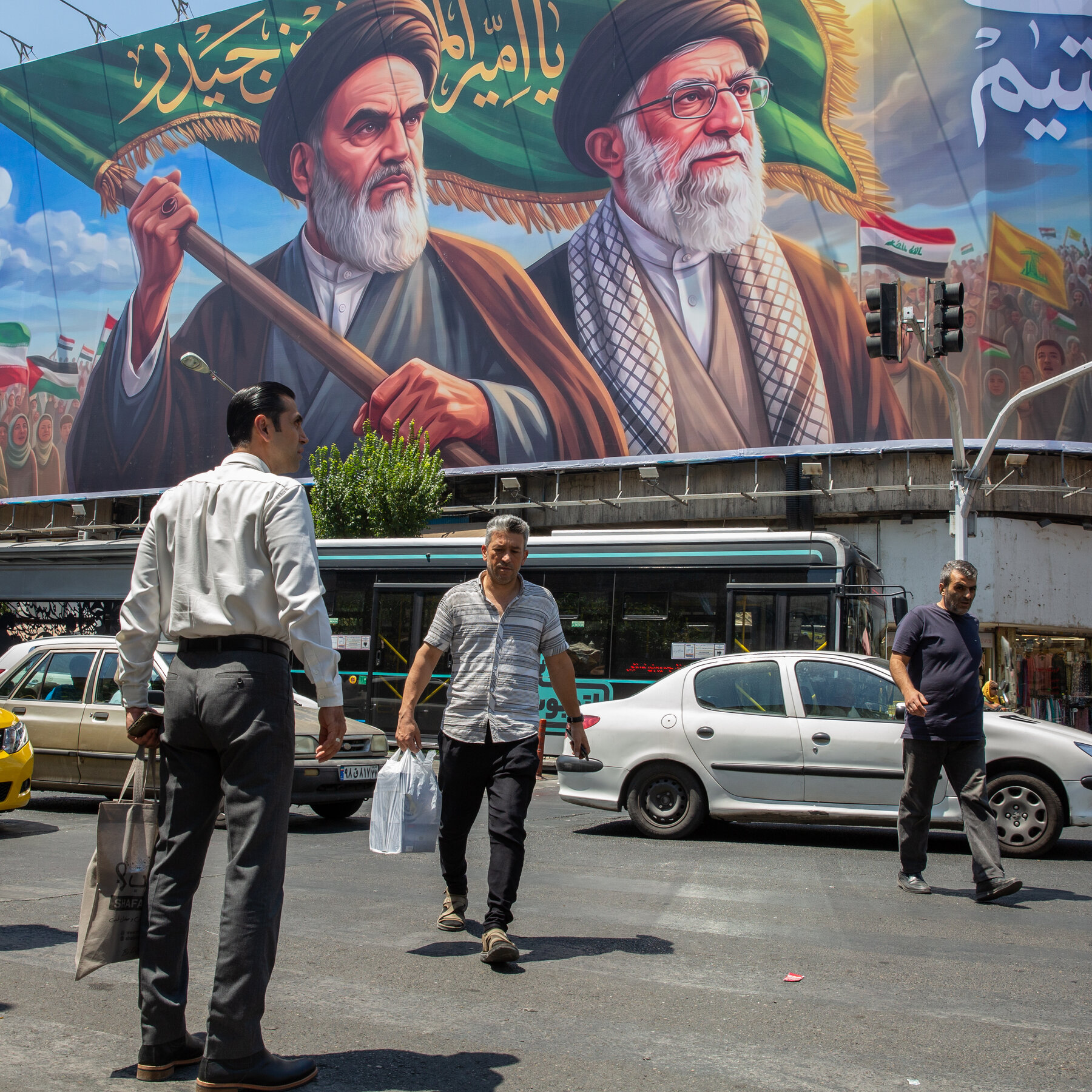
The strait is 21 miles wide at its narrowest. In normal years, roughly 21 million barrels of oil pass through it daily — a figure that drops to a trickle whenever the waterway faces credible threat of closure. On 8 May 2026, an Iranian foreign policy adviser compared that chokepoint control to the deterrent value of a nuclear weapon, the kind of statement that sends analysts back to Cold War deterrence theory not because it invokes it, but because it replicates its logic. The comparison, reported by Middle East Eye, arrived alongside parallel moves: Tehran announcing preparations for what it calls a "legal regime" governing the strait, and an independent analyst on Fars News suggesting Iran should negotiate separately with each nation that depends on the passage. Taken together, the messages form a coherent doctrine. Control of a maritime chokepoint can function as a strategic equaliser — a non-nuclear capability that generates nuclear-grade leverage.
The underlying logic is not new. What is new is the frankness with which Tehran is now articulating it, at a moment when negotiations over Iran's nuclear programme have stalled, when US sanctions pressure is being applied at maximum intensity, and when the broader architecture of Middle East deterrence is under strain from the Israel-Gaza conflict and its regional spillover. The adviser's statement, whatever its precise institutional affiliation, represents a view that has long circulated in Iranian strategic circles: that a country possessing the capacity to disrupt a global oil artery — even without actually closing it — occupies a position of extraordinary coercive potential. The strait's geography makes it uniquely suited to this purpose. Its width means that a handful of fast patrol boats, a modest minesweeping capability, or even a credible announced intent to plant mines can drive up insurance premiums, freight rates, and market anxiety far beyond what any actual disruption would cause. The weapon is the threat.
The Geography of Coercion
The Strait of Hormuz connects the Persian Gulf to the Gulf of Oman and the Arabian Sea beyond. Iran sits on both sides of the northern shore. Its coastline includes the entire northern flank of the strait, giving Tehran not just proximity but operational depth. The Islamic Republic has invested heavily in anti-access/area-denial (A2/AD) capabilities over two decades — anti-ship missiles, fast-attack craft, naval mines, and diesel-electric submarines of the Qahir class. These are not blue-water naval assets designed to win fleet engagements. They are asymmetric tools built to deny the use of a confined maritime corridor to a superior adversary.
The numbers make the strategic logic concrete. According to US Energy Information Administration data that has remained largely consistent over the past decade, roughly 21 million barrels per day of crude oil and liquefied natural gas transited the strait in recent normal years — representing about 21 percent of global liquid petroleum product flows. For Asian consumers — China, India, Japan, South Korea — the figure is significantly higher as a share of their import dependency. Japan imports virtually no Gulf oil that does not pass through Hormuz; South Korea and India are similarly exposed. European dependency is lower but not trivial. The United States, by contrast, has substantially reduced its Gulf oil import dependency since the shale revolution, which means Washington is the major power least directly vulnerable to a Hormuz disruption — a fact that shapes whose urgency dominates the policy conversation.
This asymmetry creates a structural vulnerability. The countries with the greatest interest in keeping the strait open are not the countries with the greatest leverage over Iran's behaviour. That gap is the engine of Iranian coercive diplomacy.
Negotiating Through a Chokepoint
The second notable statement from the 8 May news cycle came from Khoratian, an analyst of international issues quoted on Fars News, who suggested a diplomatic approach that amounts to the reverse of the usual multilateral pressure strategy. Rather than presenting a unified bloc of consumer nations to Iran, Tehran should engage each country individually — exploit the fact that their dependencies differ in degree and kind, and offer transit assurances in exchange for bilateral concessions. The suggestion reflects a longstanding Iranian preference for bilateral over multilateral negotiation, born of a structural belief that collective coalitions are more brittle than they appear because their members have divergent interests.
The framing has a specific strategic context. The Hormuz transit problem is one of the few areas where Iran's interests and the interests of some Gulf Arab states — who also depend on the strait for their oil exports — partially overlap. Saudi Arabia and the UAE export most of their oil through the strait. Their concern about Iranian disruption of that traffic coexists with their concern about Iranian regional behaviour more broadly. Tehran has long understood that it can exploit this tension: any disruption threatens Riyadh's exports as much as it threatens anyone else's. The result is that a credible Iranian threat to the strait creates a latent fracture in any potential unified front against Iran. Gulf states whose exports run through Hormuz have a structural incentive to avoid the extreme scenarios that might prompt Tehran to make good on its threat.
This dynamic complicates the usual Western strategy of multilateral sanctions and maximum pressure. The more effectively the United States and its partners apply economic pressure, the more Tehran has an incentive to invoke the chokepoint lever — and the more anxiety that invocation generates among partners whose exposure to the strait is acute but whose appetite for direct confrontation with Iran is limited.
What "Legal Regime" Means
The announcement that Iran is preparing a "legal regime" for the Strait of Hormuz is the most formally developed component of the 8 May statements. Tehran has long maintained that international law — specifically the 1982 United Nations Convention on the Law of the Sea (UNCLOS), which Iran has signed but not ratified — provides coastal states rights over maritime passages that have not always been respected by Western navies. The "legal regime" framing suggests Iran is preparing a set of regulatory instruments: perhaps transit fees, mandatory notification procedures, restrictions on warships or vessels carrying specific cargoes, or requirements for Iranian pilotages. Whether any of these would survive international legal challenge is a secondary question. The primary strategic function is the same as the "atomic bomb" analogy: to establish that Iran possesses legitimate, internationally-grounded authority over the passage, and that any challenge to that authority is itself a violation of norms the international community purports to uphold.
The legal ambiguity surrounding the strait is real. UNCLOS provides for innocent passage through straits used for international navigation, but the definition of "innocent" is contested, and the convention's application to warships and certain categories of cargo has never been definitively settled in Iran's favour. Iran's position has been that the United States' Freedom of Navigation operations — naval transits designed to assert the principle that international passages are open to all vessels without prior notification — constitute provocation. Tehran has historically demanded advance notice and Iranian pilotages for US warships; Washington has refused on the grounds that no such requirement exists under international law. This disagreement is not new. What is new is the degree to which Tehran is now signalling intent to codify its own rules rather than protest theirs.
The Regional Precedent Problem
The strait's significance is not merely economic. It is the physical intersection of three overlapping security architectures: the US-led conventional deterrence umbrella over the Gulf, the Iranian asymmetric deterrence posture, and the emerging multipolar competition over regional influence that has accelerated since the 2021 US withdrawal from Afghanistan and the subsequent realignment of Gulf relationships. The "atomic bomb" comparison draws its power precisely from the fact that the strait sits at the intersection of all three.
Previous episodes of heightened Hormuz tension offer a cautionary ledger. In 2019, following the US maximum pressure campaign and the designation of Iran's Islamic Revolutionary Guard Corps as a foreign terrorist organization, Tehran partially withdrew from the nuclear Joint Comprehensive Plan of Action and began enriching uranium above the协议的 limit. Tensions led to a series of incidents: tanker seizures, alleged Iranian limpet mines on vessels in the Gulf, and the shooting down of a US surveillance drone. None resulted in strait closure. But each reinforced the understanding that Iran possesses escalation options that are difficult to counter without disproportionate response.
The current escalation in rhetoric follows a familiar cycle, but the context is more stressed. The Gaza conflict has strained US diplomatic capacity across the region. The Ukraine conflict has complicated the global energy calculus in ways that make Gulf oil reliability more politically salient to European partners who have shifted away from Russian supply. And the Iranian nuclear programme has progressed to a point where Tehran's breakout time — the period required to produce enough weapons-grade material for a nuclear device — has shortened considerably, even if the weaponisation question remains separate.
Who Owns the Risk
The distribution of stakes is asymmetric in ways that make the Hormuz problem structurally resistant to easy resolution. The United States gains more from a stable, open strait than any other single actor, but it has limited direct economic exposure and possesses the military capability to keep the passage open — at acceptable cost — if it chooses to exercise it. The Gulf Arab states have high direct economic exposure but limited independent capability to manage the threat. Europe has moderate exposure and, since the Russia-Ukraine conflict, a renewed political interest in Gulf energy security that has not always translated into willingness to shoulder the burden of deterrence. China has enormous exposure — it is the largest single importer of Gulf oil — but no tradition of direct military engagement in the Gulf and a diplomatic posture that prefers managed stability to overt security commitments.
Tehran's leverage derives precisely from this distribution. It cannot match US naval power, but it does not need to. It needs only to demonstrate credible capacity to impose costs on a set of actors whose interests in the strait's openness are, in aggregate, greater than its own — and whose cohesion in responding to that threat is, at best, partial. The "atomic bomb" framing is a statement about that geometry. A nuclear weapon's deterrent value lies not in its use but in its possession — in the knowledge that its deployment would impose unacceptable costs on an adversary regardless of the asymmetry in military capacity. Tehran is asserting that Hormuz control operates on the same principle.
The nuancing caveat is real: the sources do not confirm that Tehran has made any operational decision to close or restrict the strait, and the historical record suggests Iran has typically stopped short of measures that would produce a direct US military response. The adviser's comparison is a statement of capability and intent, not an imminent operational announcement. But the fact that it is being made publicly, at this moment, is itself informative. The chokepoint has become not just a strategic asset but a communication device — a channel through which Tehran signals its willingness to escalate to powers whose own calculus about Gulf stability is increasingly uncertain.
The question for policymakers in Washington, Brussels, Beijing, and the Gulf capitals is not whether the strait matters. It manifestly does. The question is what credible response exists to a non-nuclear threat that generates nuclear-equivalent leverage — and whether the architecture of sanctions, deterrence, and diplomacy that has governed Gulf security for five decades remains adequate to the moment Iran is now describing in explicit terms.
This article was published at 2026-05-08T22:30 UTC. Monexus led with the Iranian framing of the strait as a coercive asset; the wire services led with US-Israeli coordination on border-area operations in southern Lebanon. The structural context — why a single maritime chokepoint commands this level of strategic attention — received less column-inches in the mainstream coverage.
Wire provenance
This editorial synthesis draws on the following public wire/social posts:
- https://t.me/farsna/12345
- https://x.com/unusual_whales/status/19201234567890123
- https://www.eia.gov/todayinenergy/detail.php?id=54499