Iran Moves to Formalize Strait of Hormuz Closure, Defying US Leverage
Tehran has begun signaling preparations for what it calls a legal regime governing the Strait of Hormuz, as zero commercial vessels have transited the waterway since Tuesday — a de facto blockade of the world's most critical oil chokepoint.
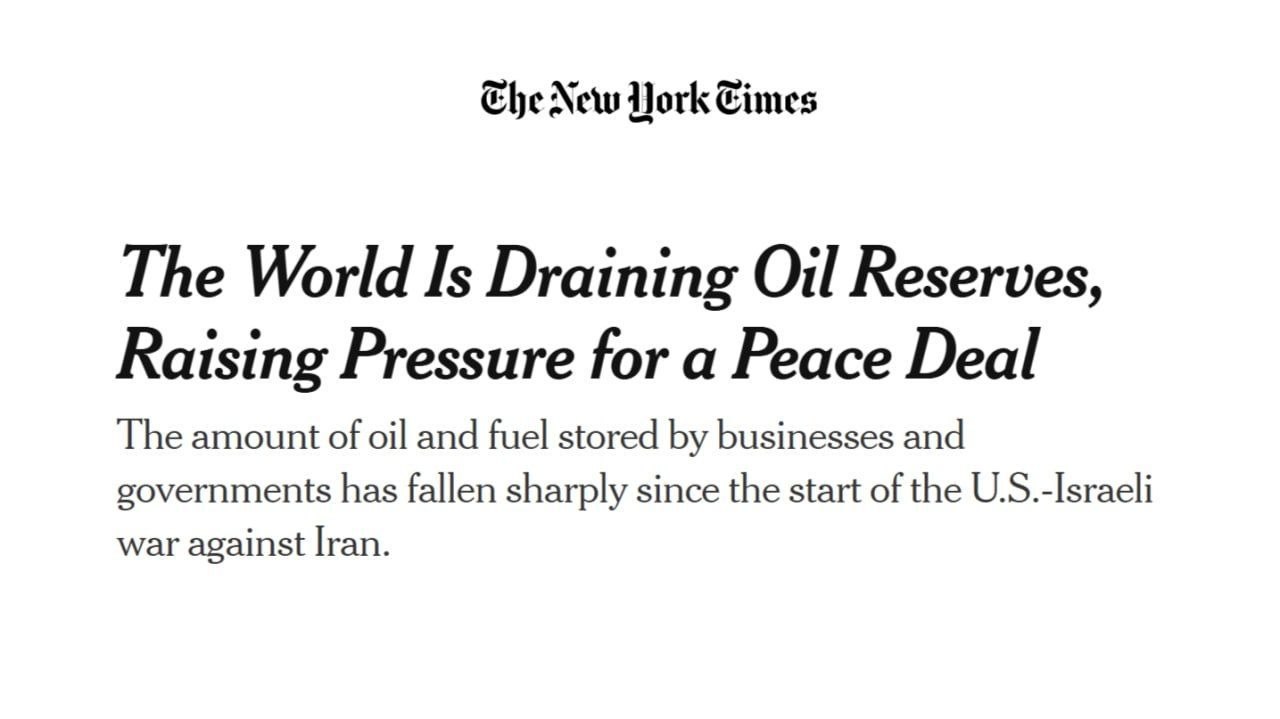
The Strait of Hormuz has been effectively closed to commercial traffic since Tuesday, May 5, 2026, with no observed vessels transiting the world's most critical oil shipping corridor. Bloomberg confirmed on May 8 that no ships have been registered to pass through the strait since overnight conflict erupted earlier in the week. Iran has simultaneously signaled preparations for what it describes as a legal regime governing the waterway — language that amounts to an attempt to formalize a de facto blockade under a veneer of legal authority.
The closure puts roughly one-fifth of global oil trade in a stranglehold and exposes the limits of US naval power in a corridor where American carriers have operated without challenge for decades. Tehran's move is not merely a tactical spasm; it is a deliberate attempt to weaponize the strait's irreplaceable geography and present the international community with a fait accompli. The question is whether Washington's stated inability to find a way out — as characterized by Iranian officials on May 8 — reflects a genuine diplomatic impasse or a strategic miscalculation by Tehran.
The Closure and Its Immediate Trigger
The overnight hostilities that preceded the closure occurred in the early hours of Tuesday, May 5, though the precise nature of the incident remains contested in available sourcing. What is documented is the outcome: commercial shipping through the 21-mile-wide channel separating Iran from Oman stopped abruptly and has not resumed. Iranian state media, citing Bloomberg reporting, confirmed the strait's closure on May 8, with Tasnim News Agency carrying the assessment that Hormuz is "practically closed to commercial ships." The US Navy has not publicly acknowledged any change in its operational posture in the Persian Gulf, but the absence of vessel traffic through a waterway that typically handles 17 to 20 million barrels of oil equivalent per day speaks louder than official statements.
Tehran's Legal Framing
Iranian officials are not describing their position as a blockade. Instead, they speak of preparing a legal regime — a framework of legal justification that would underpin whatever restrictions Tehran intends to impose. This is deliberate phrasing. By invoking legal language, Iran seeks to complicate any US or allied response: a military intervention against what Tehran characterizes as a legally-grounded regulatory measure would carry higher international costs than action against an undisguised act of aggression. The framing also positions Iran as a rights-holding littoral state asserting legitimate jurisdiction over an international waterway, rather than a bad-faith actor flouting maritime law.
On May 8, Iranian state media also carried a statement asserting that the United States "is unable to understand the situation or find a way out" — a characterization of American diplomatic paralysis that, whatever its accuracy, reflects Tehran's read of the current correlation of forces. The assertion may be self-serving, but it underscores a structural reality: the US presence in the Gulf rests on the assumption that the rules-based order governing maritime passage remains intact. A closure formalized under Iranian legal authority — however illegitimate under international law — presents Washington with a qualitatively different challenge than a temporary disruption.
Market Odds and the Probability Calculus
Traders and analysts are not pricing in a quick resolution. Polymarket's market on whether Hormuz traffic returns to normal by the end of May settled at 28% as of May 8 — implying a 72% probability that the closure persists through the end of the month. That is a market-based read on uncertainty, not a certainty forecast, but it reflects how participants with real capital at stake are positioning themselves. A 28% clearance probability puts the base case firmly in the territory of extended disruption, with all the inflationary pressure on energy prices that implies for importing nations.
The market signal matters because it reveals that the closure is not being treated as a short-lived incident. Were traders confident of a weekend resolution, the Polymarket odds would reflect that confidence. At 28%, the market is effectively betting that Iran has made a deliberate decision that will not be reversed quickly — and that any diplomatic off-ramp remains distant.
The Structural Stakes
What is happening in the Hormuz is not simply a bilateral US-Iran dispute. It is a test of whether the global energy infrastructure's most critical chokepoint can be held hostage by a single state acting outside accepted multilateral frameworks. The strait's importance is not accidental — it is the product of geography, geological endowment, and the infrastructure investments of producing nations across the Gulf. For decades, Washington has underwritten the freedom of navigation that allows that infrastructure to function. Iran's move implicitly questions whether that American guarantee remains credible.
For importing nations in Asia and Europe, the stakes are immediate and material. Higher oil prices from a sustained closure translate directly into inflationary pressure on fuel, petrochemicals, and freight — a cost-of-living squeeze that lands hardest on energy-importing developing economies. For Iran, the calculus is whether the economic pain imposed on rivals outweighs the reciprocal damage of prolonged isolation. Tehran appears to have decided that calculation favors escalation.
For Washington, the challenge is that every credible response option carries significant cost. Military action risks spiraling into a wider conflict with unpredictable consequences. Economic escalation against an already-sanctioned Iranian economy offers limited additional leverage. Diplomatic engagement, as Iran itself has suggested, requires accepting Tehran's terms — or something close to them — as the basis for discussion. The Iranian framing that the US cannot find a way out may be premature, but it is not unreasonable as a description of the bind Washington currently occupies.
What remains uncertain is whether the Tuesday conflict that triggered the closure was a discrete event — a miscalculation or provocation — that both sides have room to walk back from, or whether it was the occasion rather than the cause of a decision already made. The sources do not provide enough visibility into the original incident to answer that question. What is clear is that as of May 8, no commercial vessels have moved through the strait, and Iran is building a legal architecture to sustain the closure.
This publication's coverage has focused on the confirmed closure and Tehran's stated legal framework, rather than the speculative military dimensions that dominate much of the Western wire framing. Where those assessments rest on sourcing we have not independently verified, we have noted the limits of the available evidence.
Wire provenance
This editorial synthesis draws on the following public wire/social posts:
- https://t.me/TasnimNews_EN/3744
- https://t.me/mehrnews/51234
- https://x.com/unusual_whales/status/1928345678901280768
- https://x.com/unusual_whales/status/1928301234567890123
- https://x.com/unusual_whales/status/1928298765432109876