Iran's Hormuz Ultimatum Was Always Coming — The West Just Pretended It Wouldn't
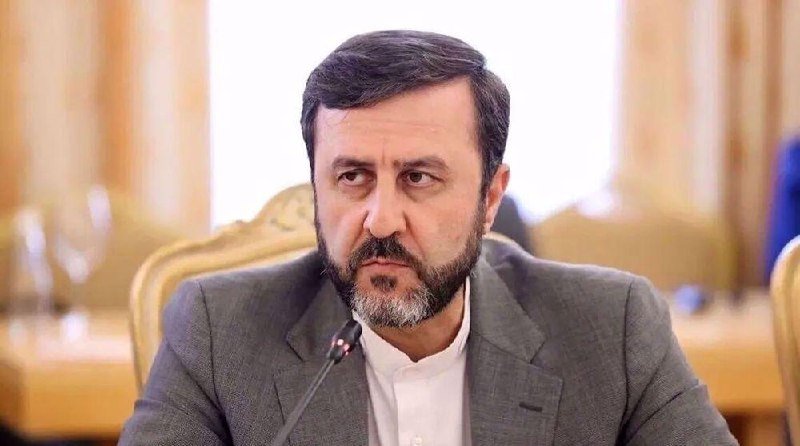
An adviser to Iran's Supreme Leader described control of the Strait of Hormuz this week as "an opportunity as precious as an atomic bomb." The phrasing is deliberate. It is also, by any reasonable measure, accurate. Around 200 Iranian speedboats were reported in and around the strait on 8 May 2026. The symbolism is impossible to miss: a chokepoint that moves roughly a fifth of the world's oil each day is under the physical control of a government that has spent forty years being told, by the United States above all, that its survival is unacceptable.
That is not a crisis. It is a structural consequence.
The leverage was always here
The Strait of Hormuz is thirty-three miles wide at its narrowest. It is the jugular of global energy markets — roughly 21 million barrels of oil pass through it daily, according to the U.S. Energy Information Administration. Naval analysts have understood for decades that whoever controls the approaches controls a switch that, when thrown, sends shockwaves through every petrol station, every heating bill, every central bank calculation on the planet. Tehran has understood this longer than most. The Islamic Revolutionary Guard Corps Navy has trained explicitly for strait denial scenarios since the 1980s tanker war. The speedboats visible this week are not a new capability. They are a familiar one, deployed at a familiar moment: when Iranian diplomacy faces maximum external pressure.
The question worth asking is not whether Tehran will use this leverage — it has used it before, in measured, deniable ways — but why Western policy has spent two decades treating an obvious strategic reality as though it could be legislated away.
Energy dependency is a political choice dressed as a market fact
The standard Western response to Hormuz risk is to invoke "energy diversification" and "renewable transition." Both are real goals. Neither is close to being achieved at the scale required. Europe still imports substantial volumes of Gulf crude and refined products. The United States, despite its shale revolution, remains tethered to global oil pricing and has strong interests in keeping the strait open regardless of domestic production figures. Japan, South Korea, India, and China — the major Asian consumers — have zero strategic interest in seeing Hormuz traffic disrupted. Tehran knows this. The atomic-bomb comparison works precisely because the damage is disproportionate: a single well-placed mining operation or speedboat interdiction does not need to close the strait permanently to send oil prices spiking twenty, thirty, forty percent. The mere threat achieves the effect.
Western policymakers have been aware of this asymmetry for years. Sanctions regimes have been calibrated as though Iran had no legitimate security interests, as though maximum pressure would simply break Tehran rather than push it toward exactly the kind of asymmetric deterrence this week's events represent. The calculation failed. The failure is now visible in the strait.
The structural problem with containment
Containment, as a strategic doctrine, requires the contained state to lack the means to make containment painful. Iran does not lack those means. It has a coastline on the Persian Gulf, a hardened anti-access/area denial doctrine, a network of allied proxy forces across the region, and a theocratic-bureaucratic apparatus that has survived four decades of sanctions designed to make it collapse. The current U.S. approach — maintaining maximum sanctions, supporting regional allies, conducting regular naval deployments in the Gulf — does not neutralize Iranian leverage. It activates it. Every additional piece of pressure adds weight to the argument that Iran must signal its resolve before the pressure becomes unmanageable.
This is not a defence of Iranian policy. The advisory comparison to atomic weapons is inflammatory precisely because it suggests deliberate escalation — a public acknowledgment that the strait is now an explicit instrument of statecraft, not merely a latent capability. That is a shift worth noting. But understanding why Tehran has moved to explicit deterrence requires acknowledging that the conditions for this moment were built by external policy, not internal Iranian pathology alone.
The counterargument — that Iran could simply accept integration into the global order if it changed its behaviour — has been tested repeatedly. It has not produced the outcome its proponents expected. Western analysts who find this frustrating are invited to consider the view from Tehran, where every diplomatic opening over the past decade has been met with increased sanctions, the targeted killing of a general, and the sustained presence of forces in neighbouring states that Tehran regards as existentially threatening. Rational actors respond to incentives. Tehran is behaving rationally within a threat environment it did not choose.
The stakes, plainly
If the current posture holds, Asian energy consumers — Japan, South Korea, India, China — face the most immediate economic exposure. Oil price spikes driven by Hormuz disruption hit import-dependent economies hardest. European consumers face secondary effects through already-elevated energy costs. American consumers feel it at the pump, with political consequences that tend to be underweighted in foreign-policy calculations. The beneficiaries, in the short term, are producers outside the Gulf — U.S. shale, Russian Urals, West African crude. In the longer term, sustained Hormuz risk accelerates every diversification project already underway: pipeline alternatives, LNG expansion, accelerated renewables deployment. Tehran's leverage is, paradoxically, a market signal that makes the West's energy transition more financially rational.
The irony is considerable. A strait that the West has treated as a permanent, cost-free transit corridor — secured by naval dominance it assumed would go unchallenged — is being repriced. The repricing is uncomfortable. It is also, in a narrow economic sense, overdue.
Western capitals will respond with statements, perhaps with additional naval deployments. The fundamental arithmetic does not change: a state with effective control of a critical chokepoint, facing what it considers existential pressure, will use that control. The atomic bomb comparison is not reckless. It is a statement of fact about the geometry of power in the Gulf. Treating it as a provocation rather than a signal means missing the message — and repeating the policy errors that sent it.
Wire provenance
This editorial synthesis draws on the following public wire/social posts:
- https://t.me/spectatorindex
- https://t.me/sprinterpress