Escalation in the Gulf: Iran Hits US Destroyers Near Hormuz, Washington Strikes Back
Iranian forces launched missiles and drones at three American destroyers transiting the Strait of Hormuz on the night of 7 May 2026, prompting immediate US retaliation strikes against Iranian military facilities — the most direct naval exchange between the two powers since at least 2020.
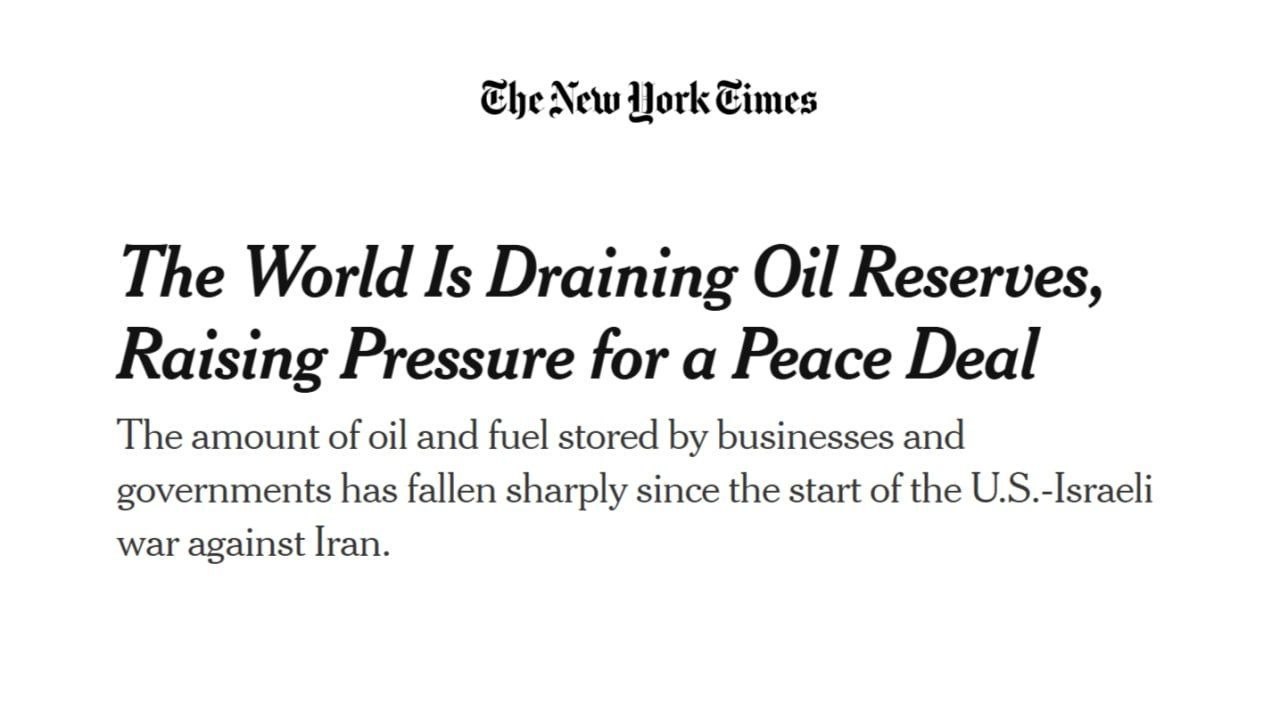
At approximately 19:00 UTC on 7 May 2026, three United States Navy destroyers transiting the Strait of Hormuz came under missile and drone attack from Iranian military forces. Iranian state-backed outlet Press TV released footage within hours showing the launches, depicting what appeared to be ballistic missiles and unmanned aerial vehicles directed at the US warships near the strategic waterway through which roughly a fifth of the world's oil passes. The US Central Command confirmed shortly after that American forces had struck Iranian military facilities in response — a direct retaliation that marks one of the most significant escalations in the Gulf since the US killing of Iranian General Qasem Soleimani in January 2020.
The exchange represents a structural rupture in a relationship that has been governed, however tensuously, by deterrence rather than dialogue for several years. What distinguishes the 7 May incident from prior confrontations — including a series of Iranian seizures and harassments of commercial vessels in 2024 and 2025 — is the target: not a tanker or a merchant ship, but US Navy destroyers. That changes the calculus in ways that previous incidents did not.
What Happened, and What It Means
The sequence of events, as reconstructed from available sources, runs as follows. Three Arleigh Burke-class destroyers of the US Navy were moving through the Strait of Hormuz in international waters. Iranian forces — the Islamic Revolutionary Guard Corps naval arm, by institutional logic, though available sources do not yet name the specific unit — launched a combination of missiles and drones at the warships. Press TV, Iran's state-run English-language broadcaster, released footage of the launches within hours of the engagement. The footage showed what appeared to be multiple missiles ascending from coastal positions, consistent with anti-ship missile configurations documented in open-source military databases. Separately, an Arabic-language Telegram channel associated with regional media reported that the American destroyers "fled" the strait following the attack — a framing this publication cannot independently verify. Reuters and other wire services had not published on-record confirmation of the engagement as of 01:00 UTC on 8 May, though Deutsche Welle reported the US strike on Iranian facilities.
The US response came within the same reporting window. Central Command confirmed that American forces had conducted strikes against Iranian military infrastructure. The specific targets, the weapons used, and the extent of any damage on the Iranian side have not been independently confirmed as of publication. What is confirmed is the character of the response: kinetic, targeted, and deliberate — not a show of force, but a strike intended to degrade Iranian capability.
The immediate danger has, for now, passed. Telegram channels associated with Iranian regional media reported by 22:19 UTC on 7 May that the situation on the Iranian islands and coastal cities along the strait had "returned to normal." That phrasing is worth pausing on — it is the language of de-escalation, of a government that has demonstrated capability and now wishes to signal restraint. Whether that restraint is genuine or tactical is one of the central questions this piece cannot yet answer.
The Framing Wars Begin Immediately
Within hours of the incident going public, two distinct narratives crystallised in the way different media systems reported it. The Western wire services — Reuters, the Associated Press, Deutsche Welle — led with the US retaliation: American forces struck Iranian targets. The framing was action-and-response, with American action as the terminating event. Iranian state-adjacent channels, including Press TV and Telegram accounts citing what they described as "occupation army radio," framed the incident differently: American destroyers were forced to retreat, and Iranian forces successfully challenged US presence in the strait. Neither framing is complete, and the truth almost certainly sits somewhere between them.
This is worth examining carefully, because the framing is not incidental. The Strait of Hormuz is not merely a geopolitical curiosity — it is the conduit for approximately 20 percent of global oil shipments and roughly 20 percent of global liquefied natural gas. Whoever controls the narrative of what happened in those waters on the night of 7 May has significant leverage in shaping how governments, markets, and allied governments respond. The US, which has an established interest in maintaining freedom of navigation as a principle, needs the incident to look like an Iranian aggression met by proportionate American force. Iran, which has an interest in demonstrating that American naval presence in the Gulf is neither uncontested nor consequence-free, needs the incident to look like a successful act of resistance.
That both narratives are partially true does not make them equally valid as descriptions of what occurred. It does, however, mean that any serious account of the night must hold both simultaneously.
The Structural Context: Why This Escalation Was Different
Iran and the United States have been engaged in a sustained, low-grade confrontation across the Gulf for years. The 2015 Joint Comprehensive Plan of Action — the Iran nuclear deal — temporarily dampened that confrontation before the Trump administration withdrew in 2018. Since then, Iranian nuclear advancement has continued: enriched uranium at 84 percent purity was confirmed by the International Atomic Energy Agency in early 2024, a level that is weapons-adjacent regardless of how one interprets Iranian intentions. Simultaneously, Iranian proxy forces have maintained pressure on US assets in Iraq and Syria, and Iranian naval activity in the Gulf has grown more assertive.
What changed on 7 May is the target category. Prior to this incident, Iranian confrontations with US forces in the Gulf had consistently involved either commercial shipping or peripheral US positions. Targeting destroyers — high-value naval assets with defensive capabilities, crewed by hundreds of sailors each — is categorically different. It is the kind of action that, if it recurs, cannot be managed with diplomatic protests and shows of force. It requires a response. And the US gave one.
The structural logic is straightforward: there is no functioning diplomatic channel between Washington and Tehran. There is no agreed-upon rules of engagement for the Gulf. There is deterrence and miscalculation, and what happened on 7 May tested the outer edge of the deterrence envelope. The question is whether the envelope held, or whether both sides are now operating in a more volatile space than they were forty-eight hours ago.
What Remains Uncertain
Several factual questions cannot be answered from available sources. First, the precise damage incurred by either side: no confirmed casualty figures, no confirmed hits or misses on the Iranian side, no confirmed damage to US warships. Second, the specific Iranian decision-making process: who authorized the strike, and on what intelligence or provocation assessment was it based? Third, whether there was any prior signal or warning — whether Iranian forces fired without a preceding incident, or whether there was a chain of escalation that preceded the missiles. Fourth, the response of the broader international community: the UN, European governments, and Middle Eastern powers with equities in Gulf stability have not, as of publication, issued on-record statements.
The available footage from Press TV, while consistent with the event as described, has not been independently geolocated or verified by this publication. The US Central Command confirmation is reliable as to fact of retaliation, but not as to scale or specific targeting. The Telegram reports from Iranian-adjacent channels reflect a clear editorial interest and must be read accordingly.
The Stakes, and Where This Goes
If the incident remains a single exchange — Iranian strike, American retaliation, return to status quo ante — it is consequential but contained. Markets will react, diplomatic channels will strain, and the risk premium on Gulf shipping will rise. That is significant, but not catastrophic.
If it does not remain contained, the escalatory logic is severe. Iran has demonstrated a willingness to target US warships. The US has demonstrated a willingness to respond with kinetic force. In the absence of a diplomatic off-ramp, each side now has evidence that the other will use force when sufficiently provoked. That is not a stable equilibrium. It is a system in which the next incident — a misidentified civilian aircraft, a misread signal, a commander on either side who miscalculates — carries potentially catastrophic consequences.
The immediate next step is diplomatic: whether the US seeks to de-escalate through back-channel communication, as it did following the January 2020 Soleimani strike, or whether it uses the incident to increase pressure on Iran — both militarily, through expanded Gulf deployments, and diplomatically, through renewed calls for a 'maximum pressure' approach. That decision will shape whether 7 May is remembered as a crisis or as a prologue.
This publication covered the incident using available wire and open-source reporting as of 01:30 UTC on 8 May 2026. Updates will follow as Central Command and Tehran issue further statements.
Wire provenance
This editorial synthesis draws on the following public wire/social posts:
- https://x.com/sprinterpress/status/1920949812304560167
- https://t.me/megatron_ron/29438
- https://t.me/osintlive/12592
- https://t.me/alalamarabic/5822
- https://t.me/alalamarabic/5819