Iran's Pezeshkian Signals Diplomatic Opening — But the Structural Hurdles Remain Tall
President Masoud Pezeshkian's declaration of a continued pursuit for friendly relations marks a notable tonal shift, but the gap between Tehran's stated ambitions and the realities of regional isolation, sanctions pressure, and contested security architecture suggests caution is warranted before reading it as a genuine reset.
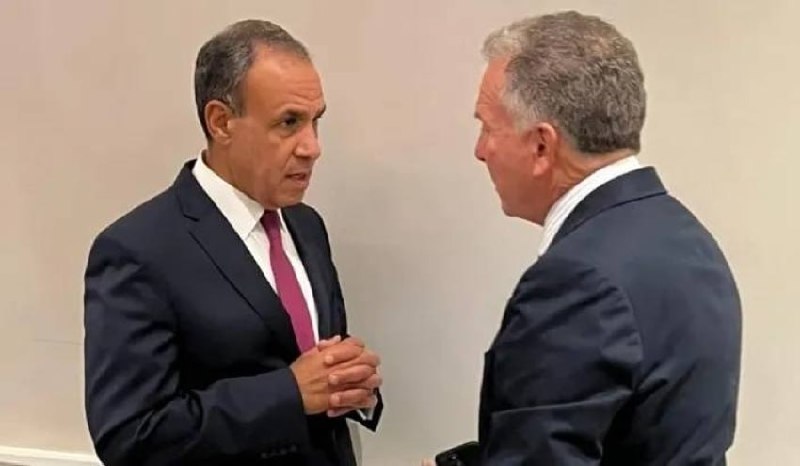
On 8 May 2026, Iranian President Masoud Pezeshkian reiterated from Tehran that Iran would continue seeking friendly relations with nations on the basis of mutual respect and shared interests, while explicitly rejecting what he termed colonial frameworks. The statement, delivered at a press briefing and circulated via official channels, landed in a regional environment defined by open-ended conflicts from Gaza to Yemen and a renewed cycle of nuclear diplomacy tensions with Western powers.
The language Pezeshkian deployed — reciprocal respect, common interests, anti-colonial framing — is not new to Iranian foreign policy discourse. What has shifted is the cadence. In public appearances since assuming office, the Iranian president has made a consistent practice of framing Iran's international standing as a matter of choice rather than necessity: Tehran seeks partnerships, he has argued, not because it is isolated, but because it is discerning. That rhetorical move is deliberate, and it reflects a genuine strategic calculation operating beneath the surface of diplomatic pleasantries.
The Diplomatic Signal and Its Limits
Pezeshkian's 8 May statement arrived at a moment when multiple external pressures converge on Tehran. United States sanctions targeting Iran's oil sector, banking channels, and individual officials remain in force under a designation framework that successive administrations have extended rather than unwound. European Union members, while more cautious than Washington on secondary sanctions, have maintained a package of targeted measures linked to Iran's nuclear programme. The International Atomic Energy Agency has continued to report gaps between Iran's declared activities and its obligations under the Joint Comprehensive Plan of Action, which the United States withdrew from unilaterally in 2018.
Into this environment, Pezeshkian's emphasis on mutual respect reads simultaneously as outreach and as insulation. By framing Iran's posture as主动而不是被动 — proactive rather than reactive — the Iranian presidency positions any diplomatic deterioration as a failure of the counterpart to meet agreed terms, rather than a consequence of Iran's own choices. This is a well-trodden path in Tehran's diplomatic communications, but it carries particular weight when nuclear talks have stalled and when regional partners — Iraq, Oman, Qatar — have expressed quiet interest in a more stable northern Gulf.
The statement's anti-colonial framing is notable for its audience. Pezeshkian was not speaking primarily to Western capitals. The emphasis on rejecting colonial structures speaks to audiences in the Global South — governments in Africa, Southeast Asia, and Latin America for whom post-colonial sovereignty is a first-order concern rather than an abstraction. That alignment is not incidental; it is a structural feature of Iran's current diplomatic posture under a presidency that has explicitly sought to deepen ties with what Iranian state media terms the "resistance axis" and its broader non-aligned network.
The Regional Security Architecture
What complicates any read of Tehran's stated openness is the layered conflict environment Iran operates within. In Gaza, the ongoing hostilities have drawn Iranian-backed Palestinian factions into sustained engagement with Israeli forces. In Lebanon, Hezbollah has maintained a defensive posture along the Blue Line despite intense strikes throughout 2024 and into 2025. In Yemen, Houthi forces have continued maritime operations in the Red Sea and Gulf of Aden, operations that Iranian officials have described in terms of solidarity with Gazan civilians rather than as part of a coordinated military strategy.
Western governments and their regional partners read these activities differently. Tel Aviv has maintained a consistent position that Iran's regional footprint — through proxies and partners — constitutes a strategic threat requiring sustained deterrence. The United States has reinforced that position with continued naval deployments in the Gulf and renewed calls for a broader regional settlement that would constrain Iran's missile programme and regional influence.
The structural tension here is not resolvable through rhetoric alone. Pezeshkian can declare an orientation toward mutual respect, but the operational calculus of Iranian regional policy — shaped by hardliners in the Islamic Revolutionary Guard Corps, by clerical institutions with independent foreign policy prerogatives, and by the institutional memory of a 2015 nuclear deal that the United States abandoned — runs along parallel tracks that the president's public posture does not fully control. Whether the 8 May statement represents a genuine diplomatic aperture or a public-relations adjustment calibrated to domestic and regional audiences is a question the available evidence does not conclusively answer.
Structural Constraints and Historical Precedent
There is a consistent pattern in Iranian diplomacy that any analysis of Pezeshkian's statement must account for. Tehran has a history of issuing high-principle declarations about sovereignty, mutual respect, and resistance to external pressure that enjoy broad international resonance — particularly in capitals fatigued by what they view as Washington-driven unilateralism — while simultaneously maintaining or expanding activities that those same capitals identify as destabilising. The 2015 nuclear agreement was the most recent moment when a structural opening coincided with a willingness to accept binding constraints; its unraveling in 2018 left a institutional scar that informs current calculations on all sides.
The structural constraint is not merely ideological. Iran's economy remains acutely sensitive to sanctions pressure, with oil revenues — the dominant source of foreign exchange — cycling through a grey market of intermediaries that has become more complex, not less, since the maximum-pressure campaign began. That complexity generates revenue sufficient to sustain state functions, but it limits the government's fiscal flexibility and creates vulnerability to enforcement actions targeting financial intermediaries in third countries.
Pezeshkian's emphasis on common interests is, in this context, both an offer and a test. It poses to Western governments a question they have historically struggled to answer: under what conditions would Iran accept the normalisation of economic ties, and what confidence-building measures would make that normalisation verifiable? The question is not rhetorical. It is a genuine diplomatic hinge point, and the failure to answer it clearly on the Western side has contributed, as much as Iranian obstinance has, to the current impasse.
What Follows From Here
The immediate question is not whether Iran seeks friendly relations — Pezeshkian's statement makes that clear — but whether the structural conditions exist to convert stated intent into negotiated outcome. The nuclear file remains the most tractable terrain for a limited agreement, given that both sides have, at various points, demonstrated willingness to accept constraints on uranium enrichment in exchange for sanctions relief. A renewed deal, even a partial one, would represent the most concrete test of the mutual-respect framework Pezeshkian described.
For European governments and the remaining parties to the JCPOA — France, Germany, the United Kingdom, Russia, China — the calculus is straightforward: a renewed agreement offers the best available path to constrain Iran's nuclear programme without resort to military options that carry catastrophic regional consequences. For Washington, the political costs of returning to a deal that critics on both the left and right of the American political spectrum view as flawed are substantial, which means any administration approaching nuclear diplomacy with Tehran must manage domestic opposition as carefully as Iranian objections.
What the 8 May statement does is preserve the diplomatic vocabulary through which any future negotiation would proceed. The language of mutual respect and common interests is precisely the vocabulary that made the 2015 agreement possible, before it became politically unsustainable for one side to defend. Whether the political will exists to sustain that vocabulary long enough to produce an outcome is a question that extends well beyond any single press statement from Tehran.
The available sources do not allow Monexus to assess the degree to which Pezeshkian's statement reflects a genuine consensus within Iran's governing institutions or a tactical posture calibrated to specific audiences. What is clear is that Iran is signalling an openness to a diplomatic framework that has historically been available and historically been squandered. The ball, as it has for the past decade, remains in the Western court — and the costs of not picking it up continue to compound.
Desk note: Wire coverage of this story focused on Pezeshkian's anti-colonial framing as an election-cycle positioning signal toward hardline constituencies. This publication's analysis foregrounds the structural constraints on all sides — the sanctions architecture, the IRGC's institutional autonomy, and the domestic political costs in Washington that limit any incoming administration's ability to negotiate freely — on the grounds that these factors better explain both the statement's timing and its limitations.
Wire provenance
This editorial synthesis draws on the following public wire/social posts:
- https://t.me/DDGeopolitics/1247