Iran's Resilience Has Hollowed Out Trump's Maximum Pressure Campaign
With 70 percent of its missile forces intact and an economy absorbing American pressure for months, Tehran has exposed the limits of dollar-based coercion—and the political fatigue setting in across the Atlantic makes a climbdown inevitable.
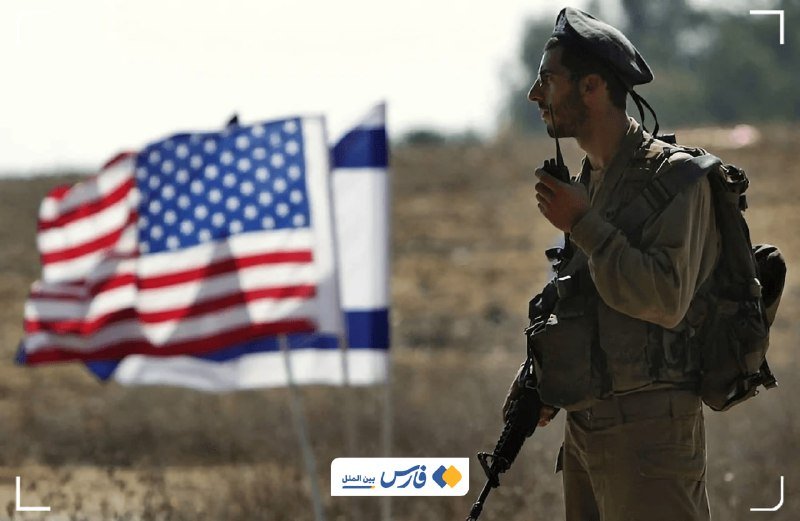
Donald Trump says he is waiting for Iran's response. That single sentence, carried on 8 May 2026 by Iranian state broadcaster Tasnim, encapsulates the central paradox of the administration's second-term Iran policy. Seven months into a campaign of maximum economic pressure — sweeping secondary sanctions, a naval Gulf presence, diplomatic isolation — the United States finds itself waiting on a target that was supposed to capitulate within weeks.
The logic of the pressure strategy was never subtle. Strangle Iranian oil exports, collapse the rial, provoke domestic unrest, force the leadership to the table on Washington's terms. Instead, the intelligence community's own assessment — as reported across wire services on 8 May 2026 — suggests Iran has retained roughly 70 percent of its missile forces and can sustain the economic blockade for months without systemic collapse. The Atlantic and The Telegraph, citing their own reporting, describe a president who feels trapped, exhausted by a campaign that has produced neither the promised quick victory nor a clear path out.
The Narrative That Collapsed on Contact with Reality
The administration's public case for renewed maximum pressure rested on a particular reading of Iranian vulnerability. Sanctions in the first term had already degraded Iranian living standards. The argument ran that a second, sharper round would tip the economy past a breaking point. Tehran would either negotiate or face internal unrest that did Washington's work for it.
Neither happened. Months into the campaign, Iran has retained 70 percent of its missile capability, and its economy — by American intelligence assessments reported on 8 May 2026 — has demonstrated the adaptive capacity to absorb sustained pressure for the foreseeable future. The Atlantic and The Telegraph both report that Trump has described himself as exhausted and trapped in a situation with no clear exit. These are not admissions that come easily from an administration built on projecting strength. Their emergence signals something has broken in the internal consensus.
What the Intelligence Community Actually Found
The most consequential detail in the current reporting is not Iran's resilience in the abstract — it is the specificity of American intelligence's own assessment. The sources cited across multiple outlets on 8 May 2026 indicate that Iranian decision-makers have preserved not just military hardware but a functioning economic base capable of sustaining operations under continued pressure. This is not the picture of a state on the verge of collapse. It is the portrait of a target that has studied American pressure doctrine for four decades and built accordingly.
The administration publicly maintained the fiction that the blockade was working. Privately, the frustration is leaking out. The Atlantic and The Telegraph reports describe a president who feels he has been maneuvered into a dead end — unable to escalate without consequences he does not want to absorb, unable to declare victory, unable to walk away without validating Iranian endurance. That combination is not sustainable.
The Structural Problem With Dollar Coercion
What the Iran episode reveals goes beyond one bilateral standoff. The United States has deployed secondary sanctions — the threat of cutting any third-country entity off from the dollar system if it deals with a target state — as its primary instrument of coercive statecraft for more than a decade. The theory is elegant in its simplicity: deny access to the world's reserve currency, and the target's trade network disintegrates.
The Iran case complicates that theory. Months of aggressive deployment have not produced the systemic breakdown the model predicts. The most straightforward reading is that the dollar's dominance, while real, is not absolute. States that invest in alternative trade architecture, maintain relationships with non-dollar economies, and accept short-term deprivation in exchange for long-term structural resilience can blunt the sharpest edge of financial warfare.
This does not mean sanctions are toothless. They inflict real costs. But it does mean the assumption that economic pressure mechanically produces political surrender is not supported by the evidence from Iran. When a target can sustain 70 percent of its military capability and absorb months of blockade while maintaining its negotiating position, the coercive model has a calibration problem.
The Geopolitical Reckoning Coming
If Washington is forced to accept a negotiated outcome in Iran — or simply to declare the crisis over without the decisive victory it promised — the consequences extend well beyond Tehran. American adversaries across the world are watching the same intelligence assessments, drawing the same conclusions about the limits of dollar coercion. The leverage that secondary sanctions provide depends on the credibility of the threat: that access to the dollar system will be cut off, and that the target will capitulate before absorbing the full cost.
The credibility of that threat has been damaged by what the Iran episode has revealed. A climbdown — or even a prolonged stalemate dressed up as negotiations — signals that American patience has limits, that domestic political costs accumulate faster than the target's willingness to absorb them, and that a state with sufficient structural resilience and geopolitical allies can outlast the pressure. Those are lessons that Beijing, Moscow, and smaller actors in the Global South are already incorporating into their own calculations.
The administration entered the Iran campaign promising a quick resolution on favorable terms. What it has produced is a slow-burning crisis with no clean exit, a target that has not broken, and intelligence assessments that undercut the public narrative of success. On 8 May 2026, Donald Trump says he is waiting for Iran's response. The more pressing question is whether the American political system is willing to wait as long as Iran apparently can.
Monexus covered this development through a combination of Iranian state media reports and Western wire commentary, using the Tasnim dispatches to establish the formal American position and the Atlantic/Telegraph reporting to surface the internal contradictions in the administration's framing. Iranian state media reports — used here with appropriate attribution caveats — provide the only direct documentation of American official statements currently available.
Wire provenance
This editorial synthesis draws on the following public wire/social posts:
- https://t.me/tasnimnews_en/511232
- https://x.com/sprinterpress/status/1930482295187272032
- https://t.me/tasnimnews_en/511210