Iran's Response Window: Inside the US Proposal and the Diplomacy Shaping the Middle East's Next Chapter
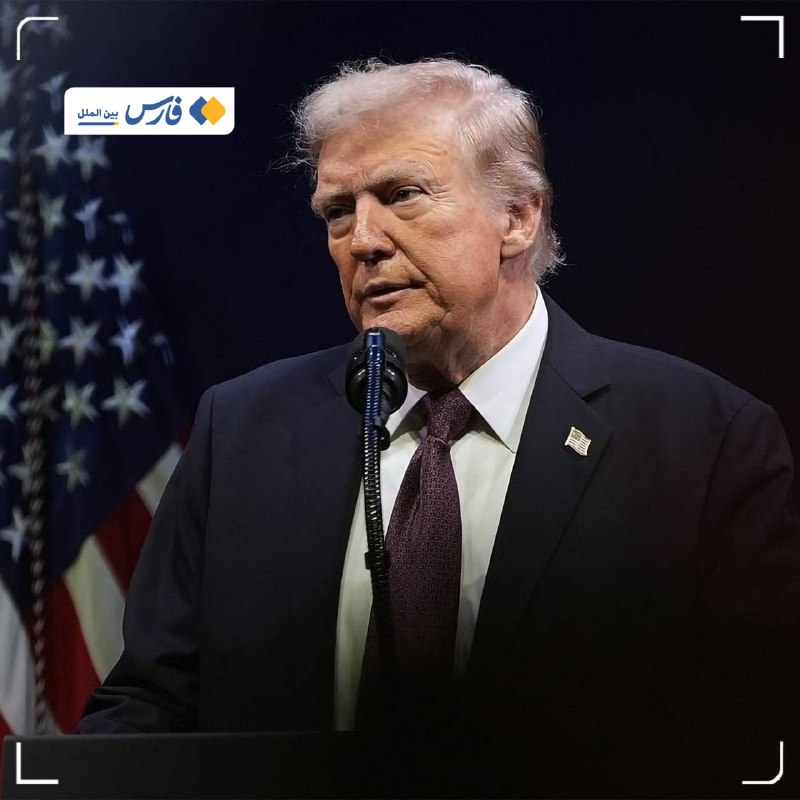
The State Department's diplomatic clock was always going to be a prop as much as a tool. When Secretary of State Marco Rubio told reporters on 8 May 2026 that the United States expected a formal response from Iran on its proposal to end the ongoing war — and that the response should come "today" — the language carried more signal than substance. Tehran had been reviewing the offer for days. The Iranian foreign ministry had signalled no imminent reply. Rubio's public insistence on a Friday deadline read less like a hard cutoff and more like a pressure tactic, calibrated to shape coverage in allied capitals as much as to move the Islamic Republic.
What the proposal actually contains — the specific concessions on offer, the sanctions relief on the table, the verification mechanisms buried in the fine print — has not been made public by either side. That opacity is itself informative. US administrations negotiating under conditions of maximum pressure have historically preferred deals that can be sold without exposing the full inventory of what was given away. Iranian negotiators, for their part, have shown across multiple rounds of nuclear talks that they understand the leverage that comes from keeping Western publics uncertain about what red lines were actually crossed.
The war in question — the phrasing matters — is not the one that generated the original maximum pressure campaign. The US proposal is directed at a conflict that has been escalating since early 2026, one that drew in regional actors and forced the question of whether Iran and the United States could find a diplomatic off-ramp before the fighting expanded further. That context — the existence of an active conflict that both sides have an interest in containing — is what gives the current talks their urgency and their fragility.
Rubio's framing of the Russia-Ukraine conflict as a "real disaster" in the same briefing on 8 May was not incidental. It served a parallel rhetorical function: a reminder that wars which grind on without negotiated endings produce catastrophe at a scale that overrides political calculations. The comparison hung over the Iran table without being named directly — the implicit argument being that the costs of continued fighting, measured in lives and regional instability, outweigh whatever can be gained at the negotiating table by waiting for a better hand.
The structural question this moment poses is familiar, even if the details are new. Can diplomatic engagement under conditions of active conflict produce durable outcomes, or does it simply buy time while both sides prepare for a next phase of confrontation? The history of US-Iranian diplomacy over the past two decades offers no clean answer. The 2015 Joint Comprehensive Plan of Action demonstrated that a deal could be struck; the 2018 withdrawal showed that a deal could be dismantled. The current round is playing out in a different geopolitical landscape — one where Gulf states have normalized relations with Iran, where China's energy relationships with Tehran have deepened, and where the dollar-based financial architecture that the US once used as its primary coercive lever has been partially circumvented by bilateral settlement mechanisms.
What Tehran wants from any negotiation is the same thing it has always wanted: sanctions relief that does not depend on congressional approval, verification arrangements that are inspectorable but not intrusive, and a formal end to the designation of the Islamic Revolutionary Guard Corps as a foreign terrorist organization. What Washington wants is less obvious from the public record, but the contours are deducible. The Trump administration appears to want a deal it can announce — a headline that reads as a diplomatic victory — without the kind of lengthy negotiation that would give critics time to identify the concessions embedded in the fine print. The Friday deadline, in this reading, serves the domestic political calendar as much as any assessment of Iranian readiness.
The counter-narrative that circulates in Tehran's analytical circles is worth surfacing, because it is not simply propaganda. Iranian officials and their affiliated analysts argue that maximum pressure has consistently overestimated the leverage that financial sanctions can generate when the target economy has had years to adapt. The development of alternative settlement systems, the expansion of non-dollar trade corridors through regional partners, and the strategic use of energy price spikes in moments of global volatility have given Tehran tools that did not exist when the original sanctions regime was constructed. The argument runs roughly as follows: the US wants a deal because continued confrontation serves Chinese interests more than it serves American ones, and because a Middle Eastern crisis complicates the broader Asia-Pacific focus that defines current US strategic thinking. If that read is correct, the Friday deadline is not a sign of American strength but a reflection of American anxiety.
Neither narrative is fully sufficient on its own. The truth is almost certainly that both sides have genuine interests in finding a temporary stoppage — Iran because its regional posture has been dented by sustained military pressure, the United States because an open-ended commitment to a conflict without a clear escalation path is strategically incoherent. But genuine interests in a pause are not the same as interests in a lasting resolution, and the terms on which either side would accept a durable settlement remain far apart.
The structural frame that best explains what is happening in this negotiation is the one that treats diplomatic engagement as competitive process rather than cooperative one. Both sides are calculating what they can extract at the table versus what they can compel on the battlefield. The proposal the US tabled is not a gift; it is an offer whose value depends entirely on what Iran believes it can get by waiting. The deadline is not a constraint on Iranian behavior; it is a tool for shaping what third parties — European allies, Gulf partners, Asian energy customers — believe about American resolve. The real audience for Rubio's Friday ultimatum is not Tehran; it is the governments in London, Paris, Riyadh, and Beijing that are watching to see whether the United States can close a deal or whether it will be forced to escalate.
What happens if Iran does not respond by Friday? The sources do not specify what happens next. The State Department's public posture suggests that silence will be treated as rejection, but the history of US diplomacy with Iran suggests a more complicated dynamic. There have been moments — in Vienna, in Muscat, in Geneva — where silence was followed by back-channel communication, and where the appearance of rejection was followed by quiet substantive engagement. The diplomatic calendar of May 2026 may simply be a moment where the gap between public posture and private calculation is unusually wide.
The stakes of this negotiation extend well beyond the bilateral relationship. A durable US-Iran understanding would reshape the regional architecture of the Middle East in ways that matter for Israel, for the Gulf states, for Iraq, and for the broader effort to contain the war that Rubio described as a disaster in Ukraine. It would also affect the pricing of energy markets, the dynamics of nuclear proliferation across the region, and the leverage that China can exercise through its economic relationships with Tehran. These are not small things. They are the reasons that even a partial, temporary, imperfect deal is worth more to both sides than continued open-ended confrontation.
The uncertainty that remains is not about whether the two governments will talk. They will talk — they are already talking, and the Friday deadline is itself a form of communication. The uncertainty is about whether what they discuss can be translated into something that survives the next change of administration in Washington, the next shift in Iranian political leadership, and the next iteration of the regional balance of power. The proposal on the table is a snapshot, not a framework. What matters is whether it can be made into something more durable, and by whom.
Monexus has covered the US-Iran relationship across multiple administrations and several rounds of diplomatic engagement. The pattern is consistent: moments of maximum public pressure tend to coincide with periods of maximum private flexibility. The Friday deadline should be read with that pattern in mind.
Wire provenance
This editorial synthesis draws on the following public wire/social posts:
- https://t.me/OSINTdefender/0000
- https://t.me/OSINTdefender/0001
- https://t.me/JahanTasnim/0000
- https://t.me/JahanTasnim/0001