Iran Threatens UAE in Rare Diplomatic Escalation From Foreign Ministry Spokesman
Iran's foreign ministry spokesman posted what appeared to be an Arabic-language threat against the UAE on 7 May, intensifying pressure on Gulf states that have deepened ties with Western-aligned nations and Israel.
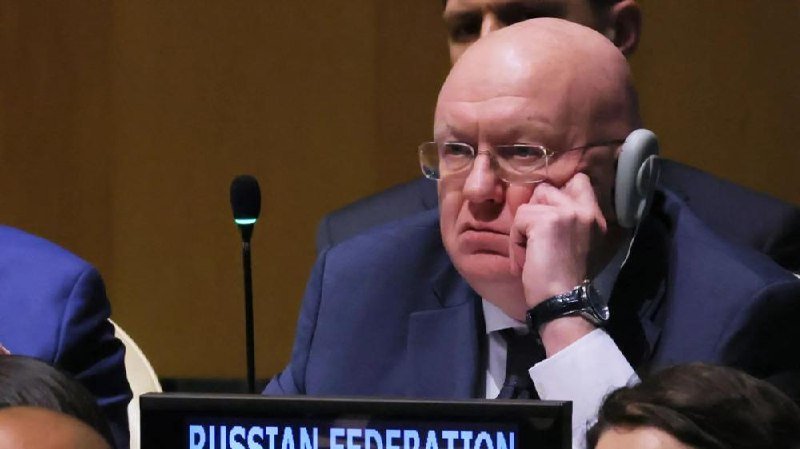
Esmaeil Baqaei, Iran's foreign ministry spokesman, posted an Arabic-language message that international observers widely interpreted as a direct threat to the United Arab Emirates on 7 May 2026. The post, flagged by the monitoring account GeoPWatch, contained a phrase widely translated as: "If you see the lion's fangs protruding." Hours later, a statement circulated in Persian on the official Mehr News agency reading in translation: "We build up the ruins, but we don't forget and we don't forgive." Baqaei met with religious scholars in Qom the same day, according to Tasnim news, in an itinerary that appeared to mix domestic political positioning with the diplomatic signal abroad.
The episode marks an unusual intervention from the foreign ministry podium in a bilateral Gulf relationship that Tehran and Abu Dhabi have managed without public rupture for years. Iranian state media framed Baqaei's language as a message of resilience rather than aggression — an assertion that Iran builds even amid sanctions, and that old grievances remain active ledger items. Whether that ledger includes a specific recent provocation, or whether the statement reflects a broader strategic posture toward Gulf normalization, is not explained in the available sources.
The Immediate Provocation
The timing of Baqaei's Arabic post drew immediate attention from regional watchers. Iranian officials have long criticized Gulf states — and the UAE in particular — for deepening ties with Israel following the Abraham Accords signed in 2020. That objection has been a consistent feature of Tehran's public posture toward the Gulf, but it had rarely been voiced directly by the foreign ministry spokesman in such pointed language. The phrase about the lion's fangs left little room for ambiguity in translation, and the Persian follow-up from Mehr News on the same evening reinforced the message in terms that Iranian domestic audiences could parse without relying on foreign reporting.
The meeting in Qom served as a counterweight on the same day — positioning Baqaei not as a lone voice but as a representative of a clerical state engaged in its own domestic political communication. That dual function — signaling outward toward the UAE while signaling inward toward conservative constituencies — is a pattern observers of Iranian diplomacy recognize as standard practice when the foreign ministry wants to hold both registers simultaneously.
What the Sources Do Not Explain
The available Iranian state media coverage does not identify a specific incident that prompted the statement. Mehr News and Tasnim carry the Persian-language statement and the Qom visit, but neither outlet offers context for what fresh grievance the foreign ministry spokesman was referencing. GeoPWatch's English-language flagging of the Arabic post identifies it as a threat but does not speculate on a triggering event.
This leaves the episode partially opaque. Possible antecedents include recent UAE activity in international forums Iran considers hostile, economic or financial pressure tied to sanctions enforcement, or a specific public statement from Abu Dhabi on a bilateral or regional matter. None of those possible triggers appears in the sources consulted. Readers should note that the proximate cause of Baqaei's statement is not established by the available record.
Structural Context: The Gulf Between Normalization and Resistance
The broader pattern is legible even without a specific trigger. The Abraham Accords restructured the Gulf's diplomatic map, and Iran has responded with a sustained campaign of political and military pressure on states that moved toward Israel — framing normalization as an act of encirclement rather than a sovereign choice. That framing has appeared in parliamentary statements, Revolutionary Guard communiqués, and now in a foreign ministry spokesman's public post. The consistency of that message across institutions suggests coordination rather than improvisation, even if the immediate timing of Baqaei's post cannot be tied to a single event.
The UAE's position in that architecture is complicated. Abu Dhabi has maintained a pragmatic relationship with Tehran even as it deepened ties with Western-aligned nations, and Iranian officials have historically distinguished between the UAE as a trading partner and Gulf states like Saudi Arabia as more direct rivals. The sharpness of Baqaei's language on 7 May suggests either a deterioration in that distinction or a deliberate decision to send a warning across the entire Gulf normalization trajectory — not just to the UAE, but to any Gulf state considering further moves toward Israel or Western security partnerships.
International coverage of Gulf security is complicated by the absence of an independent arbiter. Iranian state media presents the position from Tehran's side; Gulf-state media and Western wire services frame the same events from the opposite direction. The result is a public record in which every statement is simultaneously an assertion and a signal, and in which the factual substrate — what precisely provoked what — is often buried under competing narrative framings. Baqaei's Arabic post and the Persian follow-up are cases in point: they land as threats in international monitoring, and as measured warnings in Iranian state coverage. The gap between those two reads is the structural condition of Gulf diplomacy as it is currently practiced.
Stakes and Forward View
If this episode represents a deliberate decision by Tehran to escalate public pressure on the UAE, the consequences could extend beyond bilateral relations. Abu Dhabi has positioned itself as a financial and logistical hub for regional trade and, indirectly, for Western sanctions enforcement in the Gulf. A formal diplomatic rupture — or even sustained public pressure — would complicate that role in ways that matter to Tehran, to Beijing, and to Washington. China, which brokered a normalization agreement between Saudi Arabia and Iran in 2023, has a structural interest in Gulf stability as part of its Belt and Road corridor interests; escalation between Iran and a UAE that hosts Chinese commercial infrastructure would be unwelcome in Beijing. That dynamic may contain the episode, but it does not eliminate the underlying friction.
Whether Baqaei's post represents a new threshold or a temporary rhetorical peak will depend on whether Abu Dhabi responds and on what Tehran's next public move signals. The foreign ministry has the floor for now. What it does with that position in the coming days will determine whether the episode closes as a cautionary statement or opens a more sustained pressure campaign against Gulf states it views as having crossed a line.
This publication noted that the thread context comprised three Telegram-sourced items from Iranian state-adjacent outlets — Tasnim, Mehr News, and the independent monitoring account GeoPWatch. No Western wire service or Gulf-state media provided a direct on-the-record response by the time of filing.
Wire provenance
This editorial synthesis draws on the following public wire/social posts:
- https://t.me/GeoPWatch/5817
- https://t.me/mehrnews_com/142301
- https://t.me/tasnimnews_en/45222