The Pressure Test: Inside Iran and the West's Nuclear Talks Standoff
Iran's Foreign Minister held separate calls with his British and American counterparts this week, underscoring that diplomatic channels remain open even as the gap between the parties' stated positions on the nuclear programme looks as wide as ever. Monexus examines what the talks process is actually producing — and what the structural obstacles are.
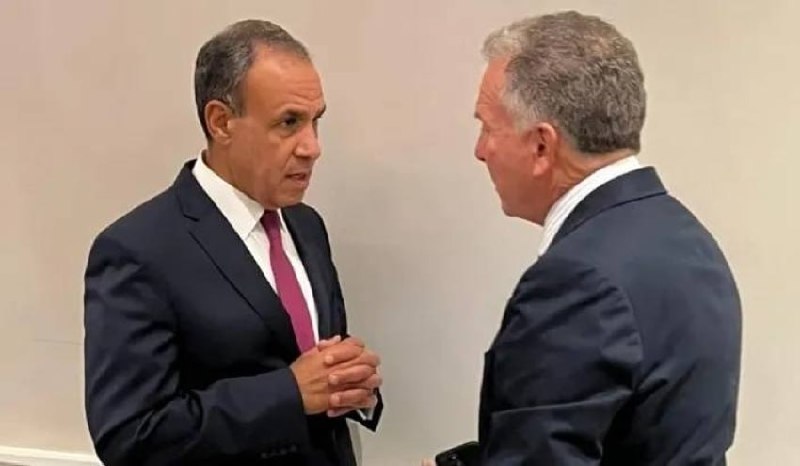
On 8 May 2026, Iran's Foreign Minister Abbas Araghchi held separate telephone conversations with his British counterpart Yvette Cooper and, separately, with United States officials — a diplomatic cadence that has become characteristic of the current phase of nuclear talks between Tehran and Western powers. The discussions came at a moment when the gap between what each side is prepared to offer and what it demands looks as wide as any point in recent memory. Araghchi, speaking after one of those calls, was blunt: the United States, he said, tends toward military adventurism precisely when diplomatic solutions appear within reach. "Iranians never bow to pressure," he added, a formulation that carries both domestic political weight in Tehran and a deliberate signal to Washington. The talks, such as they are, continue. Whether they amount to anything is a different question.
The Calls and What They Produced
The sequence of 8 May calls did not constitute a formal negotiating session. According to the Iranian Foreign Ministry's own readout, Araghchi spoke with UK Foreign Secretary Yvette Cooper about "regional developments" — language that typically encompasses the broader Middle East security environment, including the Gaza conflict, Yemen, and the ongoing shadow war between Iran and Israel. The call with British officials followed a separate exchange that Iranian state media described as touching on the bilateral nuclear file and the broader diplomatic context. Neither readout produced a joint statement, a agreed framework, or a date for further formal talks. What they produced, instead, was evidence that the channel remains open — and that both sides are, for now, choosing to keep it that way.
The UK dimension is not incidental. Britain has maintained a more consistent interlocutor role with Tehran than the United States, partly by virtue of not having formally withdrawn from the 2015 nuclear agreement — a withdrawal the Trump administration executed in 2018. London has positioned itself, quietly, as a relay between Washington and Tehran, a role that predates the current phase of negotiations. For the UK, keeping that channel active serves both its interest in regional de-escalation and its broader interest in demonstrating diplomatic utility to a Washington that has sometimes treated European allies as decorative. For Tehran, speaking to London provides a degree of diplomatic legitimacy that direct engagement with the US, given the history of the last administration, does not.
The Ceasefire Context and US Actions
Araghchi's reference to US "military adventurism" must be read against the backdrop of specific recent actions. In the weeks preceding the 8 May calls, American forces had conducted strikes in the Middle East that Tehran cited as evidence of Washington's broader posture. The phrasing was deliberate — not merely rhetorical — and it reflected a pattern in how Iranian officials frame their engagement with Washington: they are willing to negotiate, but they insist on framing the negotiating environment as one shaped by American aggression that the talks must, at some level, counteract. This is a negotiating position as much as a political statement. Iran has consistently used language of resistance and sovereignty — the "never bow" formulation has roots in the revolutionary-era political grammar that still animates parts of the Iranian establishment — to signal that concessions, if they come, will be portrayed as wins achieved under pressure, not capitulations sought under duress.
The ceasefire reference matters for a second reason. Several regional conflict zones — most notably Yemen, where a ceasefire has held in modified form for over a year — represent a degree of diplomatic success that both Iran and the US have an interest in preserving. Iran's backing of the Houthis gave it a real, if indirect, card at the negotiating table. The ceasefire demonstrates that Iran can constrain its regional assets when it chooses to. That capability is itself a negotiating asset — it allows Tehran to demonstrate that it is not a status-quo disruptor for its own sake, but an actor that calibrates regional behaviour to diplomatic objectives. Whether that calibration reflects genuine strategic flexibility or tactical opportunism is a question that Western analysts continue to debate.
What Iran Is Actually Demanding
The structural demands that Iran brings to any nuclear negotiation are not new, but they have hardened in the decade since the JCPOA was signed. Tehran's position rests on several pillars: verified sanctions relief as a condition for any freeze or rollback of nuclear activity; legally binding guarantees against future American withdrawal from any agreed framework; acknowledgment of Iran's right to civilian nuclear development under the Non-Proliferation Treaty; and the exclusion of any provisions that apply differently to Iran than to other signatories. These are not negotiating positions that can be bridged with creative diplomatic language alone. They reflect genuine differences in interest and threat perception.
The sanctions dimension is particularly concrete. Iran has demonstrated, repeatedly, that it will not accept a framework in which sanctions are suspended but remain legally in place — ready to be reactivated at Washington's discretion. This was the core of the JCPOA dispute from Tehran's perspective: the agreement did not permanently eliminate sanctions, it suspended them subject to verification of Iranian compliance. The Trump administration's withdrawal, and the re-imposition of sweeping secondary sanctions, was framed by Iran as proof that the entire American commitment structure was unreliable. Any successor agreement would have to address that credibility problem in a way that is legally durable — a standard that the US, given its own constitutional architecture, has struggled to meet without appearing to surrender Congressional authority over sanctions.
The Structural Obstacle
What makes the current phase distinctive is not the novelty of the demands on either side but the layering of multiple pressures that did not exist, or were not as acute, when the JCPOA was negotiated in 2013-2015. Iran's regional position has strengthened in some dimensions relative to that period. Its nuclear programme has advanced, both in enrichment level and in the sophistication of its civilian infrastructure. Its relationships with Russia and China have deepened, providing alternative economic and diplomatic partnerships that reduce its dependence on Western engagement. And the broader regional conflict environment — including the Gaza war and the strikes on Iranian-linked facilities — has given Tehran a frame in which it appears as a party under external pressure rather than a challenger to be contained. These are not abstract observations; they change the negotiating calculus in concrete ways.
On the American side, the political environment is equally constrained. The current administration faces domestic pressure from multiple directions — from Republicans who view any engagement with Iran as appeasement, from allies in the Gulf who view Iran's regional behaviour as inherently destabilising, and from a defence establishment that has a structural interest in maintaining the option of military force. Negotiating with Iran is not, domestically, an easy political sell. The administrations and congresses that have struggled most with this tension are not unique in finding it difficult — it reflects a genuine and persistent conflict between the strategic logic of engagement and the political logic of alliance management in a region where the US has committed security guarantees to parties who view Iran as an existential threat.
The structural obstacle, then, is not primarily about technicalities — the details of centrifuge counts, Fordow enrichment, or monitoring protocols. It is about whether each side can credibly commit to an agreement that its domestic political environment may not sustain. The history of American-Iranian negotiations is littered with agreements that looked technically achievable but collapsed when political conditions shifted. Tehran knows this history. Washington knows that Tehran knows this history. The gap between what is technically negotiable and what is politically sustainable on both sides is the gap that the current talks have not, so far, closed.
What Comes Next
The 8 May calls did not produce a breakthrough, and no serious analyst of this file expected them to. What they produced was something more modest and more important: evidence that the diplomatic channel remains operative, that both sides are willing to talk, and that neither has yet concluded that talks are futile. In a conflict where the alternative to negotiation is not stasis but escalation — with regional consequences that neither side can fully control — the maintenance of the channel is itself a form of output.
The sources do not indicate a scheduled next round of formal talks, nor any agreed framework for resuming the structured negotiating process that characterised the back-and-forth of earlier phases. What they suggest is a period of continued consultation — with London, with European capitals, with the other parties to the JCPOA who have a structural interest in keeping the agreement viable — as both sides assess whether the political conditions for substantive progress are present. Tehran has made its position clear: it will not yield to pressure. Washington has made its position clear: it will not accept a framework that does not address its core concerns about enrichment pathways and breakout capacity. The space between those positions is not small. Whether it can be navigated — or whether it is simply the terrain on which the next phase of confrontation will be conducted — is the central question for the months ahead.
The diplomatic rhythm of calls and consultations will continue. Whether it produces anything structural depends on a set of conditions — domestic political calculations in Washington and Tehran, regional conflict dynamics in Gaza and Yemen, the behaviour of secondary powers with interests in the outcome — that the sources do not fully resolve. What is clear is that both sides have, for now, chosen to test the proposition that pressure and negotiation can coexist. The outcome of that test is not yet written.
This publication covered the Araghchi-Cooper call and the US-Iran diplomatic trajectory through the lens of structural negotiating constraints, rather than foregrounding the ceasefire-violation narrative common in some Western outlets. The Iranian Foreign Ministry's readout of the Cooper call, and Araghchi's public statements, provided the primary reference points; we identified the UK as an active relay channel rather than a bystander, which shifted the analytical weight from Washington-centrism toward a more multi-polar reading of the diplomatic field.
Wire provenance
This editorial synthesis draws on the following public wire/social posts:
- https://t.me/presstv/124856
- https://t.me/alalamarabic/98742
- https://t.me/tasnimnews_en/54321
- https://t.me/presstv/124854
- https://t.me/JahanTasnim/32109