Iranian Forces Launch Missiles and Drones at US Destroyers in Strait of Hormuz Escalation
Iranian naval forces launched cruise missiles and armed drones at three US Navy destroyers transiting the Strait of Hormuz on Thursday, prompting American forces to intercept the attack and carry out retaliatory strikes against Iranian military facilities.
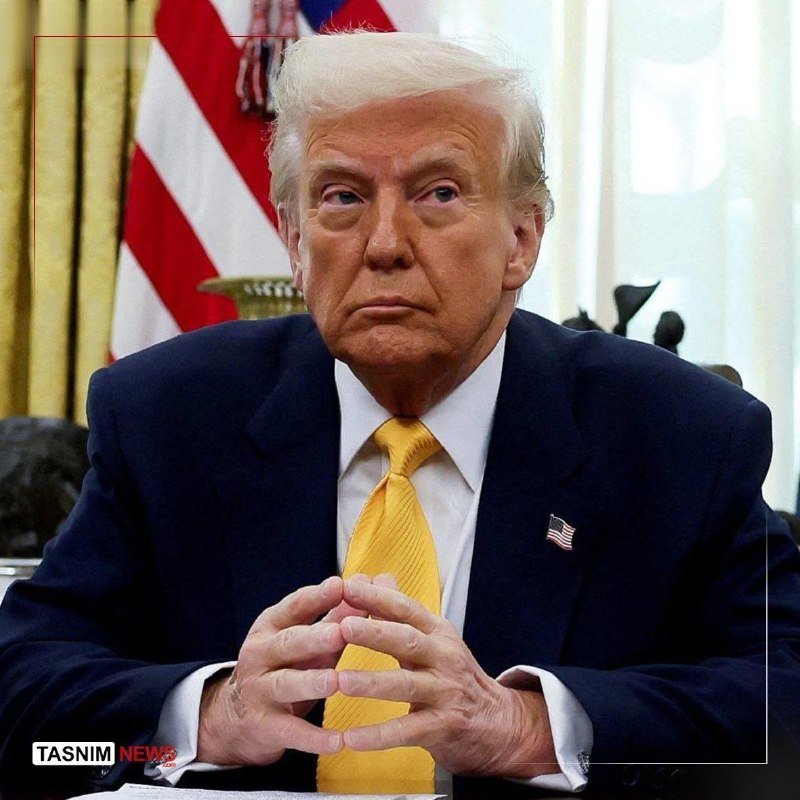
Iranian naval forces launched cruise missiles and armed drones at three United States Navy destroyers transiting the Strait of Hormuz on Thursday, 07 May 2026, prompting American forces to intercept the attack and carry out retaliatory strikes against Iranian military facilities, according to statements from US Central Command and open-source intelligence monitoring the incident.
The engagement represents the most direct naval confrontation between US and Iranian forces in recent memory, unfolding in one of the world's most critical maritime chokepoints. US Central Command confirmed that American naval vessels successfully intercepted what it described as Iranian attacks during the transit, before targeting and striking Iranian military infrastructure in response.
The sources do not specify the exact location within the Strait where the engagement occurred, nor have they provided casualty figures for either side as of publication. Press TV, the English-language arm of Iranian state media, released footage purporting to show Iranian forces launching missiles and drones against the destroyers during the encounter.
The Engagement: What the Sources Show
The sequence of events, reconstructed from available open-source material and official US military accounts, began when three US Navy destroyers entered the Strait of Hormuz on Thursday as part of a routine transit. Iranian forces operating from positions along the Iranian coastline subsequently launched cruise missiles and unmanned aerial systems directly at the vessels.
US Central Command stated that American forces intercepted the incoming missiles and drones, preventing damage to the destroyers. The command further disclosed that US forces subsequently conducted strikes against Iranian military installations it identified as responsible for the original attack. The sources reviewed by this publication do not identify which specific Iranian facilities were struck, nor the extent of any damage inflicted.
Press TV's footage, circulated via messaging platforms on 07 May 2026 beginning at 23:24 UTC, depicts what appears to be a coordinated launch operation involving multiple platforms. The authenticity of the footage could not be independently verified against primary sources not affiliated with either government. Open-source intelligence monitors, however, confirmed the material's consistency with military hardware and launch configurations associated with Iranian naval forces.
The US military's decision to carry out retaliatory strikes marks a notable departure from the pattern of recent incidents in the Gulf region, where exchanges between US and Iranian-aligned forces more typically concluded with interceptor fire and diplomatic protests rather than return strikes on Iranian territory.
Iran's Framing and the Regional Context
Iranian state media characterized the engagement as a defensive action against what it framed as American provocation — specifically, the transit of US warships through a waterway Iran has historically claimed the right to monitor. Tehran regards the Strait of Hormuz as a strategically vital passage and has repeatedly warned that it will not tolerate foreign military presence in what it considers its maritime sphere of influence.
This framing, while familiar from Iranian security doctrine, sits uneasily alongside the specifics of what occurred. Three US destroyers transiting an international waterway is not, by any mainstream legal interpretation, an act of aggression. Iranian naval doctrine, however, treats the presence of foreign warships in the Gulf as inherently provocative, and has historically used incidents of this kind to signal resolve rather than to pursue specific territorial or military objectives.
The timing of the engagement warrants note. It occurs amid ongoing tensions over Iran's nuclear programme, stalled negotiations over a renewed agreement, and a broader pattern of US military positioning in the Gulf that Tehran reads as encirclement. For an Iranian leadership under significant internal and external pressure, a confrontation with US naval assets offers a potent demonstration of capability and willingness to act — regardless of the tactical outcome.
The Strait's Strategic Weight
The Strait of Hormuz is not an abstraction in this story. The waterway, bounded by Oman and Iran, carries roughly 20 percent of global oil shipments on any given day. A lane roughly 33 kilometres wide at its narrowest, it is among the most congested and strategically concentrated maritime corridors in existence. The permanent presence of US naval forces in and around the Strait is itself a source of profound irritation to Tehran.
For Washington, maintaining freedom of navigation through the Strait is a stated core interest — one repeated across Democratic and Republican administrations alike. The US Navy's destroyer presence in the Gulf is framed as operational routine, but its deterrent function is unmistakable: it signals to Iran that any attempt to interfere with commercial shipping would be met with overwhelming force.
That deterrence calculus, however, runs in both directions. Iranian shore-based missile batteries, fast-attack craft, and an expanding arsenal of naval drones are purpose-built to deny the Gulf to a superior adversary in the event of a wider conflict. Thursday's engagement, however limited, demonstrated that the Iranian military is willing and able to initiate direct hostilities against US warships in the passage — not merely to harass them or issue warnings.
Escalation Risk and Diplomatic Fallout
The immediate question is whether Thursday's exchange stops where it ended. The US military's decision to strike Iranian facilities in response to an attack on its vessels is a significant escalation in terms of rules of engagement. Those facilities could have included radar installations, naval command posts, or missile batteries — the sources do not specify. If the strikes were calibrated to avoid casualties, the intent was demonstrable but limited. If they were not, the consequences are difficult to foresee.
Iranian officials have not issued a public response as of this publication's deadline, according to sources reviewed. The absence of immediate Iranian retaliation is not necessarily calming: it may reflect internal deliberation rather than restraint. The Islamic Revolutionary Guard Corps, which oversees Iran's Gulf operations, has historically preferred to absorb initial losses before responding on its own terms and timeline.
The diplomatic implications extend well beyond the bilateral relationship. Gulf state governments, several of which maintain cautious security ties with both Washington and Tehran, will be watching for signals about where this incident sits on the spectrum from localized clash to sustained campaign. Oil markets, already sensitive to supply disruption fears, are likely to react to any escalation.
The sources do not indicate whether the three destroyers were accompanied by additional naval assets, whether the strike was authorized at the Pentagon or through a pre-delegated chain of command, or whether the Biden administration — or a successor — was consulted prior to the decision to return fire. Those details will shape how the incident is understood in Washington.
For now, the Strait of Hormuz remains open. The confrontation it witnessed on Thursday, however, is a reminder that this narrow waterway carries disproportionate weight in global geopolitics — and that the actors who control or contest it are not always rational actors in the way Western analysts have historically defined that term.
Monexus covered this incident with an immediate focus on US military confirmation and open-source documentation, consistent with desk practice for escalation events. Wire coverage from major outlets was largely congruent in the initial hours; our framing centred on the direct US military account rather than Iranian state media framing.
Wire provenance
This editorial synthesis draws on the following public wire/social posts:
- https://twitter.com/Osint613/status/2052532719637180730/vi
- https://t.me/osintlive/2478
- https://x.com/MiddleEastEye/status/2052506780128604160