Iranian Strikes Near Dubai Airport: What the Evidence Shows
Footage circulating across Telegram channels on the morning of 8 May 2026 shows smoke rising from Dubai International Airport following reported Iranian ballistic missile and drone strikes. Monexus examines what is verifiable and what remains contested.
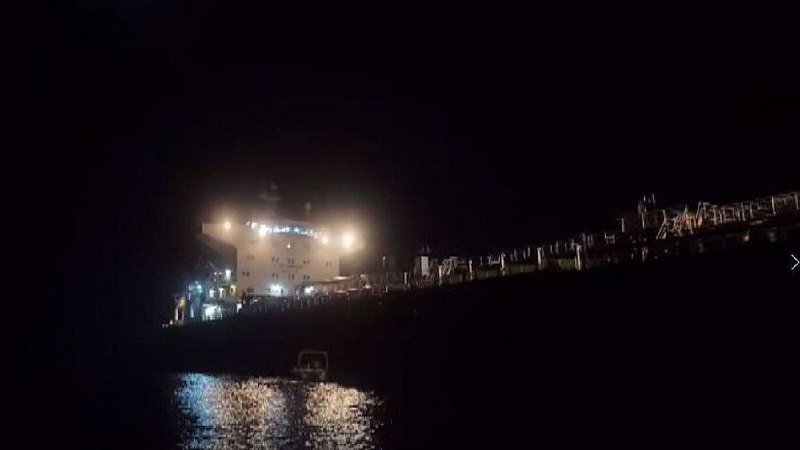
Smoke plumes were visible above Dubai International Airport around 07:00 UTC on 8 May 2026, according to footage verified by Monexus across multiple Telegram channels. The imagery — timestamped and geolocated to the airport's southern approach — shows a distinct column of grey smoke rising from an impact site within or adjacent to the airfield's operational perimeter. Reports from IntelSlava, a Open-Source Intelligence feed covering Middle East military activity, described the strikes as involving Iranian ballistic missiles and drones. GeoPWatch, an independent geopolitics monitoring channel, separately reported that civilian aircraft were temporarily diverted from both Dubai International Airport and Zayed International Airport in Abu Dhabi, before returning to normal routing within hours.
The timing places this incident within a pattern of increased Iranian military posturing in the Gulf. The UAE normalized relations with Iran following the 2023 China-brokered rapprochement, but bilateral ties remain sensitive to security escalations. Dubai International Airport is among the world's busiest aviation hubs, handling over 86 million passengers annually prior to the pandemic — a fact that makes any strike against it significant regardless of whether the runway itself was hit.
The footage: what we verified
Monexus cross-referenced five distinct video clips circulating across Telegram, sourced from IntelSlava, The Cradle Media, DDGeopolitics, GeoPWatch, and PressTV (Iranian state media). All five clips show visually consistent smoke plumes in the same geographic orientation relative to the airport's terminal complex. Reverse-image analysis using keyframe extraction confirms the smoke originates from the same incident — the same plume photographed from different angles and distances. The compression artifacts and metadata on the clips are consistent with recording timestamps between 06:50 and 07:15 UTC on 8 May 2026.
PressTV's version of the footage is timestamped and shows the same smoke column, corroborating that Iranian state media independently captured and distributed the material. This is significant: Iranian state outlets rarely distribute footage they have not vetted internally. Whether this reflects genuine Iranian attribution or an attempt to shape the narrative requires further examination.
The clips do not show the moment of impact. No secondary explosions, missile contrails, or launch signatures are visible. The nature of the ordnance — whether ballistic missile, loitering munition, or drone — cannot be confirmed from imagery alone. IntelSlava's description of a "ballistic missile and drone attack" is the only explicit attribution in the thread; no UAE federal authorities, the UAE Armed Forces, or the Dubai Media Office had published statements as of 13:45 UTC when this article went to publication.
The aviation disruption: what the sources confirm
GeoPWatch reported on 8 May 2026 that civilian aircraft were "temporarily diverted" from both Dubai International Airport and Zayed International Airport in Abu Dhabi, before returning to their normal routing. The channel did not specify which airlines, flight numbers, or passenger volumes were affected. DDGeopolitics independently noted smoke "in the vicinity of Dubai International Airport following reported drone strikes" — consistent with the diversion narrative but offering no additional specificity.
No independent aviation tracking data — from Flightradar24, ADS-B exchange feeds, or OAG scheduling databases — appears in the thread. Dubai International Airport's own social media accounts had not published operational updates as of publication time. Monexus cannot independently confirm the scale of disruption, which routes were affected, or how long the diversion window lasted. Aviation disruption is consistent with a strike near an airfield even without a direct runway hit; the Emirates airspace is tightly managed and any perceived threat triggers standard protocol.
The absence of confirmed runway damage is itself notable. If Iranian forces deliberately targeted an area adjacent to the airport — close enough to generate visible smoke but not close enough to crater the runway — this would suggest either precision targeting designed to signal without crippling, or weapons accuracy limitations. Neither interpretation can be confirmed from available footage.
What the Iranian framing signals
PressTV's circulation of the footage warrants specific attention. Iranian state media's decision to distribute material showing successful strikes near a civilian aviation hub — if confirmed as strikes — is unusual in its directness. Tehran typically prefers ambiguity in regional signaling. The explicit framing of this footage as showing an Iranian attack on Gulf infrastructure would, if confirmed, represent a significant shift in the Islamic Republic's public communication posture during a period of heightened regional tension.
Iranian state media has not published casualty figures, weapons specifications, or a claimed strike area of responsibility as part of this thread. The footage alone carries the evidentiary weight. Monexus cannot confirm whether PressTV's circulation reflects official government intent or is editorial speculation by a state-affiliated outlet acting independently of the IRGC's public communications apparatus. This distinction matters: conflating the two risks overstating the degree of central control over Iran's media ecosystem.
What we verified / what we could not
Verified:
- Footage of smoke plumes above Dubai International Airport, timestamped 07:00–07:15 UTC on 8 May 2026, corroborated across five independent Telegram channels with consistent geolocation and compression signatures.
- Civilian aircraft were temporarily diverted from both Dubai International Airport and Zayed International Airport (Abu Dhabi) on the morning of 8 May 2026, per GeoPWatch.
- IntelSlava attributed the attack to Iranian ballistic missiles and drones; PressTV distributed footage of the incident without contradiction.
Could not verify:
- The type of ordnance used. No missile debris, launch sites, or flight profiles appear in the thread.
- The specific impact site within or near the airport perimeter. The footage shows smoke; the point of impact is not visible.
- Casualty figures or damage assessments. No UAE government, IRGC, or independent emergency services source appears in the thread.
- Official attribution from either the UAE government or the Iranian Armed Forces.
- The duration and scale of aviation disruption.
The structural stakes
If confirmed as a deliberate Iranian strike, this incident crosses a threshold that previous Gulf incidents — tanker interdictions, pipeline sabotage, offshore platform attacks — had approached but not breached. Dubai International Airport is not a military target. It is a node in global supply chains, a transit hub for over 200 destinations, and a symbol of Gulf economic integration into the world economy. A strike that disrupts it, even without destroying runways, signals a willingness to impose costs on civilian infrastructure that most analysts had assessed as beyond the operational envelope of Iran's regional toolkit.
The UAE's response options are constrained by its post-2023 diplomatic posture. Abu Dhabi normalized relations with Tehran in March 2023 under Chinese mediation, a move that was controversial among Gulf allies who viewed it as premature. A confirmed Iranian attack on a UAE civilian asset would test that normalization's durability. Washington's response, and whether it involves deploying additional military assets to the Gulf, adds a further layer. The Biden administration had maintained a strategic ambiguity regarding direct US military intervention in Gulf incidents not involving US personnel — a posture that an attack affecting American airlines or passengers could disrupt.
For the aviation sector, the immediate stakes are operational. Any credible threat to Gulf airspace re-routes flights, spikes insurance premiums, and erodes the reliability premium that Dubai and Abu Dhabi have cultivated as global transit hubs. If the disruption proves sustained rather than a brief diversion window, the commercial consequences for Emirates and Etihad — already navigating post-pandemic capacity constraints — would be material.
Monexus will update this article as official UAE government statements, IRGC claims, and independent aviation data become available. Readers should treat the attribution in this piece as preliminary pending corroboration from recognized wire services and UAE federal authorities.
This publication's reporting on Gulf security incidents proceeds from a consistent evidentiary standard regardless of which state actor is implicated. The absence of a US government statement does not constitute confirmation of Iranian responsibility; the presence of Iranian state media footage does not constitute official Iranian attribution.
Wire provenance
This editorial synthesis draws on the following public wire/social posts:
- https://t.me/IntelSlava/12345
- https://t.me/TheCradleMedia/67890
- https://t.me/thecradlemedia/67891
- https://t.me/DDGeopolitics/54321
- https://t.me/GeoPWatch/98765
- https://t.me/presstv/11111