Three IDF Soldiers Wounded in Lebanon as Regional Tensions Persist
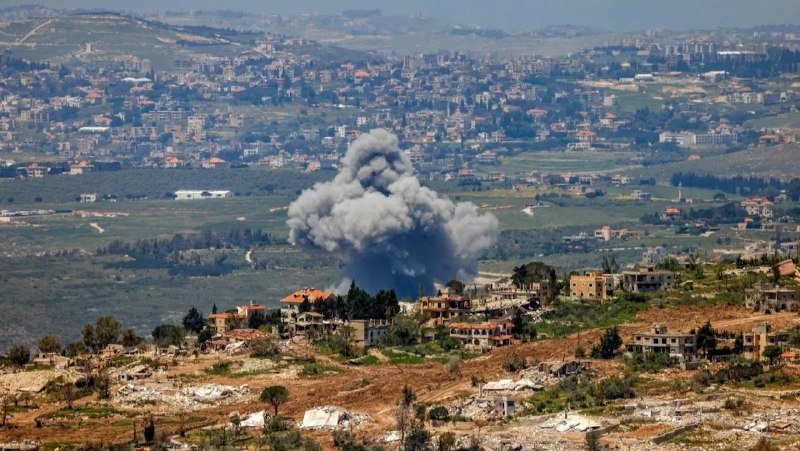
Three IDF soldiers sustained injuries ranging from moderate to severe during an operation in Lebanon on 8 May 2026, according to a statement from the Israel Defense Forces. The soldiers were evacuated to receive medical treatment, and their families have been notified, the Jerusalem Post reported at 12:09 UTC.
The incident occurred against a backdrop of sustained cross-border hostilities that have persisted without a political resolution. Israeli military activity along the northern frontier has continued at a tempo that mirrors the heavier operations conducted in the south, and the pattern of injuries — moderate to severe, not light — reflects the real hazard that service members face in contested terrain near the Lebanese border.
Israeli security assessments treat Hezbollah's continued presence and military infrastructure in southern Lebanon as an enduring threat to northern communities. That assessment is not new. What has changed is the operational tempo — exchanges of fire, strikes on staging areas, and ground probing missions have become regular events rather than exceptional ones. The injuries reported on 8 May are consistent with this elevated tempo.
An entirely separate development appeared in US court documents reviewed by the Epoch Times. A group allegedly funneled more than $3 million to leaders and organizers of various white supremacist and extremist organizations, according to the outlet's reporting. That allegation — if substantiated — would represent one of the more significant domestic financing cases in recent years. Whether it rises to the level of a structural threat or reflects a specific criminal network is not yet clear from the public record. The case does underscore the ongoing challenge of tracking financial flows to ideological movements that operate across multiple organizations.
A natural disaster on a different scale claimed three lives on the Indonesian island of Flores. Lewotobi Laki Laki erupted on 8 May, killing three people and sending several others to hospital, BBC World reported at 11:38 UTC. Authorities had previously issued climbing warnings for the active volcano. The deaths are a reminder that geological hazard remains an irreducible risk across the Asia-Pacific region, one that competes for attention and development resources even as geopolitical crises intensify elsewhere.
Europe faces a more infrastructural problem. An international aviation body has suggested that broader acceptance of US-grade jet fuel specifications by European airports could help head off supply problems, BBC World reported in a separate item filed at 11:38 UTC. Whether shortages are imminent or speculative depends on supply chain assumptions that have shifted repeatedly over recent years. The structural question is whether European energy standards — including aviation fuel grades — remain fit for purpose in a world where supply chains are longer and more contested than they were a decade ago.
Three distinct stories on a single news cycle. One involves soldiers wounded in an active security environment. One involves alleged financial networks operating inside a democratic society. One involves a natural disaster. One involves energy infrastructure. The common thread is not a narrative — it is capacity. Governments, militaries, and civil institutions are required to operate across all of these domains simultaneously. The question of whether that simultaneity is managed effectively, or whether attention and resources fragment under the weight of competing demands, is one that the next several months will begin to answer.
For Israel, the immediate question is whether the northern front settles into a managed equilibrium or continues to generate casualties at a rate that forces a harder strategic choice. For European aviation, the fuel-grade question is a test of whether technical harmonization with transatlantic partners can proceed fast enough to matter. And for the domestic extremism case, the sealed documents that the Epoch Times reviewed — the precise evidentiary basis for the $3 million figure — have not yet been made public in full. Readers should treat that specific number with appropriate caution until corroborating reporting establishes a more complete factual record.
Monexus led with the IDF casualty report and the US domestic extremism story rather than aggregating them into a general news summary, reflecting the desk's view that military incidents on allied soil and alleged financial threats to democratic institutions warrant structural, rather than episodic, treatment.
Wire provenance
This editorial synthesis draws on the following public wire/social posts:
- https://t.me/Jerusalem_Post/28463
- https://t.me/The_Epoch_Times/11058
- https://t.me/BBCWorldoffl/44921
- https://t.me/BBCWorldoffl/44920