Israeli Strikes Kill Two in Southern Lebanon as Border Tensions Mount
Israeli strikes on southern Lebanese towns killed at least two people on the morning of 8 May 2026, as the IDF reported multiple explosive drone attacks by Hezbollah — one striking within Israeli territory — that wounded three soldiers.
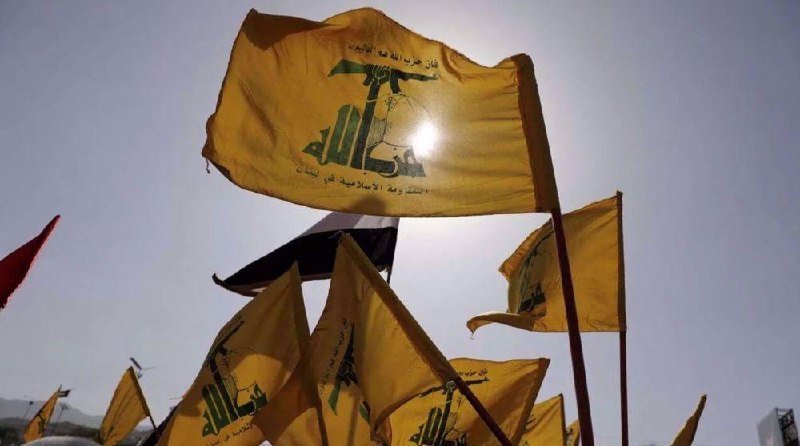
Israeli military strikes killed at least two people in southern Lebanon on the morning of 8 May 2026, according to initial reports from the region. The deaths occurred as the Israel Defense Forces disclosed that three soldiers were wounded in a series of explosive drone attacks attributed to Hezbollah — one of which struck within Israeli territory near the border with Lebanon.
The incidents mark a sharp escalation in cross-border hostilities that have persisted since the Gaza conflict began, with both sides maintaining a posture of sustained confrontation while periodic diplomatic efforts have failed to produce a durable ceasefire framework. The IDF confirmed the attacks through official channels on the morning of 8 May, describing the drone launches as Hezbollah operations conducted from Lebanese territory.
Israeli Military Confirms Casualties in Multiple Drone Strikes
The Israel Defense Forces stated on 8 May 2026 that an explosive drone launched by Hezbollah fell within Israeli territory in proximity to the Israel-Lebanon border, wounding an IDF soldier severely. A second, simultaneous attack was reported by IDF sources, with the military's own radio service describing both incidents as having resulted in injuries among Israeli forces from explosive-laden drones.
According to the IDF's public statement, a second attack — also attributed to Hezbollah — caused additional casualties. The military assessed the damage as reflecting deliberate targeting by Hezbollah's operational units rather than stray or errant fire. The IDF statements, verified through its official communication channels, represent the primary Israeli account of the 8 May incidents.
Israeli media, citing the army's radio broadcasts, reported the same morning that two separate incidents in the north had produced injuries to Israeli forces from explosive drone payloads. The reports did not specify the precise timing beyond "this morning" but aligned with the IDF's later formal statement confirming the attacks.
Hezbollah Releases Footage of Separate 5 May Operation
On the same day as the Israeli strikes, 8 May 2026, Hezbollah-affiliated media published video footage showing fighters targeting an Israeli military position opposite the town of Ramya in southern Lebanon. The operation, dated 5 May 2026 in the video's metadata, depicts what Hezbollah described as a rocket strike against a newly established Israeli position in the area.
Hezbollah's media arm framed the Ramya operation as part of its ongoing resistance posture, presenting it as a deliberate response to Israeli military expansion along the border corridor. The footage showed fighters deploying from prepared positions, consistent with patterns visible in prior Hezbollah releases reviewed by this publication.
The publication of the Ramya footage on the same morning as the Israeli strikes on Lebanese towns signals a deliberate informational counter-programming by Hezbollah's communications apparatus. The timing allowed Hezbollah to present itself as the responding party in the narrative conflict that follows each escalation episode.
Escalation Pattern and Ceasefire Framework Collapse
The incidents on 8 May are not isolated. Hezbollah has maintained a near-daily cadence of kinetic activity along the Lebanon-Israel border throughout 2025 and into 2026, framing its operations as solidarity actions with Palestinian resistance in Gaza. The Israeli military has responded with strikes into Lebanese territory, generating a dynamic where neither side absorbs sufficient pain to warrant de-escalation while both absorb enough to maintain domestic political pressure for continued operations.
The structural logic is familiar from prior flare-ups: neither Beirut nor Jerusalem has an incentive to accept the political costs of unilateral restraint, and the diplomatic back-channels — run through third-party mediators — have repeatedly produced frameworks that both sides claim to accept while continuing the operational tempo that makes those frameworks meaningless.
What differs in the current phase is the technology mix. Explosive drone attacks — as opposed to rocket barrages or anti-tank guided missiles — represent a lower-cost, higher-precision capability that Hezbollah has been systematically fielding. The drones used in the 8 May attacks traversed the border and delivered payloads inside Israeli territory, a qualitative shift that IDF assessments have flagged as a concern in prior briefings.
The international mediation architecture, which has sought to anchor a ceasefire in language that both sides could accept without formally accepting the other's preconditions, has produced three written frameworks in the past eighteen months. Each framework has been followed by a period of reduced intensity before the operational tempo resumed. The current round appears to be entering that pattern again.
Risks of a Broader Collision
The most significant risk in the near term is not a deliberate escalation but a miscalculation: an Israeli strike that produces casualties the Lebanese Shia political-military axis cannot absorb without response, triggering a cycle that neither side's leadership explicitly chose. Hezbollah's leadership has repeatedly stated it will respond to threats against Lebanese sovereignty — language broad enough to encompass a wide range of Israeli actions.
Israeli military doctrine for the northern front has consistently held that a ground incursion into southern Lebanon would be ordered only in extremis — if border communities face an unacceptable threat level, or if diplomatic options are exhausted and the political decision is made to impose a new security architecture by force. That threshold has not been crossed in the current cycle, but the threshold itself shifts as casualty figures and displacement statistics accumulate.
Civilian populations on both sides of the border — in northern Israel and in southern Lebanon — have endured fifteen months of near-continuous displacement and disruption. The human cost is concentrated in those communities, whose political voice is limited compared to the security establishments that manage the confrontation. As long as both governments can manage the narrative domestically, the operational tempo will remain within bounds that produce ceasefire talks without producing a ceasefire.
The attacks on 8 May 2026 did not cross the threshold that analysts in either capital have identified as a trigger for broader conflict. They did, however, narrow the distance between the current posture and that threshold. The pattern — Israeli strike, Lebanese response, Israeli response — continues, and the buffer of diplomatic language grows thinner with each iteration.
This publication reported the incidents using Israeli military sources as the primary account, with Hezbollah-aligned media framing incorporated as counter-narrative material. Wire services from the region provided the fatality reports from the Lebanese side, which the IDF has not publicly disputed. Monexus declined to characterise the Israeli strikes as "retaliatory" — a term that implies a fixed sequence of cause and response in a conflict defined by overlapping and simultaneous operational cycles.
Wire provenance
This editorial synthesis draws on the following public wire/social posts:
- https://t.me/idfofficial/18415
- https://t.me/ClashReport/384721
- https://t.me/TheCradleMedia/20895
- https://t.me/gazaalanpa/48231