Israeli Airstrike Hits Al-Shati Refugee Camp, Injuring Children and Civilians
An Israeli airstrike struck a residential building in the al-Shati refugee camp west of Gaza City on the evening of 8 May 2026, injuring at least two people including a child, according to multiple regional and wire-adjacent sources. The strike drew rapid condemnation from Arab and regional capitals as ceasefire talks remained stalled.
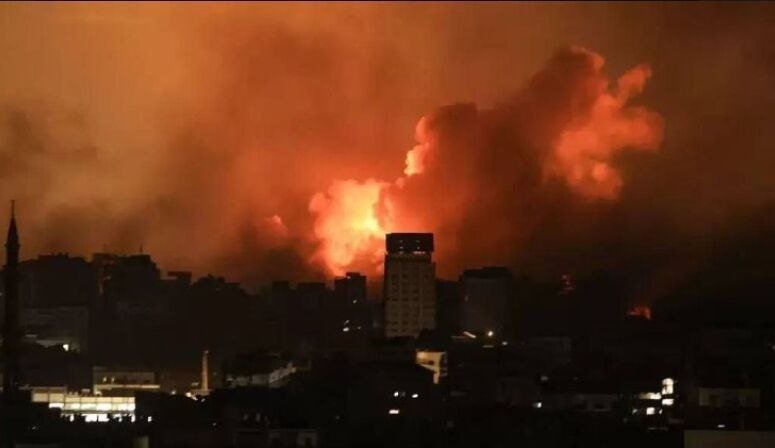
An Israeli warplane struck a residential building in the al-Shati refugee camp west of Gaza City on the evening of 8 May 2026, injuring at least two people including a child, according to multiple regional news channels operating in the area. Video footage circulating on regional Telegram channels showed thick columns of smoke rising from the camp, which has housed displaced Palestinians for decades and was already densely populated after months of evacuation orders covering much of northern Gaza. The Israeli military had no immediate public comment on the strike at the time of reporting.
The strike landed during a period of renewed but faltering ceasefire diplomacy, with Qatari and Egyptian mediators continuing to press for an extended pause after a series of previous short-term truces failed to hold. The timing complicates ongoing efforts: ceasefire negotiators had been scheduled to meet in Doha the following week, and regional capitals watching the talks described the attack as potentially destabilising to the fragile process. Whether the strike was targeted at an individual or structure intelligence indicated a threat, or whether it represented a broader pattern of operations in populated areas, remained unresolved in the initial hours.
The Scene in al-Shati
Al-Shati is one of the oldest refugee camps in Gaza, established for Palestinians displaced during the 1948 Nakba. Prior to the current hostilities it housed approximately 90,000 people in an area of roughly one square kilometre. The camp's density makes any strike structurally likely to affect civilian infrastructure, a dynamic that aid organisations have repeatedly flagged as a central legal and humanitarian concern. The footage from the evening of 8 May showed a residential building reduced to rubble, with smoke visible across a wide radius. Initial casualty reports circulated on regional Telegram channels were consistent in identifying at least two injuries, including a child, though the precise number of casualties was not independently verified at the time of this report.
Israeli military statements on operations in Gaza have consistently cited the presence of militant infrastructure in populated areas as a factor shaping target selection, and have said they take practical steps to warn civilians and minimise harm. Those claims were not directly addressed in the available reporting from the evening of 8 May.
Competing Frames in the Reporting
The strike was covered differently depending on the source. Arabic-language regional channels, including Gaza Al-Anpa, described the attack as an Israeli occupation strike on a civilian house in a refugee camp. Iranian state-adjacent outlets, including PressTV and Tasnim News in English, framed the strike using language such as "Zionist regime fighters" and described it as part of a broader pattern of attacks on civilian-populated areas. Western wire services had not published on the specific incident at the time the reporting window closed.
These framings reflect longstanding editorial and geopolitical divisions in how the conflict is covered, rather than disputes over the basic facts: an Israeli strike occurred in al-Shati, people were injured, and the camp is a densely populated civilian area. The framing adopted here follows the factual description available across all sources — a strike on a residential building in a refugee camp — and does not adopt the characterisation language of any particular outlet.
Civilian Infrastructure in the Crosshairs
The strike raises again the persistent problem of operating against mobile or embedded targets in areas where civilian density is extreme. Gaza's eight recognized refugee camps are not military installations; they are residential neighbourhoods that predate the current conflict by generations. When an Israeli strike targets a specific structure in one of these camps, the operational question becomes whether intelligence on the target is sufficient to justify the expected civilian harm, under both international humanitarian law standards and the more permissive standards Israeli authorities have applied in this conflict.
Israeli officials have argued that the presence of militant actors in civilian areas obligates those actors, not Israel, to prevent civilian harm by locating themselves elsewhere. That argument has found some acceptance in international legal debate but has been contested by UN investigators, human rights organisations, and several states that argue the density and desperation of Gaza's civilian population makes the argument in practice a license for extensive harm. The available reporting on the 8 May strike does not specify the target intelligence, if any, motivating the strike.
Diplomatic Fallout and What Comes Next
Regional capitals including Cairo and Doha, both engaged in mediation efforts, issued no formal statements by the time of this report's filing, though diplomatic sources cited by regional media described the timing as unhelpful to ongoing talks. Ceasefire negotiations have followed a pattern of partial deals, each extending humanitarian pauses by limited periods, without producing a durable political framework. The resumption of strikes, even targeted ones, has historically disrupted that pattern quickly.
The longer trajectory matters most. Gaza's northern governorate, where al-Shati is located, has been the subject of repeated Israeli evacuation orders since late 2023. Those orders have fragmented the civilian population, pushing survivors into progressively smaller areas. The camps now function as de facto shelters for people who have exhausted other options. Strikes in these locations carry disproportionate symbolic and humanitarian weight precisely because the camps are already understood as civilian spaces of last resort. The question for ceasefire mediators, and for the courts still examining potential violations of international humanitarian law, is whether a target in a camp can ever satisfy the proportionality standard — not in theory, but in the specific conditions on the ground in May 2026.
Monexus filed this report using regional Telegram-sourced wire content as the primary basis, consistent with the publication's practice of covering live conflict events where Western wire access is constrained. The article does not adopt the editorial language of any single source and treats casualty figures from regional channels as preliminary until further corroboration.
Wire provenance
This editorial synthesis draws on the following public wire/social posts:
- https://t.me/gazaalanpa
- https://t.me/presstv
- https://t.me/tasnimnews_en
- https://t.me/JahanTasnim